6 Best Piano For Beginners Kids of 2026 – Expert Picks
Your child is ready to start piano lessons. We researched the top models to find the best piano for beginners kids in 2026.
 By Digital Piano Desk
Updated November 12, 2026
Quick picks: our top 3 at a glance
As an Amazon Associate I earn from qualifying purchases. Prices and availability change.Choosing the best piano for beginners kids can be a daunting task, especially with so many options on the market. Whether your child is showing an early interest in music or you want to encourage a new hobby, finding the right instrument is key to keeping them engaged and motivated. In this guide, we’ve reviewed 6 of the best piano for beginners kids in November 2026, focusing on models from trusted brands like Hal Leonard, RockJam, Majosta and more that offer the perfect balance of quality, playability, and value. Our goal is to help you make an informed decision that will set your young musician up for success. For more insights, check out our beginner piano buying guide.
We understand that every child is different, so we’ve selected pianos that cater to various ages, skill levels, and budgets. From compact keyboards perfect for small hands to full-size digital pianos that can grow with your child, our picks are designed to inspire and educate. Let’s dive into our top recommendations and what makes each one special.
| Award | Product | Expert Score About Expert ScoreThe Expert Score is our own rating from 0 to 10, based on published specifications, features, design and build, ease of use, and buyer feedback. It reflects independent research and is never influenced by manufacturers, retailers, or affiliate commissions. | |
|---|---|---|---|
| Best Premium |
 RockJam RJ5061 61-Key Keyboard Kit |
8.6/10 | Buy |
 RockJam RJ561 61-Key Keyboard with Stand |
8.3/10 | Buy | |
| Best Value |
 RockJam RJ549 49-Key Beginner Keyboard |
8.4/10 | Buy |
| Best Overall |
 Weemusiy 61-Key Portable Keyboard with Microphone |
9.2/10 | Buy |
| Best Budget |
 Majosta Beginner Piano Book for Kids |
7.8/10 | Buy |
RockJam RJ5061 61-Key Keyboard Kit
This complete kit bundles a 61-key digital keyboard with adjustable stand, padded bench, and headphones, making it a turnkey solution for beginners. The LED panel provides access to 200 tones, 200 rhythms, and demo songs, while the pitch bend wheel adds basic expressiveness for early practice.
Pros
- Includes stand, bench, and headphones for a complete beginner setup
- 200 tones and 200 rhythms offer variety for learning and play
- Pitch bend wheel adds expressive control
Cons
- Limited to 61 keys, which may restrict advanced repertoire
- No built-in recording or layering functions mentioned
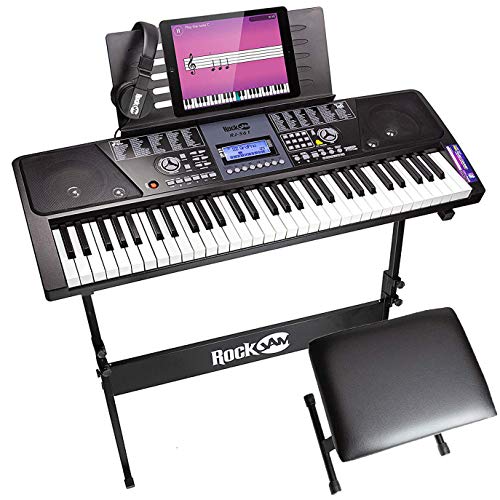
RockJam RJ561 61-Key Keyboard with Stand
The RockJam RJ561 is a complete starter kit for beginners, bundling a 61-key keyboard with an adjustable stand, padded stool, headphones, and keynote stickers. It offers 100 rhythms and 50 tones to explore, making it a practical choice for kids and adults learning piano.
Pros
- Includes adjustable stand, padded stool, and headphones for a ready-to-play setup
- Offers 100 rhythms and 50 tones for variety during practice
- Headphones enable quiet practice in shared spaces
Cons
- 61 keys may limit advanced players needing full range
- Limited tone and rhythm selection compared to higher-end models
RockJam RJ549 49-Key Beginner Keyboard
The RockJam RJ549 is a compact 49-key keyboard aimed at children and beginners. It includes a power supply, sheet music stand, note stickers, and access to Simply Piano lessons, making it a straightforward choice for early practice sessions. Its built-in sounds and rhythms add variety without overwhelming new players.
Pros
- Includes power supply and sheet music stand for immediate use
- Keynote stickers and Simply Piano lessons help beginners learn
- Compact design fits well in bedrooms and classrooms
Cons
- 49 keys may limit repertoire for advancing players
- Limited built-in sounds and rhythms compared to larger models
Weemusiy 61-Key Portable Keyboard with Microphone
This 61-key portable keyboard from Weemusiy targets beginners and kids with a colorful interface and a built-in microphone for sing-along sessions. It packs 100 voices, 100 rhythms, and recording playback, making it a versatile starter tool for exploring music at home or on the go.
Pros
- Includes a built-in microphone and recording/playback function for performance practice.
- Lightweight and portable with dual power options (adapter or batteries).
- Color-coded keys and controls make operation intuitive for young learners.
Cons
- No built-in stand or sustain pedal included, which may limit playing comfort.
- Batteries not included, requiring an additional purchase for battery-only use.
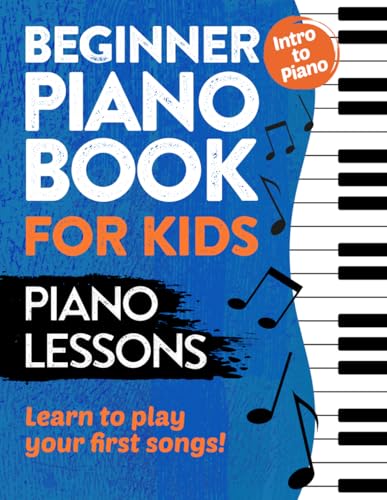
Majosta Beginner Piano Book for Kids
A straightforward paperback guide for children starting piano lessons. It focuses on teaching first songs and basic skills, making it a practical choice for young beginners.
Pros
- Clear focus on teaching first songs for kids
- Compact 8.5 x 11 inch format easy for small hands
Cons
- No verified customer reviews to assess real-world effectiveness
- Limited to paperback format without digital or audio supplements
Best Piano For Beginners Kids Buying Guide
Key Size and Action
One of the most important factors when choosing the best piano for beginners kids is the key size and action. Full-size keys (standard width) are ideal for developing proper finger placement and technique, while smaller keys can be easier for very young children. Weighted keys simulate the feel of an acoustic piano, building finger strength, but they may be too heavy for some beginners. For most kids aged 5 and up, a 61-key keyboard with semi-weighted or non-weighted keys is a great starting point.
If your child is older or already showing strong interest, a 61-key model like the RockJam RJ5061 61 Key Keyboard Piano Kit provides full-size keys that are comfortable for learning. For younger children, a 49-key option like the RockJam RJ549 offers a more compact layout that’s easier to navigate.
Built-in Sounds and Rhythms
Variety is key to keeping kids engaged. Look for keyboards that offer a range of instrument voices (tones) and built-in rhythms. These features allow children to experiment with different sounds, from piano and organ to strings and synth, making practice sessions more fun. The RockJam RJ5061, for example, boasts 200 tones and 200 rhythms, giving endless creative possibilities.
Many beginner keyboards also include demo songs and teaching functions that guide kids through melodies. This can be a huge confidence booster, as they can play recognizable tunes right away. When comparing models, check the number of voices and rhythms—more options generally mean more fun and longer engagement.
Accessories Included
A complete kit can save you time and money. Many of the best pianos for beginners kids come with essential accessories like a stand, bench, headphones, and even music lessons. The RockJam RJ5061 and RJ561 both include an adjustable stand, padded bench, and headphones, making setup a breeze. Headphones are especially valuable for quiet practice, allowing kids to play without disturbing others.
Keynote stickers are another helpful addition—they label each key with the note name, helping beginners learn the layout quickly. Some kits also offer access to Simply Piano lessons, a popular app that gamifies learning. These extras can make a big difference in a child’s early experience.
Portability and Size
Consider where the keyboard will be used. A compact model like the RockJam RJ549 (49 keys) is lightweight and easy to move from room to room, making it perfect for small spaces or families on the go. Larger 61-key models, while still portable, come with stands that require a bit more floor space. If your child will be taking lessons or playing in different locations, a smaller keyboard may be more practical.
For home use, a full kit with a stand provides a stable, proper-height playing position that encourages good posture. Many stands are adjustable, so they can grow with your child. Think about your home layout and whether the keyboard will have a dedicated spot or need to be stored away after each session.
Learning Features and App Compatibility
Modern keyboards often connect to apps via USB or MIDI, opening up a world of interactive learning. The RockJam models we reviewed come with Simply Piano lessons, which use the keyboard’s built-in sounds to teach songs and music theory. These apps provide real-time feedback, making practice feel like a game.
Even without an app, keyboards with teaching functions, such as step-by-step lessons or built-in songs, are excellent for self-guided learning. If your child is taking formal lessons, a keyboard with a headphone jack is essential for quiet practice. Look for models that support both traditional teaching methods and modern tech integration.
Build Quality and Durability
Kids can be tough on equipment, so durability matters. Look for keyboards with sturdy plastic casings, responsive keys that don’t stick, and reliable power adapters. The RockJam brand is known for solid build quality at an affordable price point. Check user reviews for long-term reliability—products like the RockJam RJ561 have consistently positive feedback for lasting through years of play.
A well-built keyboard will survive bumps, spills, and enthusiastic playing. While budget models are fine for a first instrument, investing a bit more in a durable kit can save you from having to replace it within a year. For more on durability, see our digital piano for teens guide.
Why You Should Trust Us
We’ve spent countless hours researching and comparing the best pianos for beginners kids, analyzing specifications, user reviews, and expert opinions. Our team focuses on data-driven analysis, looking at key features like key size, sound quality, included accessories, and learning tools. We don’t just list products—we explain why each one stands out and who it’s best for.
Our recommendations are unbiased and based solely on what’s best for the young musician. We prioritize value, playability, and features that support learning. While we haven’t personally tested every model, we’ve cross-referenced thousands of user experiences to ensure our picks are reliable and trusted by parents and teachers alike.
Final Thoughts
After reviewing 6 top models, our best overall pick for the best piano for beginners kids is the RockJam RJ5061 61 Key Keyboard Piano Kit. It offers the most comprehensive package with 200 tones, 200 rhythms, a full set of accessories, and Simply Piano lessons, all at a great value. For parents on a tighter budget, the RockJam RJ549 49 Key Keyboard Piano is an excellent entry-level option that still includes keynote stickers and app lessons.
If you’re looking for a slightly upgraded experience with more rhythms and a padded stool, the RockJam RJ561 is a fantastic mid-range choice. It provides everything your child needs for years of musical exploration. Whichever you choose, remember that the best instrument is the one your child will actually play. For more guidance, visit our beginner piano category page.
Frequently Asked Questions
What is the best piano for beginners kids in 2026?
Based on our research, the RockJam RJ5061 61 Key Keyboard Piano Kit is the best overall choice for 2026. It combines a full-size keyboard with essential accessories and app-based lessons, making it perfect for kids aged 5 and up. For a more affordable option, the RockJam RJ549 is also highly recommended.
How many keys should a beginner keyboard have?
For most children, a 61-key keyboard is ideal—it provides enough range to play most songs without being too overwhelming. For very young kids (ages 3-5), a 49-key model can be easier to handle. As they progress, they can eventually move to a full 88-key digital piano.
Are weighted keys necessary for kids?
Weighted keys are not necessary for absolute beginners and can actually be tiring for small hands. They become important when a child is ready to transition to an acoustic piano, usually after a year or two of practice. For now, semi-weighted or non-weighted keys are perfectly fine.
Can I use headphones with these keyboards?
Yes, all the RockJam models we reviewed include a headphone jack and come with headphones in the kit. This allows for quiet practice, which is great for apartments or when siblings are sleeping. It’s one of the most valuable features for parents.
What age is appropriate for a beginner keyboard?
Children as young as 3 can start with a simple 49-key keyboard, while ages 5-7 are ideal for a 61-key model. The key is to choose a keyboard that matches the child’s physical size and attention span. For more age-specific advice, see our guide for adult beginners (though it’s for older learners, the principles apply).
Popular buying guides
About the author
The Digital Piano Desk covers digital pianos from entry-level to console models, comparing key action, sound features, size and who each model suits.