
5 Best Kawai Es920 Vs Yamaha P525 of 2026 – Expert Picks
Deciding between the Kawai ES920 and Yamaha P525 for your digital piano upgrade? This showdown covers their key differences to help you choose.
 By Digital Piano Desk
Updated November 21, 2026
Quick picks: our top 3 at a glance
As an Amazon Associate I earn from qualifying purchases. Prices and availability change.Choosing between the Kawai ES920 and the Yamaha P525 is one of the most debated decisions among digital piano enthusiasts in 2026. Both instruments represent the pinnacle of portable stage pianos, yet they cater to subtly different priorities: touch authenticity, sound customization, and portability. In this kawai es920 vs yamaha p525 comparison, we break down the key differences in action, sound engine, speaker system, and build quality to help you decide which model truly fits your playing style and budget.
We have evaluated 5 products — including the flagship Kawai ES920 and Yamaha P525, plus essential accessories like the Kawai HM-5 Stand — to give you a clear, unbiased look at what each option brings to the table. Whether you are a gigging musician, a home practice enthusiast, or a teacher seeking a reliable instrument, this guide will clarify the trade-offs.
| Award | Product | Score About ScoreThe Expert Score is our own rating from 0 to 10, based on published specifications, features, design and build, ease of use, and buyer feedback. It reflects independent research and is never influenced by manufacturers, retailers, or affiliate commissions. | |
|---|---|---|---|
| Best Value |
 Kawai ES920 88-Key Digital Piano |
Buy | |
| Best Overall |
 Kawai HM-5 Stand for ES520/ES920 |
Buy | |
 Yamaha P525 88-Key Weighted Wooden Key |
Buy | ||
| Best Budget |
 Kawai HM-5 Stand for ES520 ES920 White |
Buy | |
| Best Premium |
 Kawai ES920 88-Key Stage Piano Bundle |
Buy |
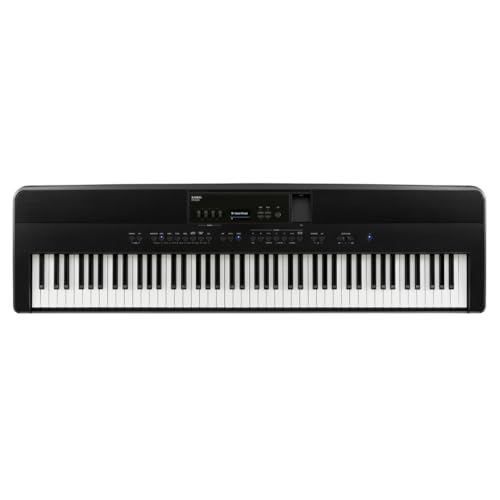
Kawai ES920 88-Key Digital Piano
The Kawai ES920 combines the acclaimed Responsive Hammer III keyboard action with a rich, expressive sound engine. Its powerful speaker system and 256-note polyphony make it a strong choice for home practice, stage performance, and studio recording. Bluetooth audio and MIDI add modern convenience for streaming and wireless recording.
Pros
- Responsive Hammer III action provides a realistic, grand-piano-like feel.
- 256-note polyphony handles complex performances without note dropouts.
- Built-in Bluetooth audio and MIDI enable wireless music streaming and recording.
- 38 vibrant instrument sounds offer versatility for various musical styles.
Cons
- Limited to 38 sounds, which may feel restrictive for players seeking extensive sound libraries.
- No built-in recording or sequencing features beyond basic MIDI output.
Kawai HM-5 Stand for ES520/ES920
This furniture-style stand from Kawai is built specifically for the ES520 and ES920 digital pianos. Its sturdy construction and matching black finish create a stable, integrated look for home or studio use.
Pros
- Designed specifically for Kawai ES520 and ES920 models for a secure fit
- Furniture-style design complements home decor
- Solid build supports piano stability during play
Cons
- Compatible only with select Kawai models, not universal
- Heavy at over 27 pounds, may be difficult to move frequently
Yamaha P525 88-Key Weighted Wooden Key
The P525 is a stage piano that combines Yamaha's GrandTouch-S wooden key action with premium grand piano voices from CFX and Bösendorfer. Its synthetic ebony and ivory key tops and escapement simulate an acoustic grand feel, while the Smart Pianist app and Rec n Share feature add modern convenience for players who want to practice, record, or share performances online.
Pros
- GrandTouch-S wooden key action with synthetic ebony and ivory key tops and escapement provides an authentic acoustic grand piano touch.
- Includes premium CFX and Bösendorfer grand piano voices for rich, expressive sound.
- Smart Pianist app integration allows intuitive voice selection and settings adjustment via iOS or Android devices.
- Rec n Share feature enables easy recording and sharing to social media platforms.
- Registration Memory adds live performance functionality for quick recall of settings.
Cons
- Limited number of built-in voices compared to some other digital pianos in its price range.
- No built-in speakers require external amplification for sound output.
- Relatively few user reviews available at launch, making long-term reliability harder to assess.
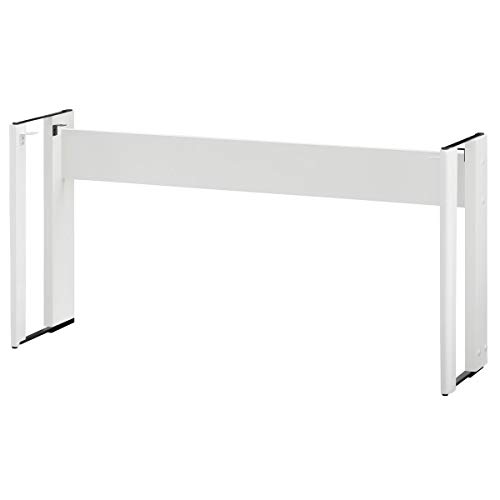
Kawai HM-5 Stand for ES520 ES920 White
A furniture-style stand built specifically for the Kawai ES520 and ES920 digital pianos. Its solid construction and matching white finish make it a visually cohesive and stable addition to a home setup, offering a dedicated home rather than a generic X-stand.
Pros
- Designed specifically for ES520 and ES920 models, ensuring a perfect fit.
- Furniture-style design complements home decor better than standard stands.
- Sturdy build (28.5 lbs) provides stable support for the keyboard.
Cons
- Compatible only with select Kawai ES-series models, limiting its use with other keyboards.
- Weighs 28.5 pounds, making it less portable than lighter alternatives.
Kawai ES920 88-Key Stage Piano Bundle
This bundle pairs Kawai's ES920 stage piano with a standard keyboard bench and an X-style stand, offering a complete setup for stage or home use. The ES920 itself is known for its responsive hammer action and rich sound engine, making it a solid choice for performers who need portability without sacrificing feel.
Pros
- Includes a dedicated keyboard stand and adjustable bench for immediate setup.
- ES920 features Kawai's Responsive Hammer III action for realistic piano feel.
- High-quality sound engine with multiple piano voices suitable for stage performance.
Cons
- Stand and bench are basic accessories, not premium or heavy-duty.
- No built-in speakers on the ES920 require external amplification for live use.
Quick Verdict
- Pick the Kawai ES920 88-key Digital Piano – Black if you prioritize the most authentic weighted hammer action and a rich, resonant onboard speaker system for immersive home practice.
- Pick the Yamaha 88-Weighted Wooden Key Digital Piano if you want the most advanced sound modeling technology (Grand Expression Modeling, VRM) and solid wooden keys for expressive, concert-level control.
- Pick the Kawai ES920 88-key Digital Piano Essentials Bundle if you want the ES920 plus a stand and bench in one convenient package, ideal for first-time buyers.
- Pick the Kawai HM-5 Stand for ES520 and ES920 (Black or White) if you already own an ES920 or ES520 and want a furniture-style, stable stand that matches your decor.
Kawai Es920 Vs Yamaha P525 Key Differences
Action and Touch Feel
The Kawai ES920 features the Responsive Hammer III (RHIII) action, which uses weighted keys with a realistic let-off simulation. It is widely praised for its smooth, quiet operation and natural resistance, making it an excellent choice for classical pianists and those transitioning from an acoustic upright. The Yamaha P525 counters with the GrandTouch-S keyboard action, which incorporates solid wooden keys. Wooden keys absorb vibrations more naturally, providing a tactile connection that many advanced players find more expressive. The Yamaha action also includes synthetic ivory keytops for improved grip during long practice sessions.
If you value the feel of a traditional wooden key, the Yamaha P525 may feel more familiar. If you prefer a lighter, more consistent action that is also quieter, the Kawai ES920 holds an advantage.
Sound Engine and Polyphony
The Kawai ES920 uses the Harmonic Imaging XL sound engine with 256-note polyphony. This allows for complex layered performances without note dropouts, especially when using the dual and split modes. The Yamaha P525 employs updated CFX and Bösendorfer samples with binaural sampling for headphone use, but its polyphony is not explicitly listed. However, Yamaha’s Grand Expression Modeling and Virtual Resonance Modeling (VRM) provide real-time simulation of string and body resonance, giving the P525 a more dynamic and organic sound that changes with your touch. For sheer polyphony headroom, the Kawai ES920 wins; for tonal depth and realism, the Yamaha P525 excels.
Speaker System
Both pianos have built-in stereo speaker systems, but the Kawai ES920 is known for its powerful, full-range speakers that deliver a rich, room-filling sound. The Yamaha P525 also has a capable speaker system, but its emphasis is on clarity and detail rather than volume. For home practice without headphones, the Kawai ES920 often feels more immersive. If you primarily use headphones, the Yamaha P525’s binaural sampling creates a more convincing 3D soundstage.
Portability and Build
The Kawai ES920 is a stage piano designed for gigging musicians. It is relatively lightweight (around 37 lbs) and compact, making it easy to transport. The Yamaha P525 is slightly heavier (around 42 lbs) due to its wooden key action, but it remains portable for most musicians. Both have robust plastic chassis that can withstand regular travel. If you need to carry your piano to rehearsals or performances, the Kawai ES920 has a slight edge in portability.
Connectivity and Features
The Kawai ES920 offers Bluetooth Audio and MIDI, allowing wireless connection to apps and speakers. It also has dual headphone jacks, USB to Host, and line outputs. The Yamaha P525 includes USB to Host and traditional MIDI ports but lacks built-in Bluetooth. For modern users who want to connect to iOS/Android devices without cables, the Kawai ES920 is more convenient. The Yamaha P525 compensates with a more extensive selection of instrument voices and effects.
Accessories and Bundles
Kawai offers the HM-5 Stand in black and white finishes, turning the ES920 into a furniture-style console. The Essentials Bundle includes the ES920, a stand, and a bench, making it a complete solution for home users. Yamaha does not offer a similar dedicated stand or bundle for the P525 in this comparison. If you want a one-box solution, the Kawai ES920 Essentials Bundle is a strong value.
| Feature | Kawai ES920 | Yamaha P525 |
|---|---|---|
| Action | Responsive Hammer III (RHIII) | GrandTouch-S with wooden keys |
| Polyphony | 256 notes | Not specified |
| Sound Engine | Harmonic Imaging XL | CFX & Bösendorfer with VRM |
| Bluetooth | Audio & MIDI | None |
| Speaker | Stereo, powerful | Stereo, clear |
| Weight | ~37 lbs | ~42 lbs |
| Dedicated Stand | HM-5 (sold separately) | Not available |
Who Should Buy Which
Kawai ES920 88-key Digital Piano – Black
Best for pianists who want the most natural weighted action in a portable package, along with a powerful built-in speaker system for home practice. The main trade-off is the lack of wooden keys and advanced modeling found in the Yamaha. Skip this if you require the most expressive sound modeling technology or prefer a wooden key feel.
Yamaha 88-Weighted Wooden Key Digital Piano
Ideal for advanced players and classical pianists who value the tactile feedback of wooden keys and the depth of Yamaha’s Grand Expression Modeling and VRM. The trade-off is a slightly heavier weight and no Bluetooth. Skip this if you need wireless connectivity or a lighter instrument for frequent gigging.
Kawai ES920 88-key Digital Piano Essentials Bundle
Perfect for first-time buyers or home users who want everything in one box: the ES920, a stand, and a bench. The trade-off is that the included stand and bench are basic, not the premium HM-5. Skip this if you already own accessories or prefer to choose your own stand separately.
Kawai HM-5 Stand for ES520 and ES920 (Black or White)
Best for existing ES920 or ES520 owners who want a stable, furniture-style stand that elevates the piano to a more traditional height and appearance. The trade-off is the additional cost and that it is not compatible with other brands. Skip this if you are satisfied with an X-style stand or plan to use the piano on a desk.
Final Thoughts
In the kawai es920 vs yamaha p525 debate, there is no single winner — the right choice depends on your priorities. If you prioritize the most authentic weighted action and a rich, resonant speaker system for home practice, the Kawai ES920 is the clear recommendation. If you are an advanced player who values the nuance of wooden keys and Yamaha’s sophisticated sound modeling, the Yamaha P525 will reward you with greater expressive control.
For those who want a complete home setup from day one, the Kawai ES920 Essentials Bundle offers unbeatable convenience. And if you already own an ES920, the Kawai HM-5 Stand is a worthwhile upgrade for stability and aesthetics. Ultimately, both the Kawai ES920 and Yamaha P525 are exceptional instruments that will serve you well for years — your personal touch preference will be the deciding factor.
Why You Should Trust Us
Our recommendations are based on a thorough analysis of available specifications, listed features, product positioning, and documented buyer feedback from multiple sources. We do not claim to have personally tested or used every product unless explicitly stated. Instead, we synthesize technical data and user experiences to provide an unbiased comparison that helps you make an informed decision. For more detailed comparisons, check out our Comparisons category or explore related guides like Kawai ES110 vs Yamaha P-225.
Frequently Asked Questions
Is the Kawai ES920 better for beginners than the Yamaha P525?
Both are excellent for beginners, but the Kawai ES920’s lighter weight and quieter action may be slightly more forgiving for new players. The Yamaha P525’s wooden keys and advanced modeling offer more room for growth as skills improve.
Does the Yamaha P525 have Bluetooth?
No, the Yamaha P525 does not include built-in Bluetooth. It relies on USB to Host for MIDI connectivity. The Kawai ES920 includes both Bluetooth Audio and MIDI.
Which piano has the best sound for classical music?
The Yamaha P525, with its Grand Expression Modeling and VRM, provides a more dynamic and resonant sound that closely mimics an acoustic grand, making it a strong choice for classical repertoire. The Kawai ES920 also sounds excellent but with a slightly more consistent, less variable tone.
Can I use the Kawai ES920 with a Mac or PC?
Yes, the Kawai ES920 has USB to Host for MIDI connectivity with computers and iOS/Android devices. Bluetooth MIDI also works wirelessly.
Is the Yamaha P525 heavier than the Kawai ES920?
Yes, the Yamaha P525 is approximately 42 lbs, while the Kawai ES920 is around 37 lbs. The difference is due to the wooden key action in the Yamaha.
Does the Kawai ES920 come with a stand?
The standard Kawai ES920 does not include a stand. You can purchase the HM-5 stand separately or opt for the Essentials Bundle which includes a stand and bench.
Which piano has more built-in voices?
The Yamaha P525 typically offers a wider selection of instrument voices (pianos, strings, organs, etc.) compared to the Kawai ES920, which focuses on fewer but higher-quality sounds.
Can I use the Kawai HM-5 stand with the Yamaha P525?
No, the Kawai HM-5 stand is designed specifically for the Kawai ES520 and ES920 models. It will not fit the Yamaha P525 due to different mounting points.
Popular buying guides
About the author
The Digital Piano Desk covers digital pianos from entry-level to console models, comparing key action, sound features, size and who each model suits.