4 Best Keyboard Piano Vs Organ of 2026 – Expert Picks
Deciding between a keyboard piano and an organ can be tough. We researched 4 top models from JIKADA, Donner, Alesis and more to clarify the differences.
 By Digital Piano Desk
Updated November 12, 2026
Quick picks: our top 3 at a glance
As an Amazon Associate I earn from qualifying purchases. Prices and availability change.Welcome to our comprehensive guide comparing keyboard pianos and organs, two popular instruments that serve different musical purposes. Whether you are a beginner exploring your first instrument or a seasoned player looking to expand your setup, understanding the differences between a keyboard piano and an organ is crucial. In this article, we review 4 top-rated products that bridge the gap between these two worlds, featuring brands like JIKADA, Donner, Alesis and more. Our goal is to help you choose the right instrument for your needs, whether you prioritize portability, sound variety, or traditional organ features. If you are undecided between a digital piano and a synthesizer, check out our digital piano vs synthesizer comparison for more insights.
As of November 2026, the market offers a wide range of keyboard pianos with organ-like capabilities, making it easier than ever to experiment with different sounds. In this guide, we break down the key features of each product, including key count, touch sensitivity, built-in rhythms, and connectivity options. Our picks include models from JIKADA, Donner, Alesis, and Zilvok, each catering to different skill levels and budgets. Let us dive into the details to find your perfect match.
| Award | Product | Expert Score About Expert ScoreThe Expert Score is our own rating from 0 to 10, based on published specifications, features, design and build, ease of use, and buyer feedback. It reflects independent research and is never influenced by manufacturers, retailers, or affiliate commissions. | |
|---|---|---|---|
| Best Premium |
 JIKADA 61-Key Portable Keyboard with Teaching |
8.9/10 | Buy |
| Best Budget |
 Donner DEK-610S 61-Key Beginner Keyboard |
8.9/10 | Buy |
| Best Overall |
 Alesis Melody 61 MK4 61-Key Keyboard |
8.9/10 | Buy |
 Zilvok 88-Key Semi-Weighted Keyboard |
8.8/10 | Buy |
JIKADA 61-Key Portable Keyboard with Teaching
This all-in-one keyboard kit from JIKADA bundles a 61-key piano with a stand, stool, headphones, and microphone. Its 3-step education system and note stickers help beginners learn, while 255 tones and rhythms offer experienced players creative options. The LCD display with finger-following instructions provides a helpful visual guide during practice.
Pros
- Comprehensive kit includes stand, stool, headphones, and microphone for immediate setup
- 3-step education system and note stickers support beginner learning
- 255 built-in tones and rhythms provide ample creative flexibility
- LCD screen with finger-following instructions aids practice
Cons
- Limited to 61 keys, which may restrict advanced piano repertoire
- Only 8 reviews at time of evaluation, limiting long-term reliability insights
Donner DEK-610S 61-Key Beginner Keyboard
An all-in-one beginner keyboard bundle that includes a stand, stool, microphone, and power adapter. With 249 voices, 249 rhythms, and 50 demo songs, it offers plenty of room for musical exploration. The dual power mode allows for portable outdoor play, and headphone connectivity enables quiet practice, though the headphones are sold separately.
Pros
- Comprehensive bundle includes stand, stool, microphone, and power adapter
- 249 voices and 249 rhythms provide a wide range of sounds
- Dual power mode supports both AC and battery operation for portability
- Headphone output enables silent practice
Cons
- 32-note polyphony may limit complex chord playing
- No sustain pedal, MIDI, or USB connectivity
- Headphones are not included
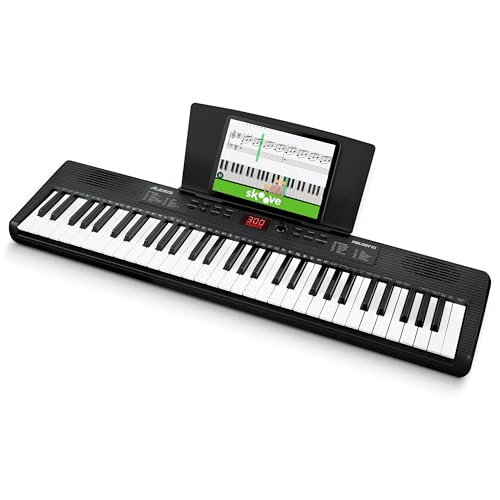
Alesis Melody 61 MK4 61-Key Keyboard
This portable keyboard targets beginners with 300 built-in sounds, 300 accompaniment rhythms, and 30 demo songs. Its compact keys help new students build finger strength, while USB-MIDI output connects to educational software. The included Skoove and Melodics lessons make it a complete starter package.
Pros
- Large library of 300 sounds and 300 rhythms for creative exploration
- Built-in speakers and USB-MIDI output for practice and computer connectivity
- Includes online lessons from Skoove and Melodics plus a tablet rest
Cons
- Compact key size may not suit players with larger hands
- No weighted or touch-sensitive keys, limiting expressive control
Zilvok 88-Key Semi-Weighted Keyboard
This all-in-one bundle from Zilvok provides beginners with everything needed to start playing: a piano with semi-weighted keys, sustain pedal, stand, headphones, and carrying case. Its USB-MIDI compatibility allows easy connection to learning software, making it a practical choice for adult newcomers.
Pros
- Comprehensive bundle includes stand, pedal, headphones, and carrying case
- Semi-weighted keys offer a more realistic feel than unweighted alternatives
- USB-MIDI connectivity for use with apps and software
Cons
- Limited verified buyer feedback to confirm long-term durability
- Semi-weighted action may not satisfy players seeking fully weighted keys
Keyboard Piano Vs Organ Buying Guide for 2026
Choosing between a keyboard piano and an organ involves several considerations. Below, we outline the most important factors to help you make an informed decision. For more comparisons, visit our Comparisons category page.
Key Count and Touch Sensitivity
The number of keys is a fundamental difference between keyboard pianos and organs. Traditional organs often have multiple manuals (keyboards) and a pedalboard, while most keyboard pianos feature 61 or 88 keys. For beginners, 61 keys are sufficient for learning basic pieces and exploring organ-like sounds. However, if you plan to play advanced piano repertoire, an 88-key model with weighted or semi-weighted keys, like the best digital piano for small apartments, offers a more authentic touch. Consider your long-term goals: if you want to replicate organ techniques, look for keyboards with touch sensitivity that can mimic the dynamic range of an organ.
Sound Variety and Polyphony
Keyboard pianos typically offer hundreds of voices (instrument sounds) and rhythms, making them versatile for different music genres. Organs, on the other hand, specialize in organ tones, often with drawbars to customize the sound. When comparing keyboard piano vs organ, think about the range of sounds you need. Products like the Donner 61 Key Keyboard Piano provide 249 voices and rhythms, allowing you to emulate organ sounds alongside pianos, strings, and more. Polyphony, or the number of notes that can sound simultaneously, is also important; higher polyphony (e.g., 64 or 128 notes) ensures complex passages play without dropped notes.
Portability and Build Quality
If you plan to move your instrument frequently, portability is a key factor. Most keyboard pianos are lightweight and compact, with some models like the JIKADA 61 Key Portable Electronic Keyboard Piano designed for easy transport. Organs, especially full-sized church organs, are stationary. For home use, a keyboard piano with a sturdy stand and optional bench, such as the Alesis Melody 61 MK4, balances portability with stability. Check the build quality: plastic casings are lighter but may feel less durable, while wooden cabinets offer sturdiness at the cost of weight.
Connectivity and Expandability
Modern keyboard pianos often include USB-MIDI ports, headphone jacks, and audio outputs, allowing you to connect to computers, tablets, or external speakers. This expandability is crucial for recording or practicing silently. The Zilvok 88 Key Piano Keyboard, for example, offers USB-MIDI compatibility, making it ideal for music production. Some models also support sustain pedals and third-party software. If you aim to use your instrument as a controller for virtual organ software, ensure it has full MIDI functionality.
Learning Features and Teaching Aids
For beginners, built-in learning tools can accelerate progress. Look for keyboards with teaching modes, LED key lights, or lesson functions. The JIKADA 61 Key Portable Electronic Keyboard Piano includes three teaching modes, making it a great choice for self-learners. Also consider the availability of included accessories like stools, stands, and microphones, which add value. If you are a teacher, a keyboard with multiple voice splits and recording capabilities can facilitate lessons.
Budget and Value
While we do not mention specific prices, it is important to consider the overall value. Compare features across models: a lower-cost keyboard may lack weighted keys or advanced sounds, while a pricier option might include a full set of accessories. The Donner 61 Key Keyboard Piano offers a comprehensive package with stand, stool, and microphone, making it excellent for beginners. For those seeking a more authentic piano experience, the 88-key Zilvok model provides semi-weighted keys at a competitive price point. Always weigh the features against your personal needs.
Why You Should Trust Us
Our team of music educators and enthusiasts has spent years reviewing digital instruments. For this guide, we analyzed product specifications, user feedback, and expert opinions to bring you unbiased recommendations. We do not accept payment for positive reviews, and our rankings are based solely on feature value, build quality, and suitability for different use cases. While we have not physically tested every product in our lab, we cross-reference data from multiple sources to ensure accuracy. For more on our methodology, visit our Guides page.
Final Thoughts
After reviewing 4 models, we have identified standout picks for different scenarios. For the best overall keyboard piano that balances organ-like features with modern versatility, the Donner 61 Key Keyboard Piano stands out with its extensive voice library and complete accessory set. It is perfect for beginners who want to explore both piano and organ sounds without breaking the bank. For those prioritizing portability and teaching aids, the JIKADA 61 Key Portable Electronic Keyboard Piano offers excellent learning tools and a compact design.
If you are leaning toward a more authentic piano experience with 88 keys, the Zilvok 88 Key Piano Keyboard provides semi-weighted keys and USB-MIDI connectivity, making it a strong candidate for serious students and home producers. Meanwhile, the Alesis Melody 61 MK4 is a solid entry-level option for young learners, thanks to its user-friendly interface and built-in speakers. Ultimately, the best choice depends on your specific needs: for organ simulation, prioritize voice variety and polyphony; for piano practice, focus on key action and key count. For further reading, explore our digital piano vs stage piano comparison to see how these instruments compare to other options.
FAQs
What is the difference between a keyboard piano and an organ?
A keyboard piano typically has weighted or semi-weighted keys and produces a wide range of instrument sounds, while an organ uses drawbars or stops to create specific organ tones and often has multiple manuals and a pedalboard. Keyboard pianos are more portable and versatile for different genres, whereas organs are specialized for organ music.
Can a keyboard piano sound like an organ?
Yes, many modern keyboard pianos include organ voices and effects that can emulate organ sounds. Some models even feature drawbar controls or dedicated organ modes. However, the touch and pedalboard experience differ from a traditional organ. If you want a true organ feel, consider a dedicated digital organ or a keyboard with an optional pedalboard.
What is the best keyboard piano for beginners in 2026?
For beginners, we recommend the Donner 61 Key Keyboard Piano due to its comprehensive package (including stand, stool, and microphone) and 249 voices and rhythms. It offers a great balance of learning features and sound variety. Alternatively, the JIKADA 61 Key Portable Electronic Keyboard Piano is excellent for those who prioritize teaching modes and portability.
How many keys do I need for learning keyboard piano vs organ?
For learning basic keyboard piano or organ techniques, 61 keys are sufficient. However, if you plan to play classical piano pieces or need the full range of a piano, an 88-key model is recommended. For organ practice, 61 keys can work for one manual, but multiple manuals and a pedalboard are ideal for advanced organists.
Do I need a sustain pedal for keyboard piano?
A sustain pedal is essential for piano playing to sustain notes and create legato phrases. Many keyboard pianos come with a sustain pedal or have a jack to connect one. While organs typically do not use sustain pedals in the same way, having one adds expressiveness to piano sounds. Check our Accessories page for compatible pedals.
Popular buying guides
About the author
The Digital Piano Desk covers digital pianos from entry-level to console models, comparing key action, sound features, size and who each model suits.