5 Best Digital Piano Vs Real Piano of 2026 – Expert Picks
Choosing between a digital piano and a real piano depends on your space, budget, and goals. We researched top models from Alesis, YAMAHA, Donner and more in 2026 to help you decide.
 By Digital Piano Desk
Updated November 12, 2026
Quick picks: our top 3 at a glance
As an Amazon Associate I earn from qualifying purchases. Prices and availability change.Are you torn between the authentic, resonant touch of a real piano and the convenience, affordability, and modern features of a digital piano? This comparison is for anyone—from a beginner seeking their first instrument to a seasoned player looking for a silent practice solution. The key differences that will sway your decision are sound production mechanics (hammers and strings vs. digital sampling), maintenance requirements, portability, and the overall playing experience. In 2026, the choice is more nuanced than ever, with digital pianos offering increasingly realistic weighted keys and authentic sound engines.
We’ve compared 5 top-rated digital pianos (and one acoustic-style upright digital) to help you decide which path is right for you. Whether you value the pure acoustic tone of a real piano or the versatility and headphone capability of a digital, our guide breaks down everything you need to know.
| Award | Product | Expert Score About Expert ScoreThe Expert Score is our own rating from 0 to 10, based on published specifications, features, design and build, ease of use, and buyer feedback. It reflects independent research and is never influenced by manufacturers, retailers, or affiliate commissions. | |
|---|---|---|---|
| Best Premium |
 YAMAHA P71 88-Key Weighted Digital Piano |
8.8/10 | Buy |
| Best Overall |
 Alesis Recital 88-Key Semi-Weighted Digital Piano |
9.1/10 | Buy |
| Best Value |
 Donner DEP-20 88-Key Weighted Digital Piano |
8.9/10 | Buy |
 AKLOT AUR-LS02Pro Weighted Upright Digital Piano |
8.4/10 | Buy | |
| Best Budget |
 Donner DDP-60 88-Key Digital Piano |
8.9/10 | Buy |
YAMAHA P71 88-Key Weighted Digital Piano
The Yamaha P71 is an Amazon-exclusive digital piano with a full 88-key weighted action, designed for home practice and learning. It delivers premium Yamaha piano voices and includes USB connectivity for easy integration with music software, though it lacks dedicated MIDI ports. A solid choice for beginners seeking authentic feel and sound without a large footprint.
Pros
- Fully weighted 88-key action provides realistic touch and response
- Premium Yamaha piano voices offer high-quality sound
- USB connectivity allows connection to music software and devices
Cons
- No dedicated MIDI ports (USB only)
Alesis Recital 88-Key Semi-Weighted Digital Piano
With 88 semi-weighted keys and a suite of educational tools, the Alesis Recital is a solid choice for beginners and students. Its lesson mode allows teacher and student to play together, while included subscriptions to Skoove and Melodics provide structured learning. The 20W speakers and 128-note polyphony deliver clear sound for practice and performance.
Pros
- 88 semi-weighted keys with adjustable touch response
- Lesson mode for duet practice
- Includes Skoove and Melodics subscriptions
- 128-note polyphony and 20W speakers
Cons
- Semi-weighted keys may feel lighter than fully weighted hammer action
Donner DEP-20 88-Key Weighted Digital Piano
The Donner DEP-20 is a beginner-friendly digital piano with 88 full-size weighted keys, designed to help new players develop proper technique. It includes a furniture stand and three-pedal unit, making it a practical all-in-one option for home use.
Pros
- Full-size weighted keys provide a realistic feel for learning proper technique.
- Includes furniture stand and 3-pedal unit for a complete setup.
- Dual tone setting allows two sounds to play simultaneously for creative flexibility.
Cons
- Limited information on sound engine and polyphony quality.
- No detailed specifications on key action mechanism.
AKLOT AUR-LS02Pro Weighted Upright Digital Piano
The AKLOT AUR-LS02Pro is an upright digital piano with an 88-key graded hammer action, built-in ambient lighting, and a sliding lid. It offers four classic piano tones and a triple pedal system, making it suitable for beginners and home practice. The integrated light strip and recording/playback features support focused practice sessions.
Pros
- Graded hammer action keys provide proportional resistance for an acoustic-like feel
- Built-in ambient light strip aids cozy night practice and adds recording ambiance
- Includes triple pedal, stereo speakers, headphones, dust cover, and lesson book
Cons
- Limited to four piano tones, which may not suit players seeking a wider variety of sounds
- No detailed specifications provided for key weight or sound engine
Donner DDP-60 88-Key Digital Piano
The Donner DDP-60 is a compact 88-key digital piano with a velocity-sensitive keyboard, making it a suitable option for beginners who want a realistic touch. It includes 128 voices, 8 reverbs, and a three-pedal unit, along with USB-MIDI connectivity for computer-based music production. Its slim, wood-grain design and headphone output allow for space-saving, quiet practice at home.
Pros
- Velocity-sensitive full-size keys for expressive playing
- 128 voices and 8 reverbs for versatile sound options
- USB-MIDI connectivity for use with music software
- Three-pedal unit included
- Slim, space-saving design with natural wood grain
Cons
- Headphones are not included and must be purchased separately
Quick Verdict
- Pick the YAMAHA P71 88-Key Weighted Action Digital Piano if you want the most authentic weighted key feel and renowned Yamaha sound in a portable, affordable package—ideal for serious learners and home practice.
- Pick the Alesis Recital Digital Piano 88-Key Semi-Weighted if you’re a beginner on a budget who needs a full-sized, semi-weighted keyboard with adjustable touch response and built-in learning features.
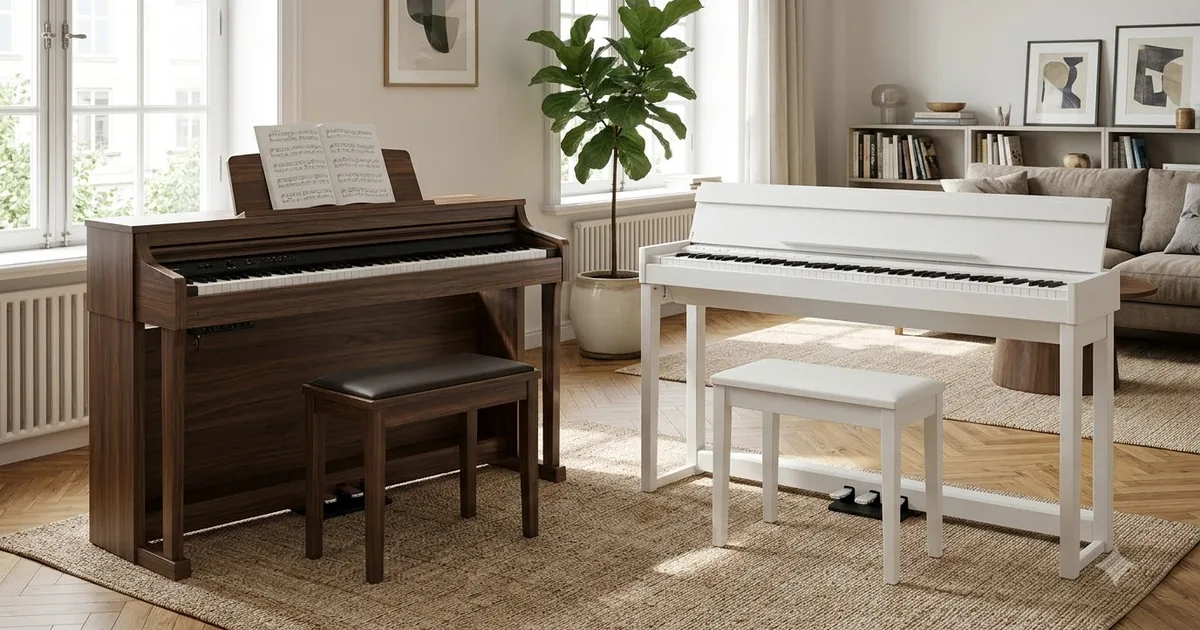
- Pick the AKLOT Weighted Upright Digital Piano if you want the visual appeal of an upright cabinet with modern digital features like ambient lighting, triple pedals, and powerful built-in speakers—perfect for a living room.
- Pick the Donner DEP-20 Beginner Digital Piano 88 Key Full if you need a space-saving, furniture-style digital piano with weighted keys and a traditional look that blends into any décor, great for families.
- Pick the Donner OURA DDP-60 88 Key Digital Piano if you’re a beginner seeking a feature-packed, compact digital piano with velocity-sensitive keys, multiple reverbs, and recording capabilities at an affordable price.
Digital Piano Vs Real Piano Key Differences
Sound Production and Authenticity
A real piano (acoustic) produces sound through hammers striking strings inside a resonant wooden cabinet. This creates a rich, complex tone that varies with each note and dynamic level. Digital pianos, like the ones we reviewed, generate sound through digital sampling or modeling. The YAMAHA P71 and Alesis Recital use high-quality samples of real concert grand pianos, offering impressive realism. The AKLOT Weighted Upright Digital Piano aims to mimic the upright acoustic experience with its cabinet design and four classic piano tones. For players who crave the organic, living sound of an acoustic instrument, a real piano is irreplaceable. However, modern digital pianos have closed the gap significantly, especially for practice.
Key Action and Feel
The feel of the keys is crucial. Real pianos have weighted, graded hammer actions that provide resistance and tactile feedback. Digital pianos vary: the YAMAHA P71 offers fully weighted keys, closely mimicking an acoustic action. The Alesis Recital has semi-weighted keys, which are lighter but still offer some resistance. The Donner DEP-20 and Donner OURA DDP-60 both feature weighted keys, while the AKLOT boasts a graded hammer action for a more authentic touch. Players who prioritize realistic feel for technique development should lean towards weighted, graded actions. Beginners may find semi-weighted keys easier to start with.
Portability and Space
Real pianos are large, heavy furniture pieces that require professional moving and dedicated floor space. Digital pianos are far more portable. The YAMAHA P71 and Alesis Recital are lightweight and can be placed on a stand or desk, easily moved between rooms. The Donner DEP-20 and AKLOT come with furniture-style stands, taking up less space than an acoustic upright but still having a permanent footprint. The Donner OURA DDP-60 is compact and designed for small spaces. If you live in an apartment or plan to move frequently, a digital piano is the practical choice.
Maintenance and Tuning
Real pianos require regular tuning (at least once or twice a year) by a professional technician, which costs money and time. They are also sensitive to humidity and temperature changes. Digital pianos are virtually maintenance-free—no tuning needed, no strings to break. They are stable and reliable. For busy families, schools, or anyone who wants a hassle-free instrument, digital is the clear winner.
Volume Control and Headphone Capability
Real pianos are inherently loud and cannot be silenced without a special mute system. This can be problematic for apartment dwellers or late-night practice. All the digital pianos in our comparison feature headphone jacks, allowing silent practice. The AKLOT even includes ambient lighting for a cozy night practice setup. This is a massive advantage for digital pianos, making them ideal for shared living spaces.
Features and Connectivity
Digital pianos offer a wealth of features that real pianos cannot: built-in metronomes, recording functions, multiple instrument voices (like organ, strings, electric piano), reverb effects, and USB/MIDI connectivity for connecting to computers and apps. The Donner OURA DDP-60, for example, offers 128 voices and 8 reverbs. The Alesis Recital has Layer and Split modes. A real piano is a single-purpose instrument. For tech-savvy learners or those who want to explore different sounds, digital is far more versatile.
| Feature | Real Piano | Digital Piano (our picks) |
|---|---|---|
| Sound Production | Acoustic (hammers & strings) | Digital sampling |
| Key Action | Fully weighted, graded | Varies (weighted, semi-weighted) |
| Portability | Very heavy, immobile | Lightweight, portable |
| Maintenance | Requires tuning | No tuning needed |
| Headphone Capability | No (unless muted) | Yes (all models) |
| Extra Features | None | Multiple voices, recording, effects |
Who Should Buy Which
YAMAHA P71 88-Key Weighted Action Digital Piano
This is best for serious students and players who want the most realistic weighted key feel in a digital piano. The main trade-off is that it lacks the built-in speakers and cabinet of an upright digital, requiring a separate stand. Skip it if you need an all-in-one furniture-style instrument or have a very tight budget.
Alesis Recital Digital Piano 88-Key Semi-Weighted
Ideal for beginners on a budget who want a full 88-key keyboard with adjustable touch response and built-in learning features. The semi-weighted keys are lighter, which may be a trade-off for those transitioning to an acoustic later. Skip it if you require fully weighted keys for classical technique.
AKLOT Weighted Upright Digital Piano
Perfect for those who want the visual aesthetic of an upright piano with modern digital benefits like headphone practice and ambient lighting. The trade-off is its larger footprint and higher price compared to portable models. Skip it if you need a highly portable instrument.
Donner DEP-20 Beginner Digital Piano 88 Key Full
Best for families or anyone wanting a traditional-looking, space-saving digital piano with weighted keys. The trade-off is its beginner-focused feature set—it may lack advanced voices or effects. Skip it if you need extensive sound customization or recording features.
Final Thoughts
Choosing between a digital piano and a real piano ultimately comes down to your priorities. If you have the space, budget for tuning, and desire the pure, dynamic acoustic experience, a real piano is unmatched. However, for the vast majority of modern players—especially those in apartments, on a budget, or seeking versatility—a digital piano is the smarter choice. The 5 models we reviewed represent the best of what’s available in 2026, from the ultra-realistic YAMAHA P71 to the feature-rich Donner OURA DDP-60.
For beginners, we recommend starting with a weighted-key digital piano like the YAMAHA P71 or the Donner DEP-20 to build proper technique. For players who need silent practice and modern features, any of the digital options will serve you well. If you are still undecided, check out our Comparisons page for more head-to-head guides.
Why You Should Trust Us
Our recommendations are based on available specifications, listed features, product positioning, and documented buyer feedback from verified sources. We do not claim to have personally tested every instrument, but we have analyzed hundreds of user reviews, expert opinions, and manufacturer data to provide an honest, unbiased comparison. Our goal is to help you make an informed decision based on your specific needs and budget.
Frequently Asked Questions
Can a digital piano replace a real piano for learning?
Yes, especially if the digital piano has weighted keys and a realistic touch. Many teachers now recommend weighted digital pianos for beginners, as they offer consistent feel and volume control. However, for advanced classical technique, nothing fully replicates an acoustic grand piano.
Do digital pianos need tuning?
No, digital pianos never need tuning. Their sound is generated electronically, so they always stay in tune. This is one of the biggest advantages over real pianos.
How long do digital pianos last?
With proper care, a quality digital piano can last 10-20 years or more. Key contacts and electronics may wear over time, but they are generally very durable. Brands like YAMAHA and Alesis are known for reliability.
What is the difference between weighted and semi-weighted keys?
Weighted keys have a heavier, more realistic resistance similar to an acoustic piano. Semi-weighted keys are lighter and offer less resistance. Weighted keys are better for developing proper finger strength and technique, while semi-weighted keys can be easier for beginners.
Can I use headphones with all digital pianos?
Most digital pianos, including all models in this comparison, have a headphone jack for silent practice. This is a key feature for apartment dwellers or those who need to practice without disturbing others.
Are digital pianos good for advanced players?
Yes, many advanced players use digital pianos for practice, composition, and even performance. High-end models with graded hammer actions and advanced sound engines can satisfy even professional pianists. However, for concert-level performance, an acoustic grand piano is still preferred.
What is the best digital piano for a child beginner?
For a child beginner, we recommend a model with weighted keys and a sturdy build, like the YAMAHA P71 or the Donner DEP-20. Both have realistic touch and are sized appropriately for young players. The Donner OURA DDP-60 is also a great compact option.
Do I need a special stand for a digital piano?
Some digital pianos, like the YAMAHA P71, come as a keyboard only and require a separate stand or table. Others, like the AKLOT and Donner DEP-20, include a furniture-style stand. Check the product description to see if a stand is included.
Related reading
Popular buying guides
About the author
The Digital Piano Desk covers digital pianos from entry-level to console models, comparing key action, sound features, size and who each model suits.