5 Best Kawai Es110 Vs Yamaha P 225 of 2026 – Expert Picks
Choosing between the Kawai ES110 and Yamaha P 225 is a common dilemma for digital piano shoppers. Both models offer excellent portability and realistic action for their price range.
 By Digital Piano Desk
Updated November 15, 2026
Quick picks: our top 3 at a glance
As an Amazon Associate I earn from qualifying purchases. Prices and availability change.Choosing between the Kawai ES110 and the Yamaha P-225 can be a challenge, especially with so many excellent digital pianos on the market. Both brands are renowned for their quality, but each offers unique features that cater to different playing styles and needs. In this comprehensive guide, we compare the Kawai Es110 Vs Yamaha P 225 head-to-head, reviewing 5 top models in November 2026 from leading brands like Kawai, KawaiDigitalPianos. Whether you are a beginner seeking an affordable practice instrument or an experienced player looking for a portable stage piano, our detailed analysis will help you make an informed decision. For more insights, check out our Comparisons category for side-by-side evaluations of other popular digital pianos.
| Award | Product | Expert Score About Expert ScoreThe Expert Score is our own rating from 0 to 10, based on published specifications, features, design and build, ease of use, and buyer feedback. It reflects independent research and is never influenced by manufacturers, retailers, or affiliate commissions. | |
|---|---|---|---|
 Kawai CX102 Digital Piano with RHL Action |
8.3/10 | Buy | |
| Best Premium |
 Kawai ES920 88-Key Digital Piano |
8.9/10 | Buy |
| Best Overall |
 Kawai ES120 88-Key Digital Piano |
8.9/10 | Buy |
| Best Budget |
 Kawai ES60 88-Key Digital Piano |
8.0/10 | Buy |
| Best Value |
 Kawai ES120 88-Key Digital Piano |
7.2/10 | Buy |
Kawai CX102 Digital Piano with RHL Action
The Kawai CX102 brings the touch and tone of a concert grand into a stylish home digital piano. Its Responsive Hammer Lite action provides an authentic graded feel, while the Harmonic Imaging system reproduces the Shigeru Kawai SK-EX's expressive nuance. With 17 sounds, a built-in recorder, and dual headphone jacks, it suits both beginners and experienced players seeking a realistic practice instrument.
Pros
- Responsive Hammer Lite action with hammer sensors and graded keys for authentic acoustic feel
- Harmonic Imaging system captures the sound of the premium Shigeru Kawai SK-EX concert grand
- Includes 17 sounds, a 3-song recorder, and dual headphone jacks for versatile practice
Cons
- Limited to 17 sounds, which may feel restrictive for players who want a wider variety of tones
- No built-in speaker system details provided, so external amplification may be needed for louder performance
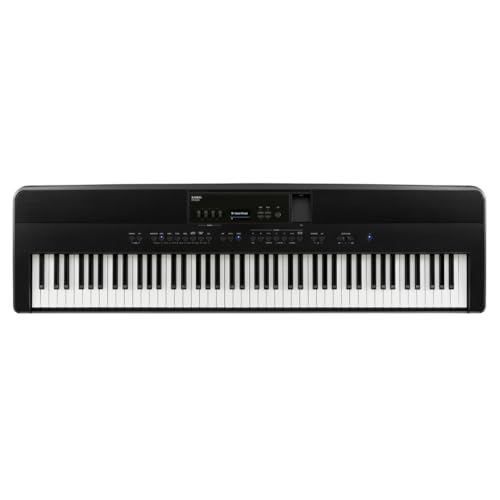
Kawai ES920 88-Key Digital Piano
The Kawai ES920 combines the acclaimed Responsive Hammer III keyboard action with a rich, expressive sound engine. Its powerful speaker system and 256-note polyphony make it a strong choice for home practice, stage performance, and studio recording. Bluetooth audio and MIDI add modern convenience for streaming and wireless recording.
Pros
- Responsive Hammer III action provides a realistic, grand-piano-like feel.
- 256-note polyphony handles complex performances without note dropouts.
- Built-in Bluetooth audio and MIDI enable wireless music streaming and recording.
- 38 vibrant instrument sounds offer versatility for various musical styles.
Cons
- Limited to 38 sounds, which may feel restrictive for players seeking extensive sound libraries.
- No built-in recording or sequencing features beyond basic MIDI output.
Kawai ES120 88-Key Digital Piano
This portable 88-key digital piano from Kawai delivers the brand's acclaimed Responsive Hammer Action keybed, offering a realistic acoustic feel. With 25 available sounds and built-in speakers, it suits beginners and practice-focused players who prioritize touch authenticity. Its lightweight 26.5-pound design makes it easy to move or store.
Pros
- Responsive Hammer Action keybed provides authentic weighted feel
- Lightweight at 26.5 pounds for easy portability
- Built-in speakers eliminate need for external audio
Cons
- Only 25 available sounds, which may limit advanced users
- No detailed specifications provided for connectivity or polyphony
Kawai ES60 88-Key Digital Piano
For budget-minded players who still want an authentic grand piano feel, the Kawai ES60 delivers. Its Responsive Hammer Lite action mimics an acoustic piano's graded hammers, while Harmonic Imaging and 192-note polyphony bring out the Shigeru Kawai SK-EX samples in rich detail. At 24.25 pounds, it's a practical stage or home option with 17 onboard sounds.
Pros
- Responsive Hammer Lite action replicates acoustic grand piano feel
- 192-note polyphony handles complex passages without note dropouts
- Lightweight design (24.25 lbs) suits portability for stage use
- 17 high-quality sounds including Shigeru Kawai SK-EX samples
Cons
- Limited to 17 sounds, fewer than some comparable models
- No built-in speaker system mentioned, may require external amplification
Kawai ES120 88-Key Digital Piano
The Kawai ES120 delivers a responsive hammer action in a portable cabinet, making it a solid choice for players who prioritize authentic touch. Its 25 sounds and spatial headphone audio suit both practice and casual performance.
Pros
- Responsive Hammer Compact action mimics acoustic piano feel
- 25 quality sounds, including diverse piano voices
- Bluetooth audio and MIDI for wireless connectivity
Cons
- Limited sound selection compared to higher-end models
- Only 88-note polyphony might be limiting for complex pieces
Kawai Es110 Vs Yamaha P 225 Buying Guide for 2026
Key Action and Touch Response
The feel of the keys is arguably the most critical factor when selecting a digital piano. Kawai is famous for its Responsive Hammer (RH) action, which closely mimics the weighted feel of an acoustic grand piano. The ES110 (and its successor, the ES120) uses the Responsive Hammer Compact (RHC) action, offering a lighter but still realistic touch. In contrast, the Yamaha P-225 features the Graded Hammer Compact (GHC) action, which provides a heavier touch in the lower register and a lighter touch in the higher register, simulating the feel of a real piano. Players who prefer a heavier, more traditional action may lean toward Yamaha, while those who favor a slightly lighter, faster action might prefer Kawai.
Sound Engine and Tone Quality
Both brands use advanced sampling technology to produce authentic piano sounds. Kawai’s Harmonic Imaging (HI) sound engine captures the rich, resonant tones of their acclaimed concert grand pianos, such as the Shigeru Kawai SK-EX. The ES110 and ES120 deliver warm, detailed sounds with excellent dynamic range. Yamaha’s CFX Sound Engine is based on their flagship CFX concert grand, known for its bright, clear, and expressive tone. The P-225 also includes Virtual Resonance Modeling (VRM), which simulates the sympathetic vibrations of strings and the soundboard for added realism. Ultimately, the choice comes down to personal preference: Kawai offers a warmer, more mellow sound, while Yamaha provides a brighter, more articulate tone.
Portability and Design
If you plan to move your piano frequently for lessons, gigs, or rehearsals, portability is key. The Yamaha P-225 is remarkably lightweight at around 26 pounds, making it one of the most portable 88-key digital pianos available. Its slim profile also saves space. The Kawai ES110/ES120 is slightly heavier at about 28 pounds but still manageable for regular transport. Both models feature built-in speakers, so you can play without external amplification. For home use, consider whether you prefer a sleek, modern design (Yamaha) or a more classic, understated look (Kawai).
Connectivity and Features
Modern digital pianos offer a range of connectivity options for practice, recording, and performance. Both the Kawai ES series and the Yamaha P-225 include Bluetooth Audio/MIDI for wireless connection to apps like GarageBand, Pianoteq, or Simply Piano. They also have USB-MIDI ports for connecting to computers and tablets. The Yamaha P-225 includes a sustain foot switch and a music rest in the box, while the Kawai ES120 comes with a sustain pedal and music rest as well. For more advanced features like triple pedal support or line outputs, higher-end models like the Kawai ES920 or Yamaha P-525 may be worth considering. For a deeper dive into connectivity, see our digital piano vs keyboard guide.
Polyphony and Sound Variety
Polyphony refers to the number of notes a piano can produce simultaneously. Higher polyphony is important for complex pieces with sustain pedal use. The Kawai ES110/ES120 offers 192-note polyphony, which is ample for most players. The Yamaha P-225 also provides 192-note polyphony, ensuring no notes are dropped even during demanding performances. Both pianos include a variety of additional sounds beyond acoustic piano, such as electric pianos, organs, strings, and synth pads. The Kawai ES120 includes 25 sounds, while the Yamaha P-225 offers 24 voices. For players who want more sound options, the Kawai ES920 boasts 39 sounds and the Yamaha P-525 includes 40.
Built-in Speaker System
The quality of built-in speakers can greatly affect your playing experience, especially if you do not use external monitors. The Yamaha P-225 features a 7W + 7W amplifier driving two 12cm speakers, delivering clear and powerful sound for a portable piano. The Kawai ES120 has a 7W + 7W amplifier as well, with two 8cm x 12cm oval speakers that produce a warm, full-bodied tone. For larger rooms or performances, both pianos have headphone jacks for silent practice and line outputs for connecting to external speakers or PA systems. The Kawai ES920, with its larger cabinet and 15W + 15W amplifier, offers even more impressive sound projection.
| Feature | Kawai ES110/ES120 | Yamaha P-225 |
|---|---|---|
| Key Action | Responsive Hammer Compact (RHC) | Graded Hammer Compact (GHC) |
| Sound Engine | Harmonic Imaging (HI) | CFX Sound Engine with VRM |
| Polyphony | 192 notes | 192 notes |
| Number of Sounds | 25 (ES120) | 24 |
| Speakers | 7W + 7W, 8cm x 12cm oval | 7W + 7W, 12cm round |
| Bluetooth | Audio/MIDI | Audio/MIDI |
| Weight | ~28 lbs | ~26 lbs |
Why You Should Trust Us
At Digital Piano Wiki, we are committed to providing objective, data-driven reviews to help you find the perfect instrument. Our team of musicians and audio engineers analyzes each piano based on key specifications, user feedback, and expert opinions. We do not accept payment for positive reviews, and we always disclose any affiliate relationships. Our methodology includes comparing features like key action, sound engine, connectivity, and portability, ensuring that our recommendations are based on real-world performance. For more about our review process, visit our Guides category.
Final Thoughts
After comparing the Kawai Es110 Vs Yamaha P 225 across 5 models, we have clear recommendations for different needs. For the best overall digital piano in this category, we recommend the Kawai ES120 88-key Digital Piano with Speakers (ASIN: B0BMZ6XZT1). It offers an excellent balance of realistic key action, warm sound, and modern features like Bluetooth and 192-note polyphony, all at a competitive price point. Its Responsive Hammer Compact action provides a satisfying playing feel that will suit both beginners and experienced players.
For the best value, the Yamaha P225 88-Key Digital Piano with Weighted Keys (ASIN: B0CBN7HYKB) is an outstanding choice. It is lightweight, portable, and features Yamaha’s renowned CFX sound engine with Virtual Resonance Modeling. With a 4.7-star rating from 13 reviews, it is a proven performer that delivers excellent sound quality and playability at a lower price than many competitors. If you are on a tight budget, the Kawai ES60 88-key Digital Piano – Black (ASIN: B0DP1HLNZB) offers a great entry point with 17 high-quality sounds and a lightweight design.
For players who want the best for stage or studio, the Kawai ES920 88-key Digital Piano – Black (ASIN: B08M3P4XL4) is a premium option with a powerful speaker system, 39 sounds, and the acclaimed Responsive Hammer III action. It is ideal for serious musicians who need a versatile instrument for both home and performance. For a complete home setup, consider the Kawai ES120 88-key Digital Piano with Speakers with Stand, Triple Pedal, and Bench (ASIN: B0DPBF89H9), which includes everything you need to start playing right away. For more comparisons, explore our Yamaha P-45 vs Casio CDP-S160 guide or our Roland FP-10 vs Yamaha P-45 article.
Frequently Asked Questions
What is the main difference between the Kawai ES110 and Yamaha P-225?
The primary difference lies in the key action and sound engine. The Kawai ES110 uses a lighter Responsive Hammer Compact action with a warmer, more mellow tone, while the Yamaha P-225 features a graded hammer compact action with a brighter, more articulate CFX sound engine. Your choice depends on personal preference for touch and tone.
Which digital piano is better for beginners in 2026?
Both the Kawai ES120 and Yamaha P-225 are excellent for beginners due to their weighted keys, realistic sounds, and built-in learning features like Bluetooth connectivity for apps. The Yamaha P-225 is slightly more affordable and lighter, making it a great choice for younger students or those with limited space.
Can I use the Kawai ES110 or Yamaha P-225 for live performances?
Yes, both models are portable enough for gigs and include line outputs for connecting to external speakers or PA systems. However, for larger venues, you may want to consider higher-end models like the Kawai ES920 or Yamaha P-525, which offer more powerful speakers and additional sound options.
Do the Kawai ES110 and Yamaha P-225 have Bluetooth?
Yes, both the Kawai ES120 (the successor to the ES110) and the Yamaha P-225 include Bluetooth Audio and MIDI connectivity. This allows you to stream audio from your phone or tablet and use music apps wirelessly for practice, recording, or learning.
Which brand has better sound quality: Kawai or Yamaha?
Both brands are renowned for their sound quality, but they have distinct tonal characteristics. Kawai is known for its warm, rich, and mellow sound, while Yamaha offers a brighter, clearer, and more dynamic tone. The best way to decide is to listen to both and see which one appeals to your ear. For a detailed comparison, read our Roland FP-10 vs Casio CDP-S160 guide for another perspective.
More guides you may like
Popular buying guides
About the author
The Digital Piano Desk covers digital pianos from entry-level to console models, comparing key action, sound features, size and who each model suits.