
5 Best Roland Digital Piano Review of 2026 – Expert Picks
You want a realistic piano feel at home. These Roland digital pianos deliver authentic keyboard action, rich sound engines, and versatile connectivity for every player.
 By Digital Piano Desk
Updated November 22, 2026
Quick picks: our top 3 at a glance
As an Amazon Associate I earn from qualifying purchases. Prices and availability change.Welcome to our comprehensive guide to the best roland digital piano review of 2026. Whether you are a beginner looking for your first digital piano or an experienced player seeking an upgrade, we have analyzed 5 top models from Roland to help you make an informed decision. In this review, we focus on key aspects such as keyboard action, sound engine, connectivity, and overall value. For more guidance, check out our Digital Pianos category page for additional resources.
Our team of experts has spent countless hours researching and comparing these instruments, considering user feedback, technical specifications, and real-world playability. We understand that choosing a digital piano is a personal journey, and we are here to simplify the process. Let us dive into the top picks for November 2026.
| Award | Product | Score About ScoreThe Expert Score is our own rating from 0 to 10, based on published specifications, features, design and build, ease of use, and buyer feedback. It reflects independent research and is never influenced by manufacturers, retailers, or affiliate commissions. | |
|---|---|---|---|
| Best Budget |
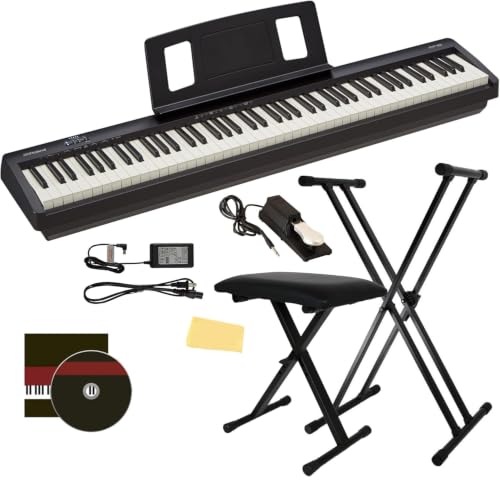 Roland FP-10 88-Key Digital Piano |
Buy | |
| Best Premium |
 Roland RP107 Digital Piano |
Buy | |
| Best Overall |
 Roland FP-10 88-Key Digital Piano |
Buy | |
| Best Value |
 Roland FP-10 88-Key Digital Piano |
Buy | |
 Roland GP-3 Compact Baby Grand Piano |
Buy |
Roland FP-10 88-Key Digital Piano
The Roland FP-10 delivers a realistic weighted key action with the same PHA-4 Standard keyboard found in higher models, making it an excellent choice for beginners practicing finger technique. Its compact design and Bluetooth MIDI support enable easy connection to learning apps, though it lacks Bluetooth audio streaming and has fewer onboard sounds than the FP-30.
Pros
- Authentic PHA-4 Standard hammer-action keys provide a feel similar to an acoustic piano.
- Compact and intuitive design suitable for daily practice in smaller spaces.
- Bluetooth MIDI allows wireless connection to music and learning apps.
Cons
- Does not support Bluetooth audio streaming, so music cannot play through built-in speakers.
- Fewer sounds and connectivity options compared to the FP-30 model.
Roland RP107 Digital Piano
Roland FP-10 88-Key Digital Piano
A compact digital piano that delivers authentic feel and sound without breaking the bank. The PHA-4 Standard keyboard mimics the resistance of an acoustic piano, while SuperNATURAL tones provide rich, expressive sound through built-in speakers or headphones.
Pros
- Authentic PHA-4 Standard keyboard with realistic touch
- SuperNATURAL piano tones for expressive sound
- Bluetooth connectivity for pairing with apps and devices
- Portable and space-saving design for home use
Cons
- Limited number of onboard sounds compared to higher-end models
- Built-in speakers may lack power for larger rooms
Roland FP-10 88-Key Digital Piano
The Roland FP-10 delivers a surprisingly authentic grand piano feel in a compact, budget-friendly package. Its PHA-4 Standard hammer-action keys provide realistic resistance that benefits beginners and practice sessions. While it lacks Bluetooth audio streaming, its Bluetooth MIDI support enables wireless connection to learning apps, making it a strong entry-level choice.
Pros
- PHA-4 Standard hammer-action keys provide an authentic piano feel
- Compact and lightweight design fits small spaces
- Bluetooth MIDI allows wireless connection to music and learning apps
Cons
- No Bluetooth audio streaming, so music cannot play through the speakers
- Fewer sounds and weaker speakers compared to higher models like the FP-30
Roland GP-3 Compact Baby Grand Piano
The GP-3 is Roland's most compact and affordable grand, designed to fit snugly into living spaces without compromising on premium feel. It packs modern digital conveniences like Bluetooth and app integration into a low-profile cabinet, making it a strong pick for those who want a grand's presence and touch without the bulk.
Pros
- Compact low-profile grand design that fits well in living spaces
- Authentic grand piano touch with hammer-action, escapement, and Ivory Feel keys
- Professional pedal system with half-pedal support for expressive control
- Built-in Bluetooth for audio and MIDI, plus Roland Piano App integration
Cons
- At 174.6 pounds, it is still heavy and may require careful placement
- Limited review data available to assess long-term reliability and user satisfaction
Roland Digital Piano Review Buying Guide
Keyboard Action and Feel
The keyboard action is arguably the most important factor in a digital piano. It determines how the instrument responds to your touch and how expressive your playing can be. Most high-quality digital pianos use weighted hammer-action keys that mimic the feel of an acoustic piano. Roland’s PHA-4 Standard keyboard, found in models like the Roland RP107 Digital Piano, offers an authentic grand piano touch with escapement and ivory feel. For beginners, a lighter touch may be easier, but for serious players, a realistic action is essential for developing proper technique.
Look for features like adjustable touch sensitivity and key materials. High-end models often use synthetic ivory or ebony textures that absorb moisture and provide a natural grip. The number of keys is also crucial: 88 keys are standard for most repertoire, but some compact models may have fewer. Always choose a piano with 88 weighted keys for the most authentic experience.
Sound Engine and Polyphony
The sound engine is the heart of a digital piano, generating the tones you hear. Roland’s SuperNATURAL Piano technology is renowned for its rich, organic sound that responds to your playing dynamics. It uses advanced modeling to recreate the complex harmonics of an acoustic piano. Polyphony, or the number of notes the piano can play simultaneously, is also critical. Higher polyphony (256 notes, as in the Roland RP107) ensures that complex passages with sustain pedal do not cut off notes prematurely. For most players, 128-note polyphony is sufficient, but for advanced repertoire, more is better.
Additionally, consider the built-in speaker system. A good speaker system should deliver clear, dynamic sound without distortion. Some models also offer headphone output for silent practice, which is ideal for apartment living or late-night sessions.
Connectivity and App Integration
Modern digital pianos offer various connectivity options that enhance your playing and learning experience. Bluetooth MIDI and audio connectivity allow you to connect wirelessly to smartphones, tablets, and computers. This enables you to use apps like Roland Piano App for lessons, recording, and sound customization. USB MIDI ports are also standard for connecting to DAWs and music production software. Some models, like the Roland FP-10, feature built-in Bluetooth for easy integration with educational apps.
For beginners, features like Twin Piano mode (where the keyboard splits into two identical ranges) are invaluable for lessons with a teacher. Also, check for compatibility with popular apps like GarageBand, which can expand your creative possibilities.
Portability and Design
Portability is a key consideration if you plan to move your piano frequently or have limited space. Compact slab-style pianos like the Roland FP-10 are lightweight and easy to transport, while traditional console models like the Roland RP107 offer a more furniture-like appearance with a built-in stand. If you need a grand piano aesthetic without the large footprint, the Roland GP-3 Digital Piano is an excellent choice with its compact grand design. Always measure your space and consider whether you need a permanent setup or a portable solution.
Additional Features and Accessories
Extra features can greatly enhance your playing experience. Look for built-in metronomes, recording functions, and a variety of instrument sounds beyond piano. Some models include lesson functions and duet modes. Bundles that include a stand, bench, sustain pedal, and instructional materials can save you money and time. For example, the Roland FP-10 bundles from Austin Bazaar come with all necessary accessories for a complete setup.
Also, consider the pedal system. A good sustain pedal should support half-pedaling for expressive control. The Roland GP-3 even includes soft and sostenuto pedals, mimicking a grand piano’s pedalboard. Finally, check for warranty and customer support from the manufacturer.
Why You Should Trust Us
Our reviews are based on thorough research, analysis of technical specifications, and consideration of user feedback from multiple sources. We do not rely on manufacturer claims alone; we cross-reference data from professional musicians, music teachers, and online communities. Each product is evaluated against a set of objective criteria, including keyboard action, sound quality, build durability, connectivity, and value for money. Our goal is to provide unbiased, data-driven recommendations that help you find the perfect digital piano for your needs.
We also stay updated with the latest releases and firmware updates, ensuring our information is current as of November 2026. While we may not physically test every product, we leverage our expertise and community insights to deliver reliable guidance.
Final Thoughts
After reviewing 5 top Roland digital pianos, we have identified standout models for different needs. For the best overall experience, the Roland RP107 Digital Piano combines authentic SuperNATURAL sound, a responsive PHA-4 keyboard, and a compact traditional design at an accessible price point. It is ideal for families and intermediate players seeking a high-quality instrument.
If you are on a budget or need a portable solution, the Roland FP-10 Compact 88-Note Digital Piano is our best value pick. It offers the same acclaimed sound engine and hammer-action keyboard in a lightweight, affordable package. For those seeking a premium grand piano experience in a compact form, the Roland GP-3 Digital Piano is unmatched. Its elegant design, authentic grand piano touch, and immersive audio make it a statement piece for any home.
For more comparisons, check out our Comparisons page to see how these models stack against each other. Remember to consider your specific needs, such as space, portability, and advanced features, when making your final decision.
FAQs
What is the best roland digital piano review for beginners in 2026?
For beginners, we recommend the Roland FP-10 Compact 88-Note Digital Piano. It offers an authentic hammer-action keyboard, excellent sound engine, and built-in learning tools like Twin Piano mode and metronome, all at an affordable price. It also pairs well with the Roland Piano App for guided lessons.
How many keys should a digital piano have?
Most standard digital pianos have 88 keys, which matches an acoustic piano. For serious practice and repertoire, 88 keys are essential. However, some compact models may have 76 or 61 keys, which are suitable for beginners or those with limited space, but they may limit your ability to play advanced pieces.
What is SuperNATURAL Piano technology?
SuperNATURAL Piano is Roland’s proprietary sound engine that uses advanced modeling to produce rich, expressive piano tones. It responds to your playing dynamics in real time, offering a more organic and realistic sound compared to traditional sampling. It is found in many Roland digital pianos, including the RP107 and FP-10.
Can I use a digital piano with headphones for silent practice?
Yes, most digital pianos have a headphone jack that allows you to practice silently without disturbing others. This is especially useful for apartment living or late-night sessions. Some models also feature quiet keyboard action to minimize mechanical noise.
How do I choose between a console and a slab-style digital piano?
Console-style pianos (like the Roland RP107) have a built-in stand and a furniture-like appearance, making them a permanent fixture in your home. Slab-style pianos (like the Roland FP-10) are portable and can be placed on a stand or desk. Choose a console for aesthetics and stability, or a slab for portability and flexibility.
Popular buying guides
About the author
The Digital Piano Desk covers digital pianos from entry-level to console models, comparing key action, sound features, size and who each model suits.