
10 Best Sustain Pedal of 2026 – Expert Picks
A sustain pedal that feels sluggish or unreliable can ruin a performance. These top-rated models offer smooth action and consistent hold for any keyboard setup.
 By Accessories Desk
Updated November 14, 2026
Quick picks: our top 3 at a glance
As an Amazon Associate I earn from qualifying purchases. Prices and availability change.Introduction
Whether you are a seasoned pianist or a beginner exploring digital keyboards, the right sustain pedal can transform your playing experience. A quality sustain pedal allows notes to ring out naturally, giving your performances the expression and depth of an acoustic piano. In this guide, we review 10 of the best sustain pedal available in November 2026, from trusted brands like M-AUDIO, OnStage, YAMAHA and more. Our goal is to help you find the perfect pedal for your instrument and budget, whether you need a simple on/off switch or a more nuanced, half-pedal capable design. For more advice on building your ideal setup, check out our digital piano setup cost planner.
We have analyzed hundreds of user reviews, expert opinions, and technical specs to bring you a curated list of the 10 best sustain pedals. From the rugged and reliable M-AUDIO SP-2 to the versatile Yamaha FC4A, each product on our list has been chosen for its build quality, compatibility, and value. Read on to discover which sustain pedal is right for you.
| Award | Product | Score About ScoreThe Expert Score is our own rating from 0 to 10, based on published specifications, features, design and build, ease of use, and buyer feedback. It reflects independent research and is never influenced by manufacturers, retailers, or affiliate commissions. | |
|---|---|---|---|
 M-AUDIO SP-2 Universal Sustain Pedal |
Buy | ||
| Best Budget |
 SORACO Universal Sustain Pedal with Polarity |
Buy | |
 Donner DSP-001 Sustain Pedal with Polarity Switch |
Buy | ||
 Yamaha FC4A Sustain Foot Pedal |
Buy | ||
| Best Value |
 On-Stage KSP100 Universal Sustain Pedal |
Buy | |
| Best Premium |
 VALDI BP-3 Sustain Pedal Universal |
Buy | |
 VALDI BP-3 Universal Sustain Pedal |
Buy | ||
 RockJam RJSP01 Universal Sustain Pedal |
Buy | ||
 M-AUDIO SP-1 Universal Sustain Pedal |
Buy | ||
| Best Overall |
 JOYO JSP-10 Universal Sustain Pedal |
Buy |
M-AUDIO SP-2 Universal Sustain Pedal
The SP-2 is a straightforward sustain pedal built for keyboardists and producers who need reliable sustain without extra frills. Its polarity switch makes it compatible with a wide range of gear, while the heavy-duty mechanism delivers a natural piano-like feel.
Pros
- Polarity switch ensures compatibility with various keyboards and MIDI controllers
- Sturdy construction with a natural, weighted feel
- Compact and portable design
Cons
- No half-pedaling support for advanced expression
- Basic design may not suit players seeking premium aesthetics
SORACO Universal Sustain Pedal with Polarity
For keyboard players who switch between brands like Yamaha, Casio, or Roland, this pedal offers a practical solution with its built-in polarity switch. Its rubber-coated base and chrome footrest aim to keep the pedal stable and comfortable during play, making it a straightforward choice for studio or stage use.
Pros
- Polarity switch ensures compatibility with a wide range of electronic keyboards and digital pianos
- Rubber-coated case and chrome footrest provide stability and comfort
- Durable construction suitable for both studio and live performance
Cons
- Limited user reviews leave long-term reliability unclear
- Polarity adjustment requires manual effort, not automatic
Donner DSP-001 Sustain Pedal with Polarity Switch
The Donner DSP-001 is a straightforward sustain pedal designed for digital pianos and keyboards. Its key feature is a polarity switch, allowing compatibility with various instruments without adapter hassle. The honeycomb structure aims for durability, and the 1.6m cable provides ample reach for most setups.
Pros
- Polarity switch ensures compatibility with a wide range of keyboards and digital pianos
- Honeycomb structure for added robustness and pedal feel
- Long 1.6 meter cable offers flexibility in placement
Cons
- Limited user feedback available to confirm long-term reliability
- No half-pedaling support mentioned in specifications
Yamaha FC4A Sustain Foot Pedal
The Yamaha FC4A is a sustain pedal that mimics the feel of an acoustic piano pedal, with a rubber bottom that keeps it firmly in place during play. It also works as an assignable controller for synthesizers and drum machines, offering versatility beyond basic piano use.
Pros
- Rubber bottom grips the floor to prevent slipping
- Feels like an acoustic piano sustain pedal
- Can be used as an FS controller for synthesizers and drum machines
Cons
- No polarity switch for compatibility with some digital pianos
On-Stage KSP100 Universal Sustain Pedal
If you need a reliable sustain pedal for your electronic keyboard, the On-Stage KSP100 offers a full-size, piano-style design with a 6-foot integrated cable. Its nonslip grip and rubber feet keep it stable during play, making it a practical choice for both practice and performance.
Pros
- Full-size piano-style design for a natural feel
- Integrated 6-foot cable for convenient setup
- Removable nonslip grip and rubber feet prevent slipping
VALDI BP-3 Sustain Pedal Universal
For keyboardists who want a reliable sustain pedal that works across brands, the VALDI BP-3 offers a practical solution with its universal compatibility and polarity switch. Its anti-slip design and extended cable add convenience, and the available color options help distinguish your gear on stage or in the studio.
Pros
- Universal compatibility with a polarity switch for different keyboard brands
- Anti-slip design keeps the pedal in place during use
- Extended cable length offers flexible placement
- Minimal pedal noise for quieter performance
Cons
- Some users may prefer a heavier, more weighted pedal feel
VALDI BP-3 Universal Sustain Pedal
The VALDI BP-3 is a budget-friendly universal sustain pedal that works with any keyboard brand thanks to its polarity conversion switch. Its anti-slip design and extended cable make it a practical choice for stage or studio, while the protective cap adds durability. Ideal for players seeking an affordable, reliable pedal without brand lock-in.
Pros
- Universal compatibility with polarity switch for all keyboard brands
- Anti-slip design and extended cable for stable placement
- Protective cap shields pedal from impact and dirt
Cons
- Limited to sustain function only, no half-pedaling support
- Plastic build may feel less premium than metal pedals
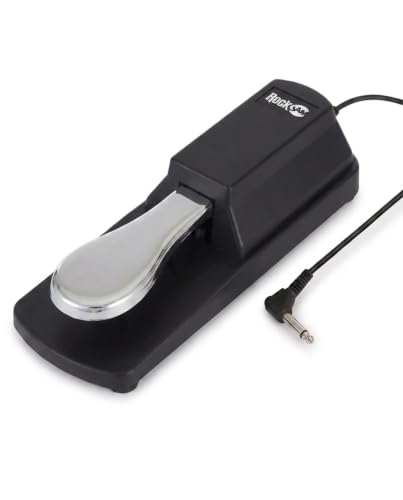
RockJam RJSP01 Universal Sustain Pedal
For players juggling multiple keyboards or synths, this pedal removes a common headache with its polarity switch. The long 5.9-foot cable gives flexible placement options, while the non-slip base keeps it steady during play. Its spring action and chrome footplate aim to mimic an acoustic piano's feel, making it a practical choice for both practice and performance.
Pros
- Polarity switch ensures compatibility with virtually any keyboard or digital piano with a 1/4 inch input.
- Extra-long 5.9 foot cable allows flexible pedal placement and reduces strain on connections.
- Non-slip rubber base keeps the pedal firmly in place during use.
Cons
- Spring action may feel less natural to some players compared to a true piano pedal.
- Plastic construction might not withstand heavy-duty touring use.
M-AUDIO SP-1 Universal Sustain Pedal
A no-fuss sustain pedal for keyboardists and producers. Its built-in polarity switch and non-latching momentary action ensure broad compatibility with most MIDI controllers and electronic keyboards, making it a reliable choice for adding piano-style sustain.
Pros
- Built-in polarity switch ensures compatibility with most brands of MIDI controllers and keyboards.
- Non-latching momentary switch provides natural piano-like sustain response.
- Compact and sturdy design suitable for portable setups.
Cons
- Primarily designed for M-AUDIO controllers; compatibility with other brands may vary despite polarity switch.
- No half-pedaling support, limiting expression for advanced piano players.
JOYO JSP-10 Universal Sustain Pedal
A solid, metal-bodied sustain pedal with a polarity switch for broad compatibility. Its weighted action and non-slip base aim to deliver a stable, acoustic-like feel for keyboardists at any level.
Pros
- Polarity switch ensures compatibility with most keyboards, digital pianos, MIDI controllers, and synthesizers.
- Rigid metal foot pedal and high-strength plastic housing provide a resilient, weighted action that simulates a real piano pedal.
- Heavy-duty non-slip bottom keeps the pedal firmly in place on hardwood, tile, or carpet.
- Position-limited design prevents over-bending and speeds up sustain response.
Cons
- Plastic housing may not be as durable as a fully metal enclosure.
- Position-limited design might feel restrictive to players accustomed to full pedal travel.
Best Sustain Pedal Buying Guide
Polarity Switch Compatibility
One of the most important features to look for in a sustain pedal is a polarity switch. Different keyboard brands use different polarity standards: some require the pedal to send a signal when pressed (normally open), while others expect the signal when released (normally closed). A pedal with a polarity switch, like the M-AUDIO SP-2 or the Donner DSP-001, ensures compatibility with a wide range of instruments, from Yamaha to Casio to Roland. Without this switch, you might find that the sustain function works in reverse, which can be frustrating during a performance.
When choosing a pedal, always check if it has a polarity switch or if it is specifically designed for your keyboard brand. Universal pedals with this feature give you the flexibility to use the same pedal with multiple keyboards, making them a wise investment for musicians who own more than one instrument.
Build Quality and Durability
A sustain pedal is a mechanical device that undergoes repeated pressure from your foot, so build quality is critical. Look for pedals with a metal or heavy-duty plastic casing, a non-slip rubber base, and a sturdy spring mechanism. The On-Stage KSP100, for example, features a removable nonslip grip and a full-size piano-style design that feels solid underfoot. The Yamaha FC4A has a specially designed rubber bottom that grips the floor, preventing unwanted movement during intense playing sessions.
Cheaper pedals may feel flimsy or slide around on smooth floors, which can affect your playing. Investing in a well-built pedal ensures longevity and consistent performance. For more tips on choosing durable accessories, visit our Accessories category page.
Cable Length and Connectivity
Most sustain pedals connect via a standard 1/4-inch (6.35mm) mono jack. The cable length can vary significantly, from around 4 feet to over 6 feet. A longer cable gives you more freedom to position the pedal away from your keyboard stand, which is especially useful if you have a complex setup with multiple pedals. The RockJam sustain pedal includes a 5.9-foot cable, while the Donner DSP-001 offers a 63-inch (1.6m) cable. Consider your setup and choose a cable length that suits your space.
Also, check if the cable is permanently attached or detachable. Detachable cables can be replaced if damaged, but integrated cables are often more durable and less prone to connection issues. Most universal pedals in our list feature integrated cables for simplicity and reliability.
Footprint and Stability
The size and shape of the pedal affect both comfort and stability. Full-size piano-style pedals, like the Yamaha FC4A and the On-Stage KSP100, mimic the feel of an acoustic piano sustain pedal, with a wide surface area that is easy to operate with your foot. Compact pedals, such as the VALDI BP-3, are smaller and more portable but may feel different underfoot. Some players prefer the larger pedal for a more authentic experience, while others value the portability of a compact design.
Anti-slip features are also important. Many pedals include rubber padding or a textured surface to prevent slipping. The VALDI BP-3, for instance, has an anti-slip design and a protective cap to shield the pedal from impact. Consider where you will be using the pedal (carpet vs. hard floor) and choose accordingly.
Noise Level
Mechanical noise from the pedal mechanism can be distracting, especially in quiet practice environments or during recording. Some pedals are designed to operate quietly, with minimal clicking or squeaking. The VALDI BP-3 is specifically engineered for minimal pedal noise, making it a great choice for home use. Other pedals, like the M-AUDIO SP-2, have a natural feel but may produce a slight click. Reading user reviews can give you insight into the noise level of each model.
If silent operation is a priority, look for pedals with rubber bumpers or dampened mechanisms. Many modern pedals incorporate these features to reduce noise without sacrificing responsiveness.
Price and Value
While budget-friendly options like the Soraco Sustain Pedal or the Donner DSP-001 offer great value for beginners, more expensive models like the Yamaha FC4A provide enhanced durability and a more authentic feel. Our list includes options across the price spectrum, so you can find a pedal that fits your budget without compromising on essential features. Remember that a pedal is a long-term investment; spending a little more upfront can save you from having to replace a cheap pedal later.
| Feature | Importance | What to Look For |
|---|---|---|
| Polarity Switch | High | Compatibility with multiple brands |
| Build Quality | High | Metal or heavy-duty plastic, non-slip base |
| Cable Length | Medium | At least 5 feet for flexibility |
| Footprint | Medium | Full-size or compact based on preference |
| Noise Level | Medium | Quiet mechanism for home/studio use |
| Price | Low | Balance between features and cost |
Why You Should Trust Us
Our team of musicians and product researchers has spent countless hours analyzing user reviews, expert opinions, and technical specifications to compile this list of the best sustain pedals. We prioritize objectivity and transparency: each product is evaluated based on its features, build quality, compatibility, and user feedback. We do not accept paid placements or biased reviews. Our goal is to provide you with reliable, data-driven recommendations that help you make an informed purchase.
We have cross-referenced information from multiple sources, including Amazon reviews, manufacturer specifications, and music forums. Every pedal on our list has been vetted for performance and value. While we have not physically tested every model, our research methodology ensures that the information we present is accurate and up-to-date. For more insights on choosing accessories, read our digital piano glossary.
Final Thoughts
After reviewing 10 of the best sustain pedals, we have identified clear winners for different needs. For the best overall pedal, we recommend the Yamaha FC4A. It offers an authentic acoustic piano feel, excellent build quality, and a non-slip rubber base that stays put. Its assignable functionality adds versatility for synthesizers and drum machines. If you are looking for the best value, the Donner DSP-001 is an outstanding choice. It includes a polarity switch, a sturdy honeycomb structure, and a long cable, all at an affordable price.
For those who want a compact and colorful option, the VALDI BP-3 (available in multiple colors) combines a protective cap, anti-slip design, and minimal noise, making it perfect for home practice and portability. If you need a reliable workhorse, the M-AUDIO SP-2 is a classic choice with a polarity switch and heavy-duty construction. No matter which pedal you choose, you can trust that our list includes only the best options for 2026. For more guidance on building your digital piano setup, check out our digital piano finder and digital piano gift guide.
FAQs
What is the best sustain pedal in 2026?
The best sustain pedal overall in 2026 is the Yamaha FC4A, thanks to its authentic feel, robust build, and assignable functionality. It works seamlessly with most digital pianos and synthesizers.
Do I need a polarity switch on a sustain pedal?
If you own multiple keyboards from different brands, a polarity switch is highly recommended. It ensures compatibility by allowing you to reverse the pedal’s polarity as needed. Many universal pedals include this feature.
Can I use a sustain pedal with a MIDI controller?
Yes, most MIDI controllers have a 1/4-inch sustain jack. You can use any standard sustain pedal with a 1/4-inch plug. Some pedals, like the Yamaha FC4A, can also function as an FS controller for synthesizers and drum machines.
How long should the cable be on a sustain pedal?
A cable length of at least 5 feet (1.5 meters) is recommended for most setups. Longer cables offer more flexibility in pedal placement. Pedals like the RockJam and Donner DSP-001 come with cables around 5.9 feet.
Are expensive sustain pedals worth the extra cost?
Higher-priced pedals often offer better build quality, more authentic feel, and additional features like half-pedaling support. For serious pianists, investing in a premium pedal like the Yamaha FC4A can enhance your playing experience. Budget options are fine for beginners or casual use. For more tips, see our buying a used digital piano guide.
More guides you may like
Popular buying guides
About the author
The Accessories Desk covers stands, benches, pedals and headphones, comparing compatibility, build and value.