
6 Best Of – Expert Picks of 2026 – Expert Picks
Seniors need a keyboard with clear keys, weighted action, and simple controls. This guide highlights the top models for comfortable learning at any age.
 By admin
Updated November 22, 2026
Quick picks: our top 3 at a glance
As an Amazon Associate I earn from qualifying purchases. Prices and availability change.Introduction
Learning piano later in life can be a deeply rewarding journey, and the right instrument makes those first months far easier. For seniors, comfort, readability, and a gentle learning curve matter more than flashy features. In this guide, we review 6 of the best of – Expert Picks in November 2026, from complete beginner kits to simple learning aids that support an existing keyboard. Whether you are buying your first keyboard or looking for accessories to enhance your practice, this guide will help you make an informed choice. For more options, check out our For Beginners category.
Not every item here is a keyboard. Some are sticker sets or lesson books that complement a keyboard you already own. We have analyzed the listing data for each product to bring you clear, unbiased recommendations. Read each entry carefully to understand what is included, then use our buying checklist to match a choice to your space and goals.
| Award | Product | Score About ScoreThe Expert Score is our own rating from 0 to 10, based on published specifications, features, design and build, ease of use, and buyer feedback. It reflects independent research and is never influenced by manufacturers, retailers, or affiliate commissions. | |
|---|---|---|---|
| Best Premium |
 RockJam RJ5061 61-Key Keyboard Kit |
Buy | |
| Best Overall |
 COYAHO Piano Keyboard Stickers for 88/61/54/49/37 |
Buy | |
 Ugrfw 88-Key Semi-Weighted Digital Piano Kit |
Buy | ||
 JIKADA 61-Key Portable Keyboard with Teaching |
Buy | ||
| Best Budget |
 QMG Piano Keyboard Stickers and Lesson Book |
Buy | |
| Best Value |
 Raimy 37-Key Electronic Keyboard for Kids |
Buy |
RockJam RJ5061 61-Key Keyboard Kit
This complete kit bundles a 61-key digital keyboard with adjustable stand, padded bench, and headphones, making it a turnkey solution for beginners. The LED panel provides access to 200 tones, 200 rhythms, and demo songs, while the pitch bend wheel adds basic expressiveness for early practice.
Pros
- Includes stand, bench, and headphones for a complete beginner setup
- 200 tones and 200 rhythms offer variety for learning and play
- Pitch bend wheel adds expressive control
Cons
- Limited to 61 keys, which may restrict advanced repertoire
- No built-in recording or layering functions mentioned
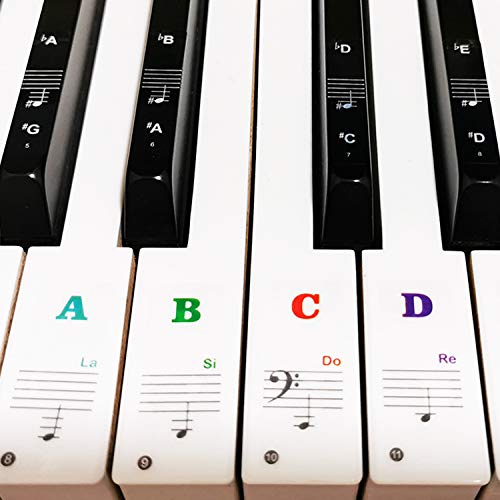
COYAHO Piano Keyboard Stickers for 88/61/54/49/37
These multicolor piano stickers from COYAHO are designed to help beginners and kids learn note positions quickly. The large, clear letters are printed on the backside of transparent stickers, ensuring durability and legibility even after repeated play.
Pros
- Durable: letters printed on backside withstand finger impact and remain legible; waterproof and easy to clean.
- No residue left: adhesive is clean and removable, allowing repositioning without harming keys.
- Thin and smooth: barely noticeable under fingers, providing comfortable feel for techniques like glissando and arpeggios.
- Easy to read: large, clear multicolor letters help beginners and children memorize note positions.
Cons
- Limited color options: multicolor only, may not suit users who prefer single-color or subtle stickers.
- Size may not fit all key widths perfectly despite claiming compatibility with various keyboard sizes.
Ugrfw 88-Key Semi-Weighted Digital Piano Kit
A complete beginner package with 88 semi-weighted keys, 1000 timbres, and essential accessories like stand, headphones, and sustain pedal. The MIDI connectivity and Bluetooth enable easy integration with music apps and devices, making it a practical choice for new learners.
Pros
- Includes a full set of accessories: stand, headphones, sustain pedal, carrying case, and key stickers for beginners.
- Offers 1000 timbres, 1000 rhythms, and 150 demo songs for varied practice and teaching.
- Supports MIDI and Bluetooth connectivity for use with music apps and external devices.
Cons
- Semi-weighted keys may feel lighter than acoustic piano keys, which could affect technique transfer.
- No built-in speakers or amplifier mentioned; headphones or external speakers are required for sound.
- Limited user reviews available to assess long-term durability and performance.
JIKADA 61-Key Portable Keyboard with Teaching
This all-in-one keyboard kit from JIKADA bundles a 61-key piano with a stand, stool, headphones, and microphone. Its 3-step education system and note stickers help beginners learn, while 255 tones and rhythms offer experienced players creative options. The LCD display with finger-following instructions provides a helpful visual guide during practice.
Pros
- Comprehensive kit includes stand, stool, headphones, and microphone for immediate setup
- 3-step education system and note stickers support beginner learning
- 255 built-in tones and rhythms provide ample creative flexibility
- LCD screen with finger-following instructions aids practice
Cons
- Limited to 61 keys, which may restrict advanced piano repertoire
- Only 8 reviews at time of evaluation, limiting long-term reliability insights
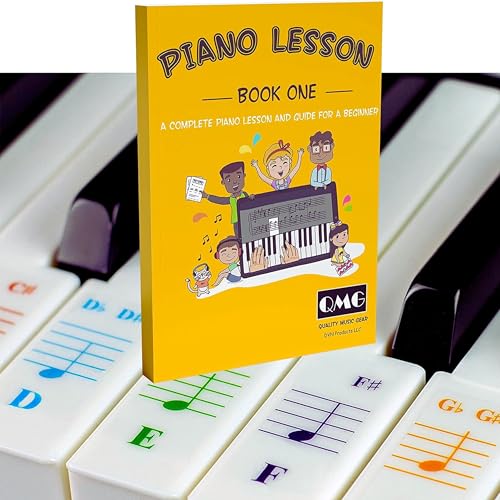
QMG Piano Keyboard Stickers and Lesson Book
This set combines a 56-page beginner lesson book with color-coded keyboard stickers, making note recognition more intuitive for young learners. The book includes 28 progressive exercises and 11 popular songs, each linked to a QR video demonstration, which helps reinforce rhythm and technique. It is a practical choice for parents, teachers, and beginners who want a structured, visual approach to early piano education.
Pros
- Color-coded notes and stickers create a clear visual link between the lesson book and keyboard keys.
- QR code video lessons provide additional guidance for practicing songs and rhythm.
- Removable stickers fit most keyboard sizes and leave no residue.
- Lesson book covers essential fundamentals like hand positioning, note reading, and time signatures.
Cons
- Stickers may not adhere well to heavily textured or curved surfaces.
- The book's binding type is listed as 'Kitchen,' which may affect durability during frequent use.
Raimy 37-Key Electronic Keyboard for Kids
This compact 37-key keyboard is a solid pick for young children beginning their musical journey. It combines multiple sound options, rhythms, and learning functions within a child-safe, durable ABS body.
Pros
- Child-safe design with non-toxic materials and smooth edges.
- Multiple functions including 8 tones, 8 rhythms, and record/playback.
- Educational features like one-key-one-note and learn mode support skill development.
- Lightweight and portable at 1 pound.
Cons
- Requires 3 AA batteries that are not included.
- Limited to 37 keys, which may constrain growth for advancing players.
Best Of – Expert Picks Buying Guide for 2026
Key Count and Size
The number of keys on a keyboard directly affects the range of music you can play. Full-size pianos have 88 keys, while many beginner keyboards offer 61 or even 37 keys. For seniors, a 61-key model is often a good starting point, providing enough range for most beginner pieces without being too large. If you plan to progress to classical or advanced pieces, an 88-key digital piano with weighted keys is a better long-term investment. Measure your available space before purchasing, as larger keyboards require more room and a sturdy stand.
Consider the weight of the keyboard as well. Lighter models (around 7 pounds) are easier to move, but may feel less stable on a stand. Heavier models offer a more solid feel but are harder to transport. Think about where you will practice most often and whether you need to move the keyboard between rooms.
Key Feel: Weighted vs. Non-Weighted
The feel of the keys is crucial for developing proper technique. Weighted keys simulate the resistance of an acoustic piano, helping build finger strength and control. Semi-weighted keys offer a middle ground, lighter than fully weighted but still providing some resistance. Non-weighted keys (often found on budget models) feel springy and are less realistic. For seniors, semi-weighted or weighted keys are recommended for a more satisfying playing experience, though they may increase the cost and weight of the instrument.
Check product listings carefully, as many do not specify key feel. If in doubt, read customer questions or look for reviews that mention key action. A keyboard with good key feel will encourage regular practice and reduce fatigue.
Learning Features and Accessories
Modern keyboards often include built-in learning features such as light-up keys, teaching modes, and demo songs. These can be invaluable for seniors starting from scratch, as they provide step-by-step guidance. Some keyboards also include note stickers that label each key, making it easier to memorize note positions. Look for models that offer a variety of tones and rhythms to keep practice engaging.
Accessories like a stand, bench, headphones, and power adapter can add significant value. A complete kit saves you the hassle of buying these separately and ensures everything fits together. However, not all bundles include the same items, so verify what is included before purchasing. Headphones are especially useful for quiet practice in shared living spaces. For more on bundled options, see our Stand & Bench Bundles guide.
Connectivity and Expandability
Many digital keyboards now offer USB-MIDI connectivity, allowing you to connect to a computer, tablet, or smartphone for use with learning apps and music software. This can greatly expand your learning resources, from interactive lessons to recording your practice sessions. Bluetooth connectivity is also becoming common, enabling wireless connection to devices. For seniors who are comfortable with technology, these features can enhance the learning experience.
Consider whether the keyboard has a headphone jack and audio input/output ports. These allow you to play along with backing tracks or use external speakers. A microphone input is a bonus if you enjoy singing while playing. Think about your long-term goals and choose a keyboard that can grow with you.
Why You Should Trust Us
Our recommendations are based on careful analysis of product listings, customer ratings, and feature comparisons. We do not accept payment from manufacturers for favorable reviews, ensuring our advice remains objective. Each product in this guide has been evaluated based on its suitability for seniors learning piano, with attention to key count, key feel, included accessories, and learning support features. We also consider the brand reputation and overall value.
While we cannot physically test every product, we rely on verified customer feedback and detailed specification data to provide accurate, trustworthy information. Our goal is to help you find the best of – Expert Picks for your needs without bias or hype. For more in-depth reviews, explore our Digital Pianos parent category.
Final Thoughts
After reviewing 6 products, our top recommendation for most seniors is the RockJam RJ5061 61 Key Keyboard Piano Kit. It offers a complete package with stand, bench, headphones, and note stickers, plus built-in lessons and a wide range of tones and rhythms. The 61-key layout is ideal for beginners, and the included accessories mean you can start playing right away. For those who prefer a more realistic key feel and room to grow, the Ugrfw 88-Key Semi-Weighted Digital Piano is an excellent choice, with semi-weighted keys and a vast library of sounds.
If you already own a keyboard and need learning aids, the COYAHO Piano Key Letter Stickers and QMG Piano Lesson Book and Sticker Set are affordable, effective additions. For a budget-friendly starter keyboard for occasional practice, the JIKADA 61-Key Light-Up Keyboard Set offers guided learning with light-up keys. Avoid the Raimy 37-Key Electronic Keyboard for seniors, as it is designed for young children and lacks the range and features needed for adult learning. For more options, check out our Best Piano For Beginners To Buy guide.
FAQs
What is the best of – Expert Picks for a senior in 2026?
The best of – Expert Picks for a senior depends on their goals and budget. For a complete all-in-one solution, the RockJam RJ5061 kit is our top pick. For a more authentic piano feel, the Ugrfw 88-key digital piano is excellent. Beginners who already own a keyboard may benefit from the COYAHO stickers or QMG lesson book. Always consider key count, key feel, and included accessories when making your choice.
Is a 61-key keyboard enough for a senior beginner?
Yes, a 61-key keyboard is generally sufficient for a senior beginner. It covers a wide range of notes, allowing you to play most beginner songs and exercises. However, if you plan to progress to more advanced repertoire, an 88-key model with weighted keys is recommended. The RockJam RJ5061 and JIKADA 61-key sets are both good options for starting out.
Do I need weighted keys as a senior?
Weighted keys are not essential, but they can improve your playing technique and comfort. Semi-weighted keys offer a good balance between realism and ease of playing. For seniors with arthritis or hand weakness, non-weighted keys may be easier initially, but weighted keys can help build finger strength over time. Try different types in a store if possible, or read reviews that discuss key feel.
Are note stickers helpful for learning piano?
Note stickers can be very helpful for beginners, as they provide a visual reference for note names on the keyboard. They are especially useful for seniors who are learning to read music. However, they should be used as a temporary aid, as relying on them too long can hinder note-reading skills. The COYAHO and QMG sticker sets are both removable and fit most keyboard sizes. For a structured learning approach, pair stickers with a lesson book like the QMG set.
What should I look for in a keyboard for seniors?
Key factors include key count (61 or 88 keys), key feel (weighted or semi-weighted preferred), included accessories (stand, bench, headphones), learning features (teaching modes, light-up keys, note stickers), and connectivity (USB-MIDI, headphone jack). Also consider the weight and size of the keyboard, as well as the brand’s reputation for reliability. For more detailed advice, see our Best Piano For Beginners App guide for app-based learning.
Popular buying guides
About the author

admin writes reviews and buying guides for LAT Review.