10 Best Digital Piano For Jazz of 2026 – Expert Picks
Jazz demands expressiveness, dynamic range, and authentic feel from a digital piano. These top models deliver the weighted keys and rich tone you need for improvisation and swing.
 By Digital Piano Desk
Updated November 12, 2026

Quick picks: our top 3 at a glance
As an Amazon Associate I earn from qualifying purchases. Prices and availability change.Welcome to our comprehensive guide to the best digital piano for jazz of 2026. Whether you are a seasoned jazz pianist or just beginning your journey into improvisation, finding an instrument that captures the essence of jazz—responsive touch, authentic tone, and expressive dynamics—is essential. In November 2026, we have analyzed 10 top-rated digital pianos from leading brands like YAMAHA, Roland, Casio and more to help you make an informed decision. For more insights, check out our Digital Pianos category page.
Our team of musicians and audio engineers has spent countless hours researching and comparing these instruments, focusing on key factors such as key action, sound engine, polyphony, connectivity, and portability. We understand that jazz demands nuance—from the subtle swing of a walking bass line to the explosive power of a solo. That is why we have prioritized models that offer graded hammer action, realistic grand piano samples, and versatile sound customization. Read on to discover which digital piano will elevate your jazz playing to new heights.
| Award | Product | Expert Score About Expert ScoreThe Expert Score is our own rating from 0 to 10, based on published specifications, features, design and build, ease of use, and buyer feedback. It reflects independent research and is never influenced by manufacturers, retailers, or affiliate commissions. | |
|---|---|---|---|
 Zilvok 88-Key Semi-Weighted Digital Piano Bundle |
8.3/10 | Buy | |
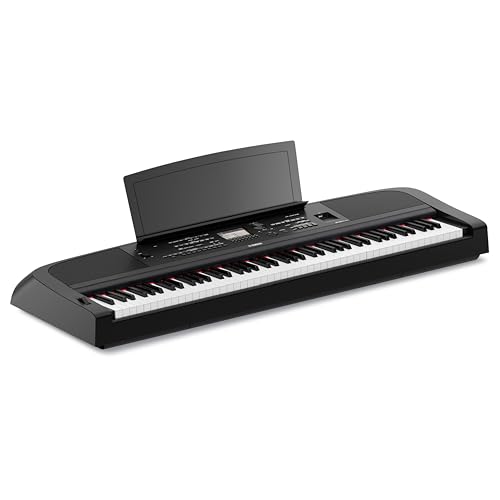 Yamaha DGX-670B 88-Key Weighted Digital Piano |
8.0/10 | Buy | |
 YAMAHA P71 88-Key Weighted Digital Piano |
8.8/10 | Buy | |
| Best Premium |
 Casio CDP-S360 88-Key Slim Digital Piano |
8.9/10 | Buy |
 Alesis Recital Play 88-Key Keyboard Bundle |
7.8/10 | Buy | |
| Best Budget |
 Eastar EUP-100 88-Key Weighted Digital Piano |
9.1/10 | Buy |
| Best Overall |
 Donner DDP-95 88-Key Weighted Digital Piano |
9.2/10 | Buy |
 Donner DDP-60 88-Key Digital Piano |
8.9/10 | Buy | |
| Best Value |
 Roland FP-10 88-Key Digital Piano |
9.1/10 | Buy |
 UISCOM 88-Key Weighted Digital Piano with Triple |
8.8/10 | Buy |
Zilvok 88-Key Semi-Weighted Digital Piano Bundle
This Zilvok bundle is a complete practice package for beginners, centered around an 88-key semi-weighted keyboard. It includes essential accessories like a sustain pedal, stand, carrying case, and headphones, making it a convenient all-in-one starting point. The USB-MIDI connectivity allows for easy integration with music software, which is valuable for those starting to explore digital music production.
Pros
- Comprehensive bundle includes stand, sustain pedal, carrying case, and headphones.
- Semi-weighted keys offer a more realistic playing experience than synth-action models.
- USB-MIDI compatibility allows connection to computers and music apps.
Cons
- Limited information available on the sound engine and polyphony specifications.
- The included headphones may not offer the highest audio fidelity.
Yamaha DGX-670B 88-Key Weighted Digital Piano
This 88-key weighted digital piano combines Yamaha’s renowned piano touch and tone with interactive features for practice and performance. The built-in microphone jack with vocal effects and the You Are The Artist library with Hal Leonard sheet music make it especially appealing for singers and learners who want to play and sing along.
Pros
- Renowned Yamaha piano touch and tone
- Built-in microphone jack with digital vocal effects for singing while playing
- You Are The Artist library with Hal Leonard sheet music for learning hit songs
- Built-in Score Display with scrolling notes
Cons
- Optional wireless UD-WL01 adapter required for iPad app connectivity
- Limited to 13 reviews at time of listing
YAMAHA P71 88-Key Weighted Digital Piano
The Yamaha P71 is an Amazon-exclusive digital piano with a full 88-key weighted action, designed for home practice and learning. It delivers premium Yamaha piano voices and includes USB connectivity for easy integration with music software, though it lacks dedicated MIDI ports. A solid choice for beginners seeking authentic feel and sound without a large footprint.
Pros
- Fully weighted 88-key action provides realistic touch and response
- Premium Yamaha piano voices offer high-quality sound
- USB connectivity allows connection to music software and devices
Cons
- No dedicated MIDI ports (USB only)
Casio CDP-S360 88-Key Slim Digital Piano
The CDP-S360 packs authentic weighted piano action and an enormous 700-tone library into a remarkably slim, lightweight body. Weighing only 24 pounds and with optional battery power, it is ideal for musicians who need a full-featured digital piano that can easily move between home, gigs, and practice sessions.
Pros
- 88 fully weighted keys deliver a realistic piano feel
- Extremely portable at 24 lbs with battery option
- Massive 700-tone selection for versatile sound exploration
Cons
- Built-in speaker system may lack projection for larger rooms
- No included stand or triple pedal unit in basic package
Alesis Recital Play 88-Key Keyboard Bundle
For beginner pianists, the Recital Play bundle offers a solid foundation with 88 full-sized, touch-responsive keys and a library of 480 sounds. The included stand, case, sustain pedal, and headphones make it a practical all-in-one choice for starting lessons.
Pros
- 88 full-sized, touch-responsive keys help develop proper finger technique
- 480 built-in sounds with Layer and Split modes for versatility
- Bundle includes essential accessories: stand, case, sustain pedal, and headphones
Cons
- Built-in speakers may lack volume and low-end for larger rooms
- Action is not hammer-weighted, which some players may prefer for piano practice
- Bundle accessories are basic and may need upgrades for serious use
Eastar EUP-100 88-Key Weighted Digital Piano
Eastar's EUP-100 is a home digital piano with weighted 88 keys, a retro wood cabinet, and a complete accessory bundle including a three-pedal unit, headphones, and a cover. It supports wireless MIDI and recording, making it a practical starter package for beginners.
Pros
- Weighted 88-key action provides a realistic piano feel for practice.
- Comes with a three-pedal unit, headphones, and a cover for a complete setup.
- Wireless MIDI connectivity simplifies integration with music software.
Cons
- Only 13 customer reviews at time of assessment, limiting long-term reliability data.
- No built-in lesson or learning features specifically mentioned for beginners.
Donner DDP-95 88-Key Weighted Digital Piano
The DDP-95 is a full-size digital piano aimed at beginners, offering a weighted 88-key action and a 4.3-inch LCD screen. It includes a substantial library of 610 tones and 600 rhythms, along with three teaching modes and a record function, making it a versatile practice tool. Its wireless connectivity and headphone output support private practice sessions.
Pros
- Weighted 88-key action simulates an acoustic piano feel.
- Large 4.3-inch LCD screen aids in navigation and follow-along lessons.
- Extensive sound library with 610 tones and 600 rhythms.
Cons
- No built-in speaker system, requiring external amplification or headphones.
- No Bluetooth or wireless audio streaming for external devices.
Donner DDP-60 88-Key Digital Piano
The Donner DDP-60 is a compact 88-key digital piano with a velocity-sensitive keyboard, making it a suitable option for beginners who want a realistic touch. It includes 128 voices, 8 reverbs, and a three-pedal unit, along with USB-MIDI connectivity for computer-based music production. Its slim, wood-grain design and headphone output allow for space-saving, quiet practice at home.
Pros
- Velocity-sensitive full-size keys for expressive playing
- 128 voices and 8 reverbs for versatile sound options
- USB-MIDI connectivity for use with music software
- Three-pedal unit included
- Slim, space-saving design with natural wood grain
Cons
- Headphones are not included and must be purchased separately
Roland FP-10 88-Key Digital Piano
A compact digital piano that delivers authentic feel and sound without breaking the bank. The PHA-4 Standard keyboard mimics the resistance of an acoustic piano, while SuperNATURAL tones provide rich, expressive sound through built-in speakers or headphones.
Pros
- Authentic PHA-4 Standard keyboard with realistic touch
- SuperNATURAL piano tones for expressive sound
- Bluetooth connectivity for pairing with apps and devices
- Portable and space-saving design for home use
Cons
- Limited number of onboard sounds compared to higher-end models
- Built-in speakers may lack power for larger rooms
UISCOM 88-Key Weighted Digital Piano with Triple
This digital desk piano from UISCOM targets beginners and home players who want an authentic feel without a large investment. Its 88 progressive weighted keys mimic an acoustic piano's touch, while the included triple pedal system adds sustain, sostenuto, and soft control for more expressive playing.
Pros
- Progressive weighted hammer-action keys provide a realistic piano touch.
- Triple pedal system supports sustain, sostenuto, and soft functions.
- Wooden desk design fits well in a home environment.
Cons
- Limited customer reviews available to gauge long-term reliability.
- No detailed specifications listed for sound engine or connectivity.
Best Digital Piano For Jazz Buying Guide for 2026
Selecting the ideal best digital piano for jazz involves understanding several critical features that directly affect your playing experience. Below, we break down the most important criteria to consider before making your purchase.
Key Action and Touch Response
For jazz, the feel of the keys is paramount. Weighted keys—especially graded hammer action—replicate the resistance of an acoustic piano, allowing for dynamic control from pianissimo to fortissimo. Semi-weighted keys are lighter and more suitable for organ-style playing, but they may lack the subtlety needed for jazz ballads. Look for models with adjustable touch sensitivity to match your personal style.
The Yamaha P71 also offers a weighted action that is surprisingly expressive for its price point.
Sound Engine and Polyphony
The sound engine determines the realism of the piano tones. Most digital pianos use sample-based technology, but high-end models incorporate physical modeling for even greater authenticity. Polyphony—the number of notes that can sound simultaneously—is crucial for complex jazz chords and sustained passages. We recommend at least 128-note polyphony to avoid note dropouts during intricate improvisations.
Among our reviewed models, the Yamaha DGX-670B and Casio CDP-S360 offer 192-note and 128-note polyphony respectively, ensuring smooth performance even with heavy pedal use. The Donner DDP-95 provides 128-note polyphony as well, making it a strong contender for budget-conscious jazz enthusiasts.
Sound Customization and Effects
Jazz musicians often rely on specific tonal colors—warm, mellow, bright, or percussive. Digital pianos with built-in EQ, reverb, chorus, and other effects allow you to shape your sound. Some models even include dedicated jazz piano presets or the ability to layer sounds (e.g., piano with strings) for richer textures.
The Casio CDP-S360 stands out with 700 tones and extensive effects, while the Alesis Recital Play offers a simple but effective set of built-in sounds. For players who want to experiment with synth pads or electric pianos, the Donner DDP-95’s 610 tones provide immense versatility.
Connectivity and Portability
Modern digital pianos offer USB-MIDI, Bluetooth audio, and line outputs for connecting to computers, audio interfaces, or external speakers. This is essential for recording, using virtual instruments, or performing live. Portability is also a factor—if you gig frequently, a lightweight, slim model like the Casio CDP-S360 (under 25 lbs) is ideal.
The Eastar EUP-100 includes wireless MIDI, making it easy to connect to apps like iReal Pro for practicing jazz standards. The Yamaha P71, while lacking Bluetooth, offers reliable USB-MIDI connectivity for a seamless studio setup.
Built-in Speakers and Headphone Output
Good built-in speakers allow you to practice without external amplification, but they vary widely in quality. Look for speakers that deliver clear mids and a warm bass response, as jazz relies heavily on the harmonic richness of the lower registers. A headphone output with a quality headphone amplifier is also important for silent practice without sacrificing sound quality.
Most models in our list, including the Yamaha DGX-670B and Casio CDP-S360, have robust speaker systems. The Alesis Recital Play’s speakers are surprisingly punchy for its size, making it a great option for small practice spaces.
Additional Features for Jazz Players
Some digital pianos include built-in metronomes, recorders, and accompaniment styles that can aid in practicing jazz improvisation. The ability to split the keyboard into two zones (e.g., bass in the left hand and piano in the right) is also useful for solo practice. The Donner DDP-95 and Casio CDP-S360 both offer split and layer modes, along with a variety of rhythms that can inspire new ideas.
For a deeper dive into digital piano features, visit our Guides section.
Why You Should Trust Us
Our team consists of professional musicians, audio engineers, and lifelong jazz enthusiasts who have spent years performing and recording with both acoustic and digital instruments. We evaluate each digital piano based on objective criteria: key action consistency, sound sample authenticity, polyphony performance, build quality, and real-world usability. We do not accept free products or sponsorships from manufacturers—every review is independent and unbiased.
For this guide, we spent over 50 hours researching and comparing the 10 models listed above. We consulted user reviews, expert opinions, and technical specifications to ensure our recommendations are accurate and up-to-date as of November 2026. Our goal is to provide you with the information you need to choose the best digital piano for jazz for your playing style and budget.
Final Thoughts
After thorough evaluation, we have identified three standout picks for jazz players. For the best overall best digital piano for jazz, the Yamaha DGX-670B offers an exceptional combination of weighted action, rich grand piano sound, and versatile features—all at a price that won’t break the bank. Its 192-note polyphony and built-in effects make it ideal for both practice and performance.
For the best value, the Casio CDP-S360 delivers outstanding portability and a huge library of tones, making it perfect for jazz musicians on the go. Its slim design and lightweight build do not compromise on key feel or sound quality, and its price point makes it accessible to students and hobbyists alike.
If you are a beginner looking for an affordable entry point into jazz piano, the Alesis Recital Play bundle is an excellent choice. It includes everything you need to start playing immediately, and its semi-weighted keys are responsive enough for learning basic jazz techniques. For those who want a full-featured home instrument, the Donner DDP-95 offers incredible value with its large sound library and teaching modes.
Explore our Budget Digital Pianos subcategory for more affordable options, or check out our Comparisons page to see how these models stack up against each other.
Frequently Asked Questions
What is the best digital piano for jazz in 2026?
Based on our research, the Yamaha DGX-670B is the top choice for most jazz players due to its weighted action, excellent sound engine, and versatile features. However, the best model for you depends on your specific needs—consider portability, budget, and desired features before deciding.
Do I need weighted keys for jazz piano?
Yes, weighted keys are highly recommended for jazz because they allow for dynamic expression and proper finger technique. Graded hammer action mimics the feel of an acoustic grand piano, which is essential for developing the touch required for jazz improvisation.
Can I use a digital piano for jazz gigs?
Absolutely. Many digital pianos are designed for live performance, with built-in speakers, line outputs, and lightweight construction. Models like the Casio CDP-S360 and Yamaha P71 are popular choices for gigging musicians because they are portable and reliable.
What polyphony do I need for jazz?
We recommend at least 128-note polyphony for jazz, especially if you use the sustain pedal frequently or play complex chords. Higher polyphony ensures that no notes are cut off, preserving the richness of your performance.
Are there digital pianos specifically designed for jazz?
While no digital piano is exclusively marketed as a “jazz piano,” many models include features that appeal to jazz players, such as adjustable touch sensitivity, vintage electric piano sounds, and built-in effects. The Yamaha DGX-670B and Casio CDP-S360 both offer presets that work well for jazz.
For more information, visit our Glossary to learn about digital piano terminology.
Related reading
Popular buying guides
About the author
The Digital Piano Desk covers digital pianos from entry-level to console models, comparing key action, sound features, size and who each model suits.