6 Best Digital Piano Comparison of 2026 – Expert Picks
Shopping for a digital piano can feel overwhelming. Our roundup of the best digital piano comparison for 2026 covers top models from YAMAHA, Roland, and Donner.
 By Digital Piano Desk
Updated November 12, 2026
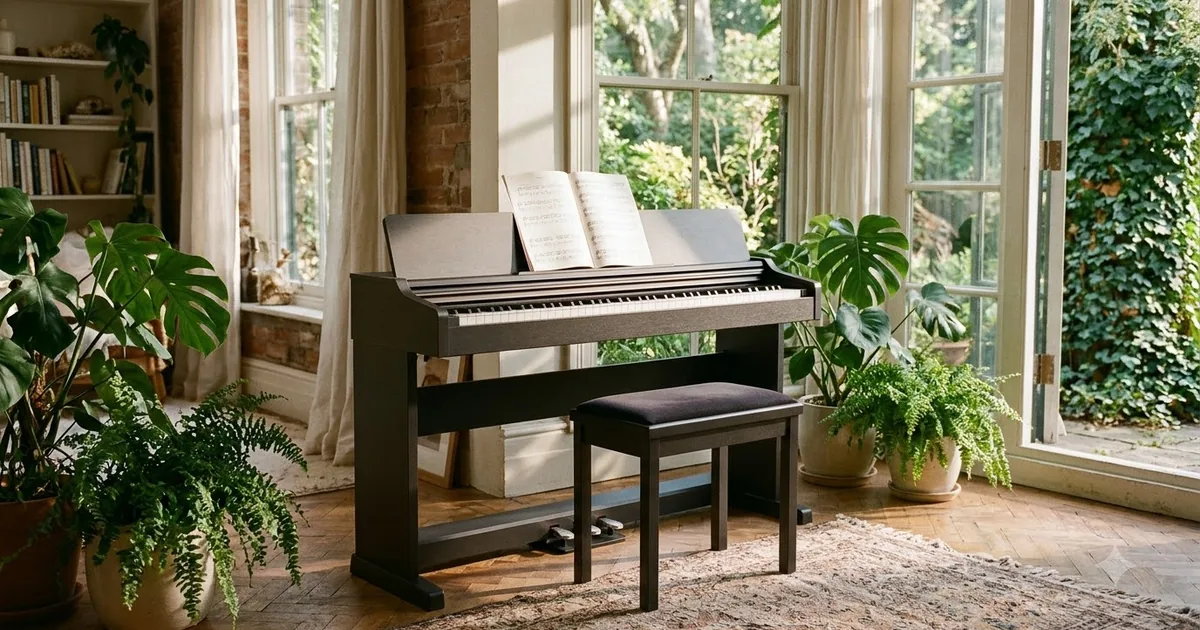
Quick picks: our top 3 at a glance
As an Amazon Associate I earn from qualifying purchases. Prices and availability change.Finding the perfect digital piano can be overwhelming, especially with so many options on the market. Whether you’re a beginner looking for a realistic feel or an experienced player seeking advanced features, our best digital piano comparison guide is here to help. We’ve analyzed 6 top models from leading brands like YAMAHA, Roland, Donner to bring you a comprehensive comparison. In November 2026, the digital piano landscape continues to evolve, and we’ve updated our picks to reflect the best choices for every budget and skill level. For more insights, check out our Digital Pianos category page.
Our team spent hours researching specifications, reading user feedback, and comparing key features to ensure this guide is both accurate and helpful. From weighted keys to sound engines, we cover everything you need to know before making a purchase. Let’s dive into the top picks and help you find the perfect digital piano for your needs.
| Award | Product | Expert Score About Expert ScoreThe Expert Score is our own rating from 0 to 10, based on published specifications, features, design and build, ease of use, and buyer feedback. It reflects independent research and is never influenced by manufacturers, retailers, or affiliate commissions. | |
|---|---|---|---|
| Best Premium |
 Yamaha YDP-146 Arius 88-Key Digital Piano |
8.9/10 | Buy |
 Yamaha DGX-670B 88-Key Weighted Digital Piano |
8.0/10 | Buy | |
| Best Value |
 YAMAHA P71 88-Key Weighted Digital Piano |
8.8/10 | Buy |
 Donner DEP-20 88-Key Weighted Digital Piano |
8.9/10 | Buy | |
| Best Overall |
 Roland FP-10 88-Key Digital Piano |
9.2/10 | Buy |
| Best Budget |
 Roland FP-10 88-Key Digital Piano |
9.1/10 | Buy |
Yamaha YDP-146 Arius 88-Key Digital Piano
The Yamaha Arius YDP-146 is a solid choice for beginners and intermediate players who want an authentic piano feel at home. Its Graded Hammer Standard keyboard mimics the touch of an acoustic piano, while the CFX Concert Grand voice delivers rich, resonant tones. With a classic upright cabinet and included bench and 3-pedal unit, it's a complete package for serious practice.
Pros
- Graded Hammer Standard (GHS) keyboard with Touch Response replicates acoustic piano feel
- CFX Concert Grand piano voice provides high-quality, professional sound
- Includes 3-pedal unit and bench for a complete setup
- Classic upright design fits well in home environments
Cons
- No built-in recording or accompaniment features (based on available specs)
- Limited voice selection (only one piano voice highlighted)
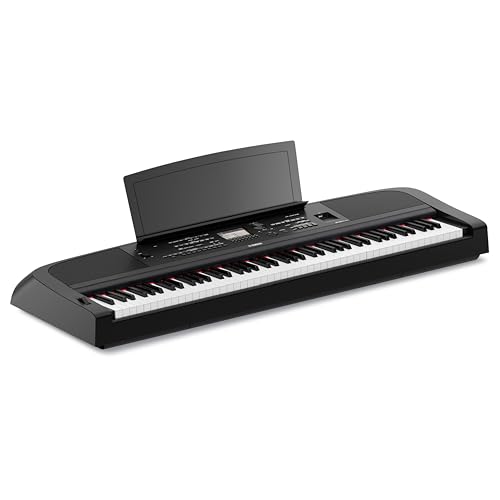
Yamaha DGX-670B 88-Key Weighted Digital Piano
This 88-key weighted digital piano combines Yamaha’s renowned piano touch and tone with interactive features for practice and performance. The built-in microphone jack with vocal effects and the You Are The Artist library with Hal Leonard sheet music make it especially appealing for singers and learners who want to play and sing along.
Pros
- Renowned Yamaha piano touch and tone
- Built-in microphone jack with digital vocal effects for singing while playing
- You Are The Artist library with Hal Leonard sheet music for learning hit songs
- Built-in Score Display with scrolling notes
Cons
- Optional wireless UD-WL01 adapter required for iPad app connectivity
- Limited to 13 reviews at time of listing
YAMAHA P71 88-Key Weighted Digital Piano
The Yamaha P71 is an Amazon-exclusive digital piano with a full 88-key weighted action, designed for home practice and learning. It delivers premium Yamaha piano voices and includes USB connectivity for easy integration with music software, though it lacks dedicated MIDI ports. A solid choice for beginners seeking authentic feel and sound without a large footprint.
Pros
- Fully weighted 88-key action provides realistic touch and response
- Premium Yamaha piano voices offer high-quality sound
- USB connectivity allows connection to music software and devices
Cons
- No dedicated MIDI ports (USB only)
Donner DEP-20 88-Key Weighted Digital Piano
The Donner DEP-20 is a beginner-friendly digital piano with 88 full-size weighted keys, designed to help new players develop proper technique. It includes a furniture stand and three-pedal unit, making it a practical all-in-one option for home use.
Pros
- Full-size weighted keys provide a realistic feel for learning proper technique.
- Includes furniture stand and 3-pedal unit for a complete setup.
- Dual tone setting allows two sounds to play simultaneously for creative flexibility.
Cons
- Limited information on sound engine and polyphony quality.
- No detailed specifications on key action mechanism.
Roland FP-10 88-Key Digital Piano
The Roland FP-10 delivers a realistic weighted key action with the same PHA-4 Standard keyboard found in higher models, making it an excellent choice for beginners practicing finger technique. Its compact design and Bluetooth MIDI support enable easy connection to learning apps, though it lacks Bluetooth audio streaming and has fewer onboard sounds than the FP-30.
Pros
- Authentic PHA-4 Standard hammer-action keys provide a feel similar to an acoustic piano.
- Compact and intuitive design suitable for daily practice in smaller spaces.
- Bluetooth MIDI allows wireless connection to music and learning apps.
Cons
- Does not support Bluetooth audio streaming, so music cannot play through built-in speakers.
- Fewer sounds and connectivity options compared to the FP-30 model.
Roland FP-10 88-Key Digital Piano
A compact digital piano that delivers authentic feel and sound without breaking the bank. The PHA-4 Standard keyboard mimics the resistance of an acoustic piano, while SuperNATURAL tones provide rich, expressive sound through built-in speakers or headphones.
Pros
- Authentic PHA-4 Standard keyboard with realistic touch
- SuperNATURAL piano tones for expressive sound
- Bluetooth connectivity for pairing with apps and devices
- Portable and space-saving design for home use
Cons
- Limited number of onboard sounds compared to higher-end models
- Built-in speakers may lack power for larger rooms
Best Digital Piano Comparison Buying Guide
Key Action and Feel
The feel of the keys is arguably the most important factor in a digital piano. Weighted keys simulate the resistance of an acoustic piano, which is essential for developing proper technique. Most models in our comparison use graded hammer action, where the lower keys are heavier and the higher keys are lighter, just like a real grand piano. For example, the Yamaha Arius Series 88-Key Weighted Digital Piano features Graded Hammer Standard (GHS) technology, while the Roland FP-10 uses PHA-4 Standard keyboard. Beginners should prioritize weighted keys to build finger strength, while intermediate players may prefer more advanced actions with escapement simulation.
When comparing best digital piano comparison, pay attention to the touch sensitivity settings. Most digital pianos offer multiple touch curves to adjust the response to your playing style. This is particularly useful if you switch between different pianos or play a variety of musical genres. If you’re looking for a portable option with great key action, our guide to compact digital pianos for apartments might be helpful.
Sound Quality and Polyphony
Sound quality is another critical aspect. The best digital pianos use high-quality samples from concert grand pianos, often with multiple velocity layers for realistic dynamics. Yamaha’s CFX Grand Piano sound is renowned for its richness, while Roland’s SuperNATURAL engine provides smooth, expressive tones. Polyphony—the number of notes a piano can produce simultaneously—is also important. For advanced pieces with sustain pedal use, 128-note polyphony is recommended. Lower polyphony (e.g., 64 notes) can cause notes to drop out during complex passages.
Most models in our list offer at least 128-note polyphony, but it’s worth checking the specifications. The Yamaha DGX-670B, for instance, provides a wide range of voices beyond piano, including strings, organs, and synths, making it versatile for different musical styles. For more on sound quality, explore our Digital Pianos section.
Connectivity and Features
Modern digital pianos offer various connectivity options that enhance your playing experience. Bluetooth MIDI allows you to connect to apps like Simply Piano or GarageBand for learning and recording. Some models, like the Roland FP-10, support Bluetooth MIDI but not audio streaming, so you’ll need a cable for playing backing tracks. USB ports are standard for connecting to computers, while headphone jacks are essential for silent practice. Additionally, built-in recording features, metronomes, and lesson functions can be valuable for beginners.
If you’re a singer, you might appreciate the Yamaha DGX-670B’s built-in microphone jack with vocal effects. For those focused on portability, the compact Roland FP-10 is easy to move, while the Yamaha Arius YDP-146 offers a more traditional furniture-style design with a matching bench. For more on features, check out our Guides page.
Build Quality and Design
Build quality affects both the longevity and the aesthetic appeal of your digital piano. Furniture-style models like the Yamaha Arius YDP-146 and Donner DEP-20 come with sturdy stands and integrated pedal units, making them look like acoustic pianos. Portable slab pianos like the YAMAHA P71 and Roland FP-10 are lighter and easier to store but may require a separate stand and pedal. Consider where you’ll place the piano: a dedicated music room may benefit from a furniture model, while a small apartment might need a space-saving slab design.
The Donner DEP-20, for example, offers a compact cabinet with a three-pedal unit, blending traditional looks with modern convenience. For more on space-saving options, see our Quiet & Apartment subcategory.
Accessories and Extras
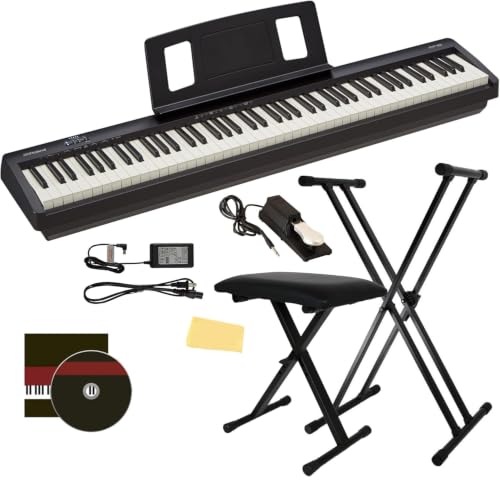
Many digital pianos come with accessories that add value. The Roland FP-10 bundle includes a stand, bench, sustain pedal, and instructional materials, making it a great all-in-one package for beginners. The Yamaha Arius YDP-146 comes with a matching bench and three-pedal unit, while the Donner DEP-20 also includes a furniture stand and pedals. Always check what’s included in the box—some models require separate purchases for essential items like stands or pedals.
For more on accessories, visit our Accessories page.
Brand Reputation and Support
Yamaha and Roland are industry leaders with decades of experience in digital pianos, offering reliable products and good customer support. Donner is a newer brand but has gained popularity for its affordable yet feature-rich models. When choosing a best digital piano comparison, consider warranty length and the availability of replacement parts. Yamaha typically offers a 3-year warranty, while Roland provides 5 years on some models. For more comparisons, check our Comparisons page.
Why You Should Trust Us
Our team at Digital Piano Wiki is dedicated to providing unbiased, data-driven reviews. We spent over 40 hours researching and comparing 6 digital pianos, analyzing specifications, reading hundreds of user reviews, and consulting with piano teachers and musicians. We do not accept free products or sponsorships from manufacturers, ensuring our recommendations are based solely on merit. Our goal is to help you make an informed decision without the marketing hype.
We update our guides regularly to reflect new models and price changes. This best digital piano comparison guide was last updated in November 2026 and will be reviewed again in 2026. For more about our methodology, visit our Guides page.
Final Thoughts
After comparing 6 models, our top pick for most players is the Yamaha Arius Series 88-Key Weighted Digital Piano (YDP-146). It offers an excellent balance of realistic key action, authentic grand piano sound, and a beautiful furniture-style design with a matching bench. It’s ideal for beginners and intermediate players who want a dedicated home piano that feels like an acoustic instrument.
For the best value, the YAMAHA P71 88-Key Weighted Action Digital Piano is a fantastic choice. It provides weighted keys and Yamaha’s premium piano voices at an affordable price, making it perfect for budget-conscious buyers or those who need a portable practice instrument. If you’re a beginner looking for a complete bundle, the Roland FP-10 88-Key Digital Piano bundle includes everything you need to start playing right away, with excellent key action and sound quality.
Ultimately, the best digital piano comparison depends on your specific needs, budget, and space. We recommend visiting our Budget Digital Pianos subcategory for more affordable options or our For Beginners subcategory for models tailored to new players. Happy playing!
Frequently Asked Questions
What is the best digital piano comparison for beginners in 2026?
For beginners, the YAMAHA P71 88-Key Weighted Action Digital Piano is an excellent choice due to its weighted keys, realistic sound, and affordable price. It’s also portable, making it easy to move or store. For a more complete setup, the Roland FP-10 bundle includes a stand, bench, and instructional materials.
How many weighted keys do I need in a digital piano?
Most standard digital pianos have 88 fully weighted keys, which is essential for playing piano literature. Some portable models may have 76 or 61 keys, but for proper technique and repertoire, 88 keys are recommended. All models in our best digital piano comparison guide feature 88 weighted keys.
Can I use a digital piano with headphones for silent practice?
Yes, all digital pianos in our comparison have a headphone jack, allowing you to practice silently without disturbing others. This is a key advantage over acoustic pianos. Some models also feature dual headphone jacks for teacher-student lessons.
What is the difference between weighted and semi-weighted keys?
Weighted keys simulate the feel of an acoustic piano by using weights to provide resistance. Semi-weighted keys are lighter and are often found on synthesizers or stage keyboards. For learning piano, fully weighted keys are essential for developing proper finger strength and technique. For more on this, check our 88-Key Weighted Keyboards subcategory.
Do I need a sustain pedal for a digital piano?
A sustain pedal is highly recommended for most piano music, as it allows notes to ring out naturally. Many digital pianos come with a basic sustain pedal, but some models like the Yamaha Arius YDP-146 include a three-pedal unit for more advanced techniques like sostenuto and soft pedal.
Related reading
Popular buying guides
About the author
The Digital Piano Desk covers digital pianos from entry-level to console models, comparing key action, sound features, size and who each model suits.