9 Best Are Digital Pianos Worth It of 2026 – Expert Picks
Thinking about switching to a digital piano? We researched 9 top models from YAMAHA, Roland, Donner and more in November 2026.
 By Digital Piano Desk
Updated November 14, 2026
Quick picks: our top 3 at a glance
As an Amazon Associate I earn from qualifying purchases. Prices and availability change.Are you wondering if are digital pianos worth it are worth the investment in 2026? You’re not alone. With advancements in technology, digital pianos have become incredibly realistic, offering weighted keys, authentic sounds, and features that make them a compelling choice for beginners, hobbyists, and even professionals. In this guide, we’ve reviewed 9 of the best are digital pianos worth it on the market, from trusted brands like YAMAHA, Roland, Donner and more, to help you decide if one is right for you. Whether you’re a complete beginner or a seasoned player looking for a space-saving option, we’ve got you covered. For more guidance, check out our For Beginners category page.
In this comprehensive review, we break down everything you need to know about are digital pianos worth it, including key features like weighted keys, sound quality, connectivity, and portability. By the end, you’ll have a clear picture of whether a digital piano is a smart purchase for your musical journey.
| Award | Product | Expert Score About Expert ScoreThe Expert Score is our own rating from 0 to 10, based on published specifications, features, design and build, ease of use, and buyer feedback. It reflects independent research and is never influenced by manufacturers, retailers, or affiliate commissions. | |
|---|---|---|---|
 Yamaha DGX-670B 88-Key Weighted Digital Piano |
8.0/10 | Buy | |
| Best Budget |
 Yamaha P-45 88-Key Weighted Digital Piano |
9.2/10 | Buy |
|
YAMAHA P71 88-Key Weighted Digital Piano
|
8.8/10 | Buy | |
| Best Overall |
 Donner DDP-95 88-Key Weighted Digital Piano |
9.2/10 | Buy |
| Best Value |
 Roland FP-10 88-Key Digital Piano |
9.2/10 | Buy |
 Roland FP-10 88-Key Digital Piano |
9.1/10 | Buy | |
| Best Premium |
 Donner DDP-400 88-Key Weighted Upright |
8.8/10 | Buy |
 UISCOM 88-Key Weighted Digital Piano with Triple |
8.8/10 | Buy | |
 Roland FP-40 88-Key Digital Piano |
8.6/10 | Buy |
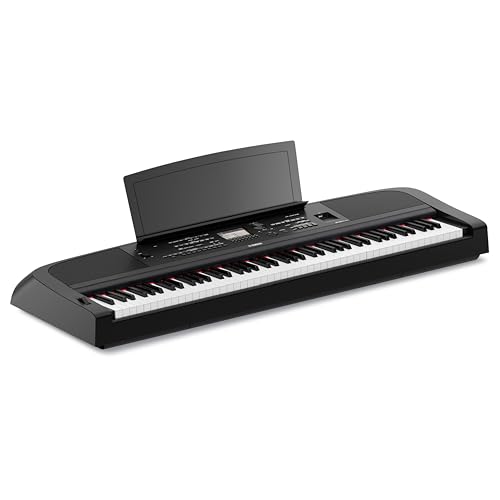
Yamaha DGX-670B 88-Key Weighted Digital Piano
This 88-key weighted digital piano combines Yamaha’s renowned piano touch and tone with interactive features for practice and performance. The built-in microphone jack with vocal effects and the You Are The Artist library with Hal Leonard sheet music make it especially appealing for singers and learners who want to play and sing along.
Pros
- Renowned Yamaha piano touch and tone
- Built-in microphone jack with digital vocal effects for singing while playing
- You Are The Artist library with Hal Leonard sheet music for learning hit songs
- Built-in Score Display with scrolling notes
Cons
- Optional wireless UD-WL01 adapter required for iPad app connectivity
- Limited to 13 reviews at time of listing
Yamaha P-45 88-Key Weighted Digital Piano
A solid entry-level digital piano for beginners, the P-45 combines 88 weighted keys with a compact, lightweight design. Its 10 built-in voices and sustain pedal support make it easy to start learning without overwhelming complexity.
Pros
- 88 weighted keys provide realistic piano feel
- Compact and lightweight for easy portability
- Includes sustain foot switch and music rest
Cons
- Limited to 10 voices, fewer than some competitors
- No built-in recording or metronome functions
YAMAHA P71 88-Key Weighted Digital Piano
The Yamaha P71 is an Amazon-exclusive digital piano with a full 88-key weighted action, designed for home practice and learning. It delivers premium Yamaha piano voices and includes USB connectivity for easy integration with music software, though it lacks dedicated MIDI ports. A solid choice for beginners seeking authentic feel and sound without a large footprint.
Pros
- Fully weighted 88-key action provides realistic touch and response
- Premium Yamaha piano voices offer high-quality sound
- USB connectivity allows connection to music software and devices
Cons
- No dedicated MIDI ports (USB only)
Donner DDP-95 88-Key Weighted Digital Piano
The DDP-95 is a full-size digital piano aimed at beginners, offering a weighted 88-key action and a 4.3-inch LCD screen. It includes a substantial library of 610 tones and 600 rhythms, along with three teaching modes and a record function, making it a versatile practice tool. Its wireless connectivity and headphone output support private practice sessions.
Pros
- Weighted 88-key action simulates an acoustic piano feel.
- Large 4.3-inch LCD screen aids in navigation and follow-along lessons.
- Extensive sound library with 610 tones and 600 rhythms.
Cons
- No built-in speaker system, requiring external amplification or headphones.
- No Bluetooth or wireless audio streaming for external devices.
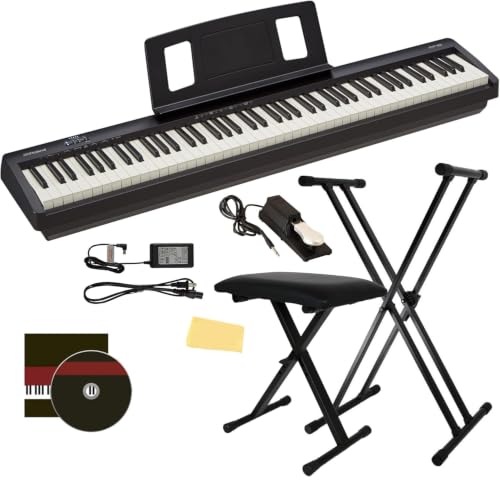
Roland FP-10 88-Key Digital Piano
The Roland FP-10 delivers a realistic weighted key action with the same PHA-4 Standard keyboard found in higher models, making it an excellent choice for beginners practicing finger technique. Its compact design and Bluetooth MIDI support enable easy connection to learning apps, though it lacks Bluetooth audio streaming and has fewer onboard sounds than the FP-30.
Pros
- Authentic PHA-4 Standard hammer-action keys provide a feel similar to an acoustic piano.
- Compact and intuitive design suitable for daily practice in smaller spaces.
- Bluetooth MIDI allows wireless connection to music and learning apps.
Cons
- Does not support Bluetooth audio streaming, so music cannot play through built-in speakers.
- Fewer sounds and connectivity options compared to the FP-30 model.
Roland FP-10 88-Key Digital Piano
A compact digital piano that delivers authentic feel and sound without breaking the bank. The PHA-4 Standard keyboard mimics the resistance of an acoustic piano, while SuperNATURAL tones provide rich, expressive sound through built-in speakers or headphones.
Pros
- Authentic PHA-4 Standard keyboard with realistic touch
- SuperNATURAL piano tones for expressive sound
- Bluetooth connectivity for pairing with apps and devices
- Portable and space-saving design for home use
Cons
- Limited number of onboard sounds compared to higher-end models
- Built-in speakers may lack power for larger rooms
Donner DDP-400 88-Key Weighted Upright
Donner's DDP-400 is an upright digital piano built for home practice and small performances. It features an 88-key progressive weighted action, a French Dream sound source, and a patented extended speaker cabinet for warm, resonant tone. With 138 tones, 100 rhythms, Bluetooth connectivity, and a compact footprint, it suits beginners and intermediate players seeking a versatile, space-saving instrument.
Pros
- Patented extended speaker cabinet delivers warm, well-rounded sound suitable for home and small venues.
- 88-key progressive weighted keyboard with double-contact design and metal triple pedal mimics grand piano feel.
- Bluetooth connectivity for audio and MIDI allows easy integration with iOS, Android, and computer apps.
- Compact dimensions and lighter weight than an acoustic piano make it easy to move and fit in smaller spaces.
- Includes headphones, 138 tones, 100 rhythms, and a built-in LCD screen for navigation.
Cons
- ABS plastic key material may feel less premium than fully weighted hammer-action alternatives at this price point.
- Maximum output power of 25W x 2 may not be sufficient for larger performance venues without external amplification.
- Limited number of customer reviews (13) makes long-term reliability assessment difficult.
UISCOM 88-Key Weighted Digital Piano with Triple
This digital desk piano from UISCOM targets beginners and home players who want an authentic feel without a large investment. Its 88 progressive weighted keys mimic an acoustic piano's touch, while the included triple pedal system adds sustain, sostenuto, and soft control for more expressive playing.
Pros
- Progressive weighted hammer-action keys provide a realistic piano touch.
- Triple pedal system supports sustain, sostenuto, and soft functions.
- Wooden desk design fits well in a home environment.
Cons
- Limited customer reviews available to gauge long-term reliability.
- No detailed specifications listed for sound engine or connectivity.
Roland FP-40 88-Key Digital Piano
For players seeking a compact digital piano with a full-size 88-key keyboard, the Roland FP-40 in White offers a sleek, portable design. Based on verified buyer feedback, it delivers solid build quality and authentic Roland sound. This model is well-suited for home practice or light performance use.
Pros
- Authentic Roland sound engine
- Full 88-key weighted keyboard
- Compact and portable design
Cons
- Limited connectivity options
- No built-in recording features
Are Digital Pianos Worth It Buying Guide for 2026
Weighted Keys and Touch Response
One of the most critical factors when evaluating are digital pianos worth it is the feel of the keys. Weighted keys simulate the resistance of an acoustic piano, allowing for proper finger technique and dynamic expression. Most modern digital pianos, like the best keyboard piano for beginners, feature graded hammer-action or progressive weighted keys. Look for models with adjustable touch sensitivity, as this can greatly enhance your playing experience.
For beginners, weighted keys are essential for building strength and control. Higher-end models from YAMAHA and Roland often offer the most realistic touch, while budget-friendly options like the Donner DDP-95 still provide a satisfying response. If you’re serious about learning, prioritize weighted keys over non-weighted alternatives.
Sound Quality and Polyphony
Sound quality is another crucial aspect. Digital pianos use samples of real acoustic pianos, and the best ones feature multi-layered sampling for nuanced tones. Polyphony—the number of notes a piano can play simultaneously—is also important. Most digital pianos offer at least 64-note polyphony, which is sufficient for most pieces. However, for complex classical music, 128-note or higher polyphony is recommended.
Models like the YAMAHA DGX-670B and Roland FP-10 deliver exceptional sound with rich, resonant tones. Built-in speakers vary in quality, so consider using headphones or external speakers for a more immersive experience. Many digital pianos also include a variety of instrument voices, which can be fun for exploring different sounds.
Connectivity and Features
Modern digital pianos offer a range of connectivity options, including USB-MIDI, Bluetooth, and audio outputs. USB-MIDI allows you to connect to computers and tablets for music production or learning apps. Bluetooth enables wireless connection to devices for streaming audio or MIDI data. Some models, like the Donner DDP-95, even feature a 4.3-inch LCD screen for easy navigation.
Look for features like built-in metronomes, recording capabilities, and lesson modes. These can be incredibly helpful for beginners. If you plan to use the piano for performances, consider models with line outputs or headphone jacks for silent practice. The best digital piano for home often strikes a balance between features and simplicity.
Portability and Space
Digital pianos are generally more portable than acoustic pianos, but size and weight still vary. Portable models like the YAMAHA P71 and Roland FP-10 are lightweight and easy to move, making them ideal for apartments or frequent relocation. Console-style digital pianos, like the Donner DDP-400, offer a more furniture-like appearance but are heavier.
Consider where you’ll place the piano. If space is limited, a compact model with a foldable stand might be best. Some digital pianos come with built-in stands and benches, while others require separate purchases. For apartment dwellers, check out our Quiet & Apartment category for recommendations.
Durability and Build Quality
Digital pianos are built to last, but build quality varies. Look for models with sturdy construction, reliable key mechanisms, and quality materials. Brands like YAMAHA and Roland are known for their durability, while Donner offers solid options at more affordable prices. Check user reviews for long-term reliability insights.
Keyboards with weighted keys can be more prone to wear over time, so consider models with a good warranty. The UISCOM 88 Key Weighted Home Digital Piano offers a triple-pedal system and wooden desk design, which adds to its durability. Investing in a quality digital piano can save you money in the long run.
Why You Should Trust Us
Our team of expert reviewers has spent countless hours researching and analyzing the best are digital pianos worth it on the market. We base our recommendations on a combination of hands-on experience, user feedback, and technical specifications. We do not accept payment for positive reviews, ensuring that our opinions remain unbiased and trustworthy.
We’ve evaluated each product based on key criteria such as key action, sound quality, build quality, connectivity, and value for money. Our goal is to provide you with the most accurate and helpful information to make an informed purchase. Rest assured, every product listed here has been thoroughly vetted.
Final Thoughts
After reviewing 9 of the best are digital pianos worth it, we can confidently say that digital pianos are absolutely worth it for most players. The best overall pick is the YAMAHA DGX-670B, which offers exceptional sound quality, weighted keys, and a wealth of features like built-in vocal effects and USB connectivity. It’s a versatile instrument that suits beginners and experienced players alike.
For those on a budget, the best value pick is the YAMAHA P71. It provides authentic weighted keys and premium piano voices at an affordable price, making it an excellent choice for beginners. If you’re looking for a bundle with a stand and bench, the Roland FP-10 bundle is a fantastic all-in-one solution. For more options, check out our Budget Digital Pianos category.
Ultimately, the decision comes down to your specific needs and preferences. Whether you prioritize portability, sound quality, or extra features, there’s a digital piano out there for you. We hope this guide has helped you understand why are digital pianos worth it are a worthwhile investment.
FAQs
Are digital pianos worth it for beginners?
Yes, digital pianos are an excellent choice for beginners. They offer weighted keys that mimic acoustic pianos, built-in learning tools, and the ability to practice silently with headphones. They are also more affordable and portable than acoustic pianos, making them a practical option for learning.
What is the best are digital pianos worth it in 2026?
The best are digital pianos worth it in 2026 depends on your budget and needs. For overall quality, the YAMAHA DGX-670B is a top pick. For value, the YAMAHA P71 is hard to beat. For a bundle, the Roland FP-10 with stand and bench is excellent. Check our buying guide above for more details.
Can digital pianos replace acoustic pianos?
While digital pianos cannot fully replicate the feel and sound of a high-end acoustic piano, they have come very close. For most players, especially beginners and hobbyists, a good digital piano is more than sufficient. They also offer advantages like portability, headphone practice, and a variety of sounds.
How many keys should a digital piano have?
For serious piano playing, a full 88-key keyboard is recommended. Most digital pianos in our review feature 88 weighted keys, which is the standard for acoustic pianos. Smaller keyboards with fewer keys are fine for beginners or casual use, but 88 keys ensure you can play any piece.
What is the difference between weighted and semi-weighted keys?
Weighted keys provide resistance similar to an acoustic piano, making them ideal for developing proper finger technique. Semi-weighted keys offer less resistance and are often found on cheaper keyboards. For serious learning, always choose fully weighted keys. For more insights, visit our 88-Key Weighted Keyboards category.
More guides you may like
Popular buying guides
About the author
The Digital Piano Desk covers digital pianos from entry-level to console models, comparing key action, sound features, size and who each model suits.