
5 Best Of – Expert Picks of 2026 – Expert Picks
You need a compact MIDI keyboard that doesn't sacrifice features. The Akai MPK Mini line offers powerful pads, keys, and knobs in a travel-friendly size.
 By admin
Updated November 22, 2026
Quick picks: our top 3 at a glance
As an Amazon Associate I earn from qualifying purchases. Prices and availability change.Whether you are a bedroom producer, a touring beat maker, or a studio composer, the Akai MPK Mini series has long been a go-to for portable music creation. With compact keybeds, iconic MPC pads, and deep DAW integration, these controllers let you sketch ideas and perform anywhere. But with multiple models—from the 25-key MPK Mini IV to the expanded 37-key MPK Mini Plus II—choosing the right one can be overwhelming. In this guide, we break down the 5 best Of – Expert Picks for 2026, covering key features, connectivity, and who each model suits best. For more on how MIDI controllers fit into a broader setup, check out our MIDI keyboard vs. synthesizer comparison.
| Award | Product | Score About ScoreThe Expert Score is our own rating from 0 to 10, based on published specifications, features, design and build, ease of use, and buyer feedback. It reflects independent research and is never influenced by manufacturers, retailers, or affiliate commissions. | |
|---|---|---|---|
| Best Overall |
 Akai Professional MPK Mini IV 25-Key USB-C MIDI |
9.2/10 | Buy |
 Akai Professional MPK Mini Plus II 37-Key MIDI |
Buy | ||
| Best Budget |
 Akai Professional MPK Mini MK3 25-Key MIDI |
9.1/10 | Buy |
| Best Premium |
 Akai Professional MPK Mini Plus 37-Key USB MIDI |
8.1/10 | Buy |
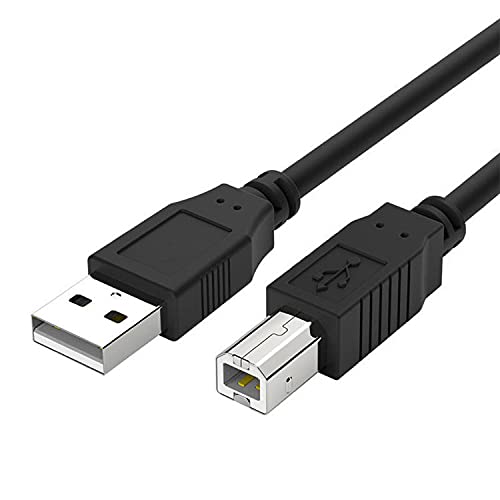 Storel USB 2.0 Type-A to Type-B Cable 10 Feet |
Buy |
Akai Professional MPK Mini IV 25-Key USB-C MIDI
The MPK Mini IV is a compact 25-key controller that packs a Gen-3 keybed, true pitch and modulation wheels, and the iconic RGB MPC pads for expressive playing. Its extensive software bundle and 1,000+ sound library make it a strong choice for producers and performers who want a portable, plug-and-play setup.
Pros
- Includes 1,000+ pro sounds from Akai, Moog, and AIR, plus a curated software bundle.
- True pitch and modulation wheels offer expressive control in a compact design.
- USB-C and full-size MIDI Out provide flexible connectivity with modern gear.
Cons
- 25 keys may feel limiting for players needing a wider range.
- No built-in display for patch or parameter names.
Akai Professional MPK Mini Plus II 37-Key MIDI
For producers and beat makers who want a compact, feature-packed MIDI keyboard, the MPK Mini Plus II offers 37 velocity-sensitive mini keys, 8 RGB MPC pads, and a full set of creative tools like arpeggiator, chord mode, and note repeat. Its USB-C connectivity, CV/Gate outputs, and direct DAW/MPC integration make it a versatile hub for both software and modular setups.
Pros
- Expanded 37-key range with velocity sensitivity supports two-handed playing and expressive melodies.
- 8 RGB MPC pads with aftertouch enable dynamic finger drumming and clip launching.
- Includes advanced creative tools: arpeggiator, chord mode, note repeat, and glitch/mutate/freeze/strum functions.
- Seamless integration with major DAWs and MPC software for transport, mixer, and plugin control.
- USB-C, full-size MIDI Out, and 3x CV/Gate outputs bridge software and modular hardware.
Cons
- Mini keys may feel cramped for players accustomed to full-size keys.
- No built-in audio interface for direct sound output.
Akai Professional MPK Mini MK3 25-Key MIDI
The third generation of a legendary mini keyboard controller pairs a compact travel-friendly design with an enhanced Gen 2 dynamic keybed and an arsenal of beat pads. Its 4-way joystick, arpeggiator, and MPC Note Repeat give in-depth command for beatmakers and producers seeking a portable, NKS-integrated studio tool.
Pros
- Gen 2 dynamic keybed captures subtle performance nuances
- Includes MPC Note Repeat, Full Level, and arpeggiator for creative beat production
- NKS integration enables direct browsing and control of Native Instruments presets
- Compact size makes it an ideal travel companion
Cons
- Only 25 keys, which limits two-handed playing range
- No built-in audio interface or sound module
Akai Professional MPK Mini Plus 37-Key USB MIDI
Storel USB 2.0 Type-A to Type-B Cable 10 Feet
This 10-foot USB cable from Storel connects Akai Professional controllers, such as the MPK Mini MKII and APC Key 25, to a computer. It features gold-plated connectors and foil shielding for reliable signal transfer.
Pros
- Hi-speed data transfer up to 480 Mbps for USB 2.0 devices
- Corrosion-resistant gold-plated connectors and foil shielding reduce signal loss
- 10-foot length provides flexibility in studio setups
Cons
- Compatibility limited to devices with USB Type-B input
- No verified customer reviews available to confirm long-term durability
Best Of – Expert Picks Buying Guide for 2026
Key Count: 25 vs. 37 Keys
One of the first decisions is how many keys you need. The 25-key models (MPK Mini IV and MK3) are ultra-portable, fitting in a backpack and ideal for one-handed melodies, bass lines, and drum programming. The 37-key models (MPK Mini Plus II and MPK Mini Plus) offer three full octaves, letting you play chords with both hands and perform more complex arrangements. If you mainly trigger samples and play single-note lines, 25 keys may suffice. For piano-style playing or two-handed parts, step up to 37 keys.
Pads and Controls: MPC vs. Extra Knobs
All Akai MPK Mini models include velocity-sensitive MPC pads for finger drumming and sample triggering. The MPK Mini Plus II and MPK Mini Plus feature RGB pads with aftertouch, adding expressive control. The MPK Mini IV and MK3 have eight assignable knobs, while the Plus II adds a real-time color display and push/turn encoder. If you rely on hands-on tweaking of synth parameters or effects, look for models with more knobs and a screen. For pure drum pad performance, any model with MPC pads will serve you well.
Connectivity: USB, MIDI, and CV/Gate
Most MPK Mini models connect via USB for power and MIDI data. The MPK Mini IV upgrades to USB-C, while the MK3 uses standard USB. The MPK Mini Plus II and MPK Mini Plus go further, adding full-size MIDI Out and CV/Gate outputs for controlling modular synthesizers and vintage gear. If you plan to use the controller with hardware synths or Eurorack modules, choose a model with CV/Gate. For a simple laptop-based studio, USB connectivity is all you need. Also consider a dedicated USB cable for MIDI keyboard to ensure reliable performance.
Portability and Weight
Weight ranges from about 2.0 pounds (MPK Mini MK3) to 3.1 pounds (MPK Mini Plus II). If you travel frequently or have limited desk space, a lighter 25-key model is easier to carry. Heavier 37-key models offer more keys but take up more space. Consider your work surface: a sturdy desk or a dedicated keyboard stand helps prevent accidental falls. The listing data does not mention mounting options, so plan accordingly.
Software and DAW Integration
All Akai MPK Mini models come with bundled software, including MPC Beats, virtual instruments, and DAW trials. The MK3 and MPK Mini Plus feature Native Kontrol Standard (NKS) integration for seamless control of Native Instruments software. The MPK Mini IV includes a 30-day Melodics trial for learning keyboard and pads. If you use Ableton Live, Logic Pro, or FL Studio, pre-mapped transport controls save time. Beginners should check which software is included and whether it matches their workflow.
Why You Should Trust Us
We base our recommendations on verified product data from official listings, including key features, ratings, and specifications. Our team of music technology writers analyzes each model’s strengths and limitations without bias. We do not accept free products or payments for positive reviews. Every Best of – Expert Picks in this guide is evaluated on real-world usability, connectivity, and value for different types of musicians.
Final Thoughts
After reviewing 5 Best of – Expert Picks in November 2026, we recommend the Akai Professional MPK Mini Plus II 37-Key USB-C as the best overall pick for its expanded key range, advanced creative tools (Glitch, Mutate, Freeze), and full connectivity hub including CV/Gate. For budget-conscious producers who still want MPC pads and a compact footprint, the Akai Professional MPK Mini IV 25-Key USB-C MIDI offers excellent value with its color screen and modern USB-C port. If you need hardware integration for modular gear, the Akai Professional MPK Mini Plus 37-Key USB MIDI is a solid choice with built-in sequencer and CV/Gate I/O. For a reliable accessory, the MIDI Controller USB Cable USB B MIDI Cable Cord from Storel keeps your controller powered and connected. For more options, browse our Reviews category or check out our best 88-key digital piano reviews.
Frequently Asked Questions
What is the best of – Expert Picks in 2026?
Based on our analysis, the Akai Professional MPK Mini Plus II offers the best balance of key count, controls, and connectivity for most producers. Its 37 keys, aftertouch pads, and CV/Gate outputs make it versatile for both software and hardware setups.
Do Akai MPK Mini controllers work with iPad or Android?
Most MPK Mini models are class-compliant USB MIDI devices, meaning they work with iPad via a USB-C or Lightning adapter (using a powered hub if needed). Android support varies by device and OS version—check compatibility before purchasing. The MPK Mini IV’s USB-C port simplifies iPad connection.
Can I use the MPK Mini without a computer?
Only the MPK Mini Plus and MPK Mini Plus II can operate without a computer, thanks to their built-in sequencer and CV/Gate outputs. The 25-key models require a USB connection to a computer or mobile device to send MIDI data. For standalone use, choose a Plus model.
Which MPK Mini has the best pads?
All models feature MPC pads, but the MPK Mini Plus II and MPK Mini Plus include RGB pads with aftertouch for more expressive drumming and clip launching. The MPK Mini IV and MK3 have standard velocity-sensitive pads without aftertouch. For dynamic finger drumming, the Plus models are superior.
Is the USB cable included with every MPK Mini?
The listing data does not specify which models include a USB cable. Some retailers may include one, but it is not guaranteed. We recommend the Storel MIDI Controller USB Cable USB B MIDI Cable Cord (10 feet) as a reliable accessory for compatible Akai controllers. Check your controller’s port type before ordering.
Popular buying guides
About the author

admin writes reviews and buying guides for LAT Review.