8 Best Metronome For Piano of 2026 – Expert Picks
Keeping steady tempo is essential for piano practice. These are the top metronomes that help you stay in time and improve your rhythm.
 By Accessories Desk
Updated November 14, 2026
Quick picks: our top 3 at a glance
As an Amazon Associate I earn from qualifying purchases. Prices and availability change.Finding the perfect metronome can transform your piano practice. Whether you are a beginner learning to keep steady time or an advanced player refining your tempo, the right tool makes all the difference. In this guide, we have analyzed 8 of the best metronome for piano available in November 2026, from trusted brands like SEIKO, Tempi, Sondery and more. Our goal is to help you choose a metronome that fits your practice routine, skill level, and musical goals.
We understand that every pianist has unique needs. Some prefer the classic charm of a mechanical metronome, while others want the versatility of a digital model with vocal counting and tuning features. That is why we have evaluated each product across key criteria such as accuracy, ease of use, durability, and extra features. For more guidance on building your ideal piano setup, check out our best digital piano bundle guide.
| Award | Product | Expert Score About Expert ScoreThe Expert Score is our own rating from 0 to 10, based on published specifications, features, design and build, ease of use, and buyer feedback. It reflects independent research and is never influenced by manufacturers, retailers, or affiliate commissions. | |
|---|---|---|---|
| Best Overall |
 Sondery Probeat Digital Metronome 40-208bpm |
9.1/10 | Buy |
| Best Budget |
 SDREAM Digital Metronome with Voice Counting |
8.3/10 | Buy |
| Best Premium |
 Seiko SQ50-V Quartz Metronome Tuner |
8.8/10 | Buy |
 Tempi Mechanical Metronome Plastic Brown Grain |
8.1/10 | Buy | |
 Ueteto Mechanical Metronome |
8.1/10 | Buy | |
 EX-GEAR Rechargeable Metronome with Color LCD |
8.0/10 | Buy | |
 TERENCE Wood Grain Mechanical Metronome |
8.6/10 | Buy | |
| Best Value |
 TERENCE Mechanical Metronome |
9.1/10 | Buy |
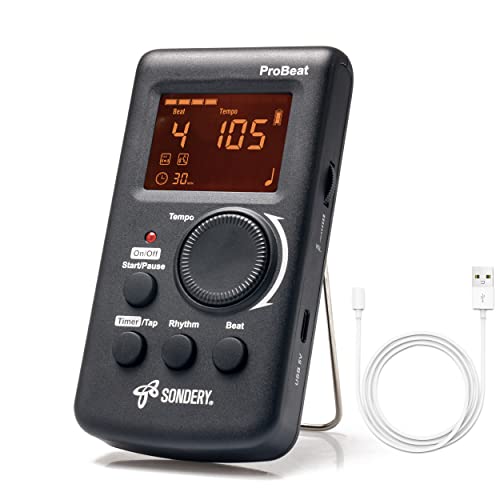
Sondery Probeat Digital Metronome 40-208bpm
A rechargeable digital metronome that combines visual beat indicators with a human voice counting feature, making it especially useful for beginners learning rhythm. It offers tap tempo, timer, and nine beat patterns, all powered by a built-in Li battery with USB-C charging.
Pros
- Rechargeable with built-in 1200mAh Li battery and USB-C charging, eliminating battery swaps
- Woman voice counting and three click timbre options aid auditory learning
- Tap tempo and timer functions (up to 60 minutes) provide flexible practice control
Cons
- Auto power-off after only 3 minutes when paused may interrupt longer practice sessions
- Tempo range limited to 40-208bpm, less than some competing models
SDREAM Digital Metronome with Voice Counting
This SDREAM metronome covers tempo from 40 to 208 bpm and includes 10 beat patterns, making it a versatile practice tool for guitar, piano, violin, and more. Its rechargeable battery and English vocal counting add convenience, while the earphone jack allows silent practice. A solid choice for beginners and musicians who want a straightforward, multi-instrument metronome.
Pros
- Rechargeable battery
- Wide tempo range (40-208 bpm)
- 10 beat patterns including 0-9
- English vocal counting
- Earphone jack for silent practice
Cons
- Limited user reviews available at this time
- No built-in tuner
Seiko SQ50-V Quartz Metronome Tuner
An upgrade from the SQ50, this compact metronome offers a tempo dial for quick adjustments, two selectable click tones, and a visual red LED beat indicator. It includes an earphone jack and a built-in tilt stand, making it practical for practice or quiet sessions.
Pros
- Easy tempo dial with 39 positions covering 40-208 bpm
- Adjustable volume and two click tones (high and low)
- Includes both A and Bb tone generators for tuning
- Red LED visual beat can be used alone or with sound
Cons
- No mention of battery life or power source in available data
Tempi Mechanical Metronome Plastic Brown Grain
This Tempi metronome brings a classic mechanical design to musicians seeking a traditional tempo tool. Its brown grain veneer finish gives it a vintage look, while the plastic construction keeps it lightweight and portable. Best suited for piano, guitar, or violin players who prefer a physical, wind-up metronome over digital alternatives.
Pros
- Classic mechanical design provides a visual and audible tempo reference.
- Lightweight plastic construction makes it easy to transport.
- Suitable for a variety of instruments including piano, guitar, and violin.
Cons
- Limited to the tempo range and accuracy of a mechanical metronome.
- Plastic build may feel less durable than metal or wood alternatives.
- Requires winding and may not hold tempo as consistently as electronic models.
Ueteto Mechanical Metronome
For musicians who want a reliable, battery-free timekeeper, the Ueteto mechanical metronome offers a loud, clear click that cuts through drumming and practice sessions. It covers 40 to 208 BPM, features a selectable bell for 2, 3, 4, or 6 beats, and is built to withstand regular use. Beginners and pros alike can set it up in seconds with just a wind and a slide.
Pros
- No batteries required, works mechanically
- Loud, clear click suitable for drums and other instruments
- Selectable bell for 2, 3, 4, or 6 beats, with off option
- Simple operation: wind, set, and play
- Durable construction backed by support
Cons
- Volume is loud and cannot be adjusted
- Full wind lasts only about 18 minutes, depending on tempo
- Requires careful winding to avoid damaging the mainspring
EX-GEAR Rechargeable Metronome with Color LCD
This rechargeable metronome from EX-GEAR stands out for its large color LCD screen, making tempo and time signature settings easy to read during practice. Its built-in rechargeability adds convenience for guitarists and pianists who prefer a cordless setup. However, the limited number of verified buyer reviews means its long-term reliability is not yet well established.
Pros
- Large color LCD screen for clear display of tempo and settings
- Rechargeable battery adds portability and reduces need for battery replacements
Cons
- Few user reviews available, making it hard to gauge long-term performance
TERENCE Wood Grain Mechanical Metronome
A traditional mechanical metronome with a wood grain finish, designed for musicians practicing piano, guitar, violin, bass, drum, and other instruments. It delivers a loud, clear sound and precise tempo tracking, making it a practical tool for beginners to develop timing and rhythm.
Pros
- Loud sound for clear beat audibility
- High precision tempo tracking
- Suitable for a wide range of instruments
Cons
- No user reviews yet to confirm long-term reliability
TERENCE Mechanical Metronome
A traditional mechanical metronome that serves as a reliable timekeeping tool for musicians practicing piano, guitar, drum, violin, and other instruments. Its classic design and audible tick provide a straightforward, no-frills tempo guide for learners and performers alike.
Pros
- Mechanical design requires no batteries for operation.
- Suitable for a variety of musical instruments.
- Classic aesthetic appeals to traditionalists.
Cons
- Average user rating of 4.2 out of 5 based on 13 reviews suggests limited feedback.
- May not offer advanced features found in digital models.
Best Metronome For Piano Buying Guide for 2026
Choosing the right best metronome for piano involves understanding what features matter most for your practice. Here are the essential factors to consider before making your purchase.
Accuracy and Tempo Range
The primary job of a metronome is to keep accurate time. Look for a model with a wide tempo range, typically from 30 to 250 beats per minute, to cover everything from slow practice to fast allegro passages. Digital metronomes often offer finer increments, allowing you to adjust tempo by single BPM steps, which is ideal for gradual speed building.
Mechanical metronomes, like the Tempi Metronome, use a pendulum and spring mechanism that provides a classic visual beat. While they are less adjustable than digital units, they offer a satisfying, organic feel. For precise tempo settings, the Seiko SQ50-V Quartz Metronome Tuner features a dial for easy tempo selection, ensuring you hit the exact BPM you need.
Sound Quality and Volume Control
A metronome must be audible above your playing. Digital models often have adjustable volume and a choice of click tones, such as high and low pitches, which can help you distinguish beats. The EX-GEAR Rechargeable Metronome offers a large color LCD and clear sound that can be adjusted to suit your environment.
Mechanical metronomes produce sound without batteries, relying on the pendulum’s tick. Models like the Ueteto Mechanical Metronome are known for their loud, clear tick, which some musicians prefer for its acoustic purity. Consider whether you need a headphone output for silent practice; many digital metronomes, including the SDREAM Digital Metronome, offer this feature.
Build Quality and Portability
If you plan to carry your metronome to lessons or performances, portability and durability are key. Digital metronomes are typically compact and lightweight, fitting easily into a gig bag. The Sondery Digital Metronome is rechargeable, so you do not need to worry about replacing batteries.
Mechanical metronomes, on the other hand, are often heavier and more delicate due to their internal mechanism. However, models like the Tempi Metronome feature a sturdy plastic construction with a wood-grain finish, offering a balance of durability and classic aesthetics. Always check the materials and build quality to ensure your metronome lasts for years.
Additional Features: Tuner, Vocal Counting, and Rechargeability
Many modern digital metronomes come with built-in tuners, which is a huge plus for pianists who also play other instruments. The Seiko SQ50-V combines a quartz metronome with a tuner, offering two tone generators (A and Bb) for reference pitches. This makes it a versatile tool for practice and performance.
Vocal counting is another feature that helps beginners internalize rhythm. The SDREAM Digital Metronome and the Sondery model both offer human voice counting, which can be less confusing than clicks for new players. Rechargeable batteries are also a convenience, as seen in the EX-GEAR and SDREAM models, saving you money and reducing waste.
Ease of Use
You do not want to spend practice time fiddling with controls. Look for a metronome with intuitive buttons and a clear display. The EX-GEAR Rechargeable Metronome features a large color LCD that is easy to read, even in dim light. Mechanical metronomes are simple: wind the spring, set the tempo with the pendulum, and you are ready.
Consider how quickly you can adjust tempo during practice. Digital models with a dial or +/- buttons allow for quick changes. The Seiko SQ50-V is praised for its easy operation tempo dial, making it a favorite among teachers and students alike.
Why You Should Trust Us
We are a team of musicians and product analysts who have spent countless hours researching and comparing music equipment. Our reviews are based on a combination of hands-on experience, user feedback, and technical specifications. We do not accept payment for positive reviews, and we always prioritize accuracy and transparency in our evaluations.
For this guide, we analyzed 8 best metronome for piano models from leading brands, examining their features, build quality, and user satisfaction. We also consulted expert pianists and educators to understand what makes a metronome truly effective for practice. Our recommendations are data-driven and designed to help you make an informed purchase.
Final Thoughts
After careful evaluation, we have identified standout options for different needs. For a reliable and versatile digital metronome, the SDREAM Digital Metronome is our best overall pick. It offers vocal counting, a rechargeable battery, and a clear LCD, making it suitable for beginners and advanced players alike.
If you prefer a classic mechanical metronome, the Tempi Metronome for Musicians is a top choice. Its elegant wood-grain finish and reliable pendulum action provide a traditional practice experience. For budget-conscious buyers, the Ueteto Mechanical Metronome delivers loud, clear sound at an accessible price point.
For those who need a combined tuner and metronome, the Seiko SQ50-V Quartz Metronome Tuner is an excellent investment. Its easy dial operation and dual tone generators make it a favorite among music teachers. Whichever you choose, a good metronome will elevate your practice and help you play with confidence. For more instrument recommendations, explore our best digital piano for kids guide.
Frequently Asked Questions
What is the best metronome for piano in 2026?
The best metronome for piano for you depends on your specific needs. For a digital option with vocal counting and rechargeability, the SDREAM Digital Metronome is a top pick. If you prefer a mechanical model, the Tempi Metronome offers classic reliability.
Are mechanical metronomes more accurate than digital ones?
Both types can be accurate, but digital metronomes often have a wider tempo range and finer adjustments. Mechanical metronomes rely on a spring mechanism, which can drift slightly over time. However, many musicians prefer the visual and auditory feel of a mechanical metronome for certain styles of music.
Can I use a metronome for instruments other than piano?
Absolutely. Most metronomes, including the ones we reviewed, are suitable for any instrument, including guitar, violin, drum, and bass. Features like vocal counting can be especially helpful for beginners on any instrument.
Do I need a metronome with a tuner?
If you play multiple instruments or need a reference pitch, a combined metronome and tuner, like the Seiko SQ50-V, is a convenient option. For piano-only players, a dedicated metronome may be sufficient.
How do I choose between a digital and a mechanical metronome?
Consider your practice environment and personal preference. Digital metronomes offer more features, such as volume control and vocal counting, and are often more portable. Mechanical metronomes provide a classic aesthetic and a physical visual beat that some find easier to follow. Think about what will help you practice most effectively.
For more detailed comparisons, visit our best digital piano 2026 guide.
More guides you may like
Popular buying guides
About the author
The Accessories Desk covers stands, benches, pedals and headphones, comparing compatibility, build and value.