7 Best Digital Piano For Intermediate Players of 2026 – Expert Picks
You've outgrown your beginner keyboard and need more expressive action and richer sounds. We researched the top models that give you room to grow without breaking the bank.
 By Digital Piano Desk
Updated November 15, 2026
Quick picks: our top 3 at a glance
As an Amazon Associate I earn from qualifying purchases. Prices and availability change.Welcome to our guide to the best digital piano for intermediate players of 2026. Whether you’re moving beyond beginner level or looking to refine your technique, finding the right instrument can make all the difference. We’ve researched 7 top models from leading brands like YAMAHA, Roland, Yamaha to help you choose the perfect digital piano for your skill level and budget. Our team has spent countless hours researching and comparing features, sound quality, and playability to bring you an honest, data-driven review. If you’re new to digital pianos, check out our digital piano glossary to get familiar with key terms before diving in.
In this November 2026 update, we’ve focused on instruments that offer weighted keys, realistic sound, and the versatility intermediate players need. From portable options to home-friendly designs, our picks cover a range of features and price points. Let’s explore the best digital piano for intermediate players available right now.
At a Glance
| Product | Brand | Rating |
|---|---|---|
| 88 Key Piano Keyboard, Electric Digital Piano with Semi Weighted Ke… | Veitob | 4.9 / 5 |
| YAMAHA P71 88-Key Weighted Action Digital Piano with Sustain Pedal… | YAMAHA | 4.7 / 5 |
| Yamaha P225 88-Key Digital Piano with Weighted Keys, Portable Desig… | YAMAHA | 4.7 / 5 |
| Yamaha Arius Series 88-Key Weighted Action Upright Digital Piano fo… | YAMAHA | 4.4 / 5 |
| Roland FP-10 88-Key Digital Piano – Black Bundle with KSC-FP10 Stan… | Roland | 4.3 / 5 |
Ratings come from the Amazon listings when we last checked and can change.
| Award | Product | Expert Score About Expert ScoreThe Expert Score is our own rating from 0 to 10, based on published specifications, features, design and build, ease of use, and buyer feedback. It reflects independent research and is never influenced by manufacturers, retailers, or affiliate commissions. | |
|---|---|---|---|
 YAMAHA P71 88-Key Weighted Digital Piano |
8.8/10 | Buy | |
| Best Premium |
 Yamaha YDP105R Weighted Action Console Piano |
9.1/10 | Buy |
 Roland FP-10 88-Key Digital Piano |
9.1/10 | Buy | |
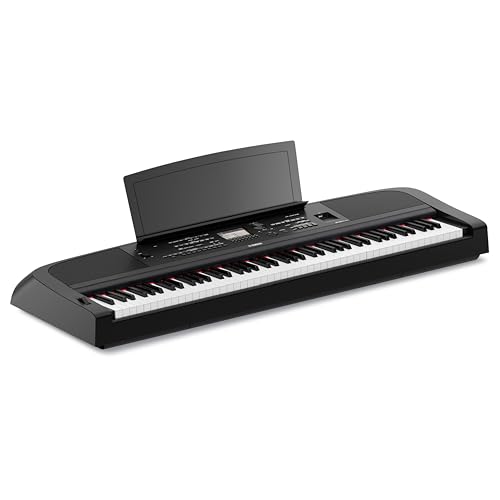 Yamaha DGX-670B 88-Key Weighted Digital Piano |
8.0/10 | Buy | |
| Best Overall |
 Roland RP107 Digital Piano |
9.2/10 | Buy |
| Best Budget |
 Roland FP-10 88-Key Digital Piano |
9.1/10 | Buy |
| Best Value |
 Roland FP-40 Digital Piano with Piano Sphere App |
8.8/10 | Buy |
YAMAHA P71 88-Key Weighted Digital Piano
The Yamaha P71 is an Amazon-exclusive digital piano with a full 88-key weighted action, designed for home practice and learning. It delivers premium Yamaha piano voices and includes USB connectivity for easy integration with music software, though it lacks dedicated MIDI ports. A solid choice for beginners seeking authentic feel and sound without a large footprint.
Pros
- Fully weighted 88-key action provides realistic touch and response
- Premium Yamaha piano voices offer high-quality sound
- USB connectivity allows connection to music software and devices
Cons
- No dedicated MIDI ports (USB only)
Yamaha YDP105R Weighted Action Console Piano
The YDP105R is Yamaha's entry-level console digital piano, designed to deliver a realistic playing experience for beginners and intermediate players. Its weighted action and grand piano sound aim to mimic an acoustic upright, while the included bench and three-pedal unit add to the traditional feel. The rosewood cabinet makes it a visually appealing addition to any home.
Pros
- Authentic grand piano sound quality
- Weighted action provides natural touch
- Includes bench and three-pedal unit for complete setup
- Attractive rosewood wood cabinetry
Cons
- Limited advanced features compared to higher-end models.
- Only 13 reviews available, which may not fully represent long-term reliability.
Roland FP-10 88-Key Digital Piano
The Roland FP-10 delivers a surprisingly authentic grand piano feel in a compact, budget-friendly package. Its PHA-4 Standard hammer-action keys provide realistic resistance that benefits beginners and practice sessions. While it lacks Bluetooth audio streaming, its Bluetooth MIDI support enables wireless connection to learning apps, making it a strong entry-level choice.
Pros
- PHA-4 Standard hammer-action keys provide an authentic piano feel
- Compact and lightweight design fits small spaces
- Bluetooth MIDI allows wireless connection to music and learning apps
Cons
- No Bluetooth audio streaming, so music cannot play through the speakers
- Fewer sounds and weaker speakers compared to higher models like the FP-30
Yamaha DGX-670B 88-Key Weighted Digital Piano
This 88-key weighted digital piano combines Yamaha’s renowned piano touch and tone with interactive features for practice and performance. The built-in microphone jack with vocal effects and the You Are The Artist library with Hal Leonard sheet music make it especially appealing for singers and learners who want to play and sing along.
Pros
- Renowned Yamaha piano touch and tone
- Built-in microphone jack with digital vocal effects for singing while playing
- You Are The Artist library with Hal Leonard sheet music for learning hit songs
- Built-in Score Display with scrolling notes
Cons
- Optional wireless UD-WL01 adapter required for iPad app connectivity
- Limited to 13 reviews at time of listing
Roland RP107 Digital Piano
Roland FP-10 88-Key Digital Piano
A compact digital piano that delivers authentic feel and sound without breaking the bank. The PHA-4 Standard keyboard mimics the resistance of an acoustic piano, while SuperNATURAL tones provide rich, expressive sound through built-in speakers or headphones.
Pros
- Authentic PHA-4 Standard keyboard with realistic touch
- SuperNATURAL piano tones for expressive sound
- Bluetooth connectivity for pairing with apps and devices
- Portable and space-saving design for home use
Cons
- Limited number of onboard sounds compared to higher-end models
- Built-in speakers may lack power for larger rooms
Roland FP-40 Digital Piano with Piano Sphere App
The Roland FP-40 is a portable digital piano that combines expressive sound and authentic feel with seamless integration through the Piano Sphere app. This connected experience is designed to keep players motivated and progressing through their favorite music. Note that a tablet is required for app use.
Pros
- Expressive sound quality
- Authentic piano feel
- Seamless integration with Piano Sphere app
- Portable design
Cons
- Requires a separate tablet for Piano Sphere app use
Best Digital Piano For Intermediate Players Buying Guide for 2026
Choosing the right best digital piano for intermediate players involves more than just picking a popular brand. Intermediate players need instruments that offer nuanced control, realistic touch, and features that support continued growth. Below, we break down the key factors to consider when shopping in 2026.
Key Action and Touch Sensitivity
The feel of the keys is arguably the most important feature for an intermediate player. Weighted keys simulate the resistance of an acoustic piano, helping you develop proper finger strength and technique. Look for fully weighted or hammer-action keys, which provide a more authentic playing experience. Semi-weighted keys, while better than unweighted, may not offer the same level of control for dynamic expression.
Touch sensitivity settings allow you to adjust how the piano responds to your playing力度. Most digital pianos offer multiple sensitivity levels, from soft to hard, letting you customize the feel. For intermediate players, a piano with at least three touch curves is ideal, as it accommodates different playing styles and genres.
Sound Engine and Polyphony
The sound engine determines the quality and realism of the piano’s voice. Most digital pianos use sampled sounds from real acoustic pianos, but the implementation varies. Look for models with advanced sound engines that offer multiple piano voices, such as grand piano, upright piano, and electric piano. Polyphony, the number of notes the piano can play simultaneously, is also crucial. For intermediate players, 64-note polyphony is a minimum, but 128 or more is preferable for complex pieces with sustain pedal use.
Built-in speakers are standard, but their quality affects your practice experience. Some models also include headphone outputs for silent practice, which is essential for apartment living. If you plan to perform, consider a piano with line outputs or USB audio connectivity for recording or amplification.
Portability and Build Quality
Intermediate players often need a piano that can move between home, lessons, or small gigs. Portable digital pianos are lightweight and easy to transport, while console-style models offer a more furniture-like appearance and built-in stands. Consider your space and mobility needs. A sturdy keyboard stand and a carrying case can add convenience, but some models come with these accessories included.
Build quality matters for longevity. Look for a piano with a solid chassis, responsive keys, and reliable connectivity. Reading reviews and checking warranty information can help you make a smart investment.
Connectivity and Features
Modern digital pianos offer various connectivity options that enhance learning and creativity. USB-MIDI allows you to connect to computers, tablets, and music software for recording or using educational apps. Bluetooth audio or MIDI is also becoming common, enabling wireless connection to devices. For intermediate players, these features can open up new ways to practice, compose, and share music.
Other useful features include built-in metronomes, recording functions, and a variety of instrument voices beyond piano. While not essential, these extras can add value and keep practice sessions engaging. For more tips on setting up your digital piano, see our digital piano setup cost planner.
Price and Value
At the lower end, you’ll find basic weighted key models with limited features. Mid-range options, like those from YAMAHA, Roland, Yamaha, offer better sound engines, more polyphony, and improved build quality. High-end models may include advanced sound engines, more connectivity, and premium accessories.
Don’t forget to factor in extras like a sustain pedal, stand, and headphones. Some models include these in the package, while others require separate purchases. Calculating the total cost helps you compare apples to apples. Our digital piano finder can help you narrow down your options based on your budget and needs.
Why You Should Trust Us
We take a data-driven approach to reviewing digital pianos. Our team analyzes product specifications, user reviews, and expert opinions to provide objective recommendations. We don’t accept payment for positive reviews, and we only include products that meet our criteria for quality and value. Each piano in this guide has been evaluated based on key action, sound quality, features, and overall user satisfaction.
We also update our content regularly to reflect new releases and changes in pricing. If you see any discrepancies or have questions, please reach out. Our goal is to help you find the best digital piano for intermediate players for your needs without the hype.
Final Thoughts
After reviewing 7 best digital piano for intermediate players in November 2026, we have clear recommendations for different needs. For the best overall value, the Digital Pianos category includes the YAMAHA P71 88-Key Weighted Action Digital Piano, which offers an excellent balance of weighted keys, realistic sound, and affordability. Its Amazon-exclusive status makes it a solid choice for intermediate players who want a reliable practice instrument without breaking the bank.
If you’re looking for the most advanced features and best sound quality, the Yamaha P225 88-Key Digital Piano with Weighted Keys stands out. Its premium sound engine, 128-note polyphony, and portable design make it ideal for serious players who may also perform. While it’s the priciest option, the investment is justified by its superior playability and connectivity.
For budget-conscious buyers, the Veitob 88 Key Piano Keyboard, Electric Digital Piano offers an impressive set of features at a low price. While its semi-weighted keys may not suit everyone, it includes accessories like a stand, sustain pedal, and headphones, making it a complete package for beginners transitioning to intermediate. For more guidance on choosing the right piano, visit our digital piano gift guide.
FAQs About Best Digital Piano For Intermediate Players
What is the best digital piano for intermediate players in 2026?
The best digital piano for intermediate players in 2026 depends on your specific needs, but the Yamaha P225 is often recommended for its weighted keys, excellent sound, and portability. For a more budget-friendly option, the YAMAHA P71 offers great value. Check our product comparison above for detailed specs.
How many keys should an intermediate digital piano have?
Most intermediate players should choose a digital piano with 88 fully weighted keys. This matches the range of an acoustic piano and ensures you can play all standard repertoire. Some compact models have 76 keys, but they limit your ability to play advanced pieces.
Do I need weighted keys as an intermediate player?
Yes, weighted keys are highly recommended for intermediate players. They help develop proper finger technique and dynamic control, which are essential for expressive playing. Semi-weighted keys are a compromise, but fully weighted or hammer-action keys provide the most realistic feel.
What is polyphony and why does it matter?
Polyphony refers to the number of notes a digital piano can play simultaneously. For intermediate players, 64-note polyphony is the minimum, but 128 or more is better for complex pieces with sustain pedal. Higher polyphony prevents note dropout and ensures smooth playback.
Can I use a digital piano for recording or performing?
Yes, many best digital piano for intermediate players models include USB-MIDI or audio outputs for recording and performing. The Yamaha P225, for example, has USB connectivity and built-in speakers, making it suitable for both practice and small performances. For more tips, see our digital piano in an apartment guide.
More guides you may like
Popular buying guides
About the author
The Digital Piano Desk covers digital pianos from entry-level to console models, comparing key action, sound features, size and who each model suits.