
10 Best Digital Piano Under $1000 of 2026 – Expert Picks
Shopping for a digital piano on a budget can be overwhelming, with so many models claiming to be the best. These top picks under $1000 combine realistic action, great sound, and portability without breaking the bank.
 By Digital Piano Desk
Updated November 16, 2026
Quick picks: our top 3 at a glance
As an Amazon Associate I earn from qualifying purchases. Prices and availability change.Welcome to our comprehensive guide to the best digital piano under $1000 in November 2026. Whether you are a beginner seeking your first digital piano or an experienced player upgrading to a more expressive instrument, finding the perfect model under $1,000 can be challenging. We have analyzed 10 top contenders from leading brands like YAMAHA, Roland, Donner and more to help you make an informed decision. For more guidance, check out our digital piano finder.
Our goal is to simplify your shopping experience so you can focus on what matters most: finding a digital piano that inspires you to practice and play.
At a Glance
| Product | Brand | Rating |
|---|---|---|
| YAMAHA P71 88-Key Weighted Action Digital Piano with Sustain Pedal… | YAMAHA | 4.7 / 5 |
| Yamaha 88-Key Digital Piano with Weighted Keys, Compact Design, Blu… | YAMAHA | 4.6 / 5 |
| Roland FP-10 Compact 88-Note Digital Piano | Roland | 4.5 / 5 |
| Alesis Recital Play 88-Key Piano Keyboard Bundle | Alesis | 4.6 / 5 |
| UISCOM 88 Key Weighted Home Digital Piano,Wooden Desk Keyboard,Trip… | UnlockYourMusicalJourney | 4.4 / 5 |
Ratings come from the Amazon listings when we last checked and can change.
| Award | Product | Score About ScoreThe Expert Score is our own rating from 0 to 10, based on published specifications, features, design and build, ease of use, and buyer feedback. It reflects independent research and is never influenced by manufacturers, retailers, or affiliate commissions. | |
|---|---|---|---|
 YAMAHA P71 88-Key Weighted Digital Piano |
Buy | ||
| Best Premium |
 Yamaha P-145BT 88-Key Weighted Digital Piano |
Buy | |
| Best Value |
 Roland FP-10 88-Key Digital Piano |
Buy | |
| Best Budget |
 Alesis Recital Play 88-Key Keyboard Bundle |
Buy | |
 UISCOM 88-Key Weighted Digital Piano with Triple |
Buy | ||
 KUMENG 88-Key Progressive Weighted Digital Piano |
Buy | ||
 Donner DDP-90 Pro 88-Key Weighted Keyboard |
Buy | ||
 Roland FP-30X 88-Key Digital Piano |
Buy | ||
 Casio CDP-S360 88-Key Slim Digital Piano |
Buy | ||
| Best Overall |
 KUMENG 88-Key Semi-Weighted Digital Piano |
Buy |
YAMAHA P71 88-Key Weighted Digital Piano
The Yamaha P71 is an Amazon-exclusive digital piano with a full 88-key weighted action, designed for home practice and learning. It delivers premium Yamaha piano voices and includes USB connectivity for easy integration with music software, though it lacks dedicated MIDI ports. A solid choice for beginners seeking authentic feel and sound without a large footprint.
Pros
- Fully weighted 88-key action provides realistic touch and response
- Premium Yamaha piano voices offer high-quality sound
- USB connectivity allows connection to music software and devices
Cons
- No dedicated MIDI ports (USB only)
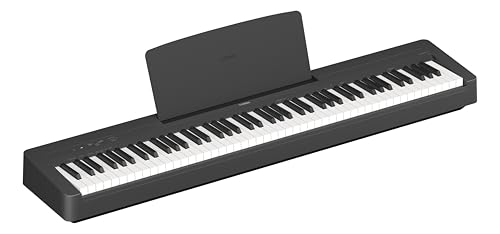
Yamaha P-145BT 88-Key Weighted Digital Piano
The Yamaha P-145BT brings a compact, stylish digital piano with weighted keys and built-in Bluetooth audio. Its touch-sensitive action and grand piano sound aim to mimic an acoustic feel, making it a solid option for beginners or anyone seeking a space-friendly instrument for home practice or travel.
Pros
- Weighted keys provide realistic acoustic-like touch for expressive playing.
- Built-in Bluetooth audio allows streaming and playing along with songs through the speakers.
- Compact, slim design fits easily into small spaces or for travel.
Cons
- Limited to 13 reviews at launch, so long-term reliability feedback is still emerging.
- No built-in recording or advanced features for more experienced players.
Roland FP-10 88-Key Digital Piano
A compact digital piano that delivers authentic feel and sound without breaking the bank. The PHA-4 Standard keyboard mimics the resistance of an acoustic piano, while SuperNATURAL tones provide rich, expressive sound through built-in speakers or headphones.
Pros
- Authentic PHA-4 Standard keyboard with realistic touch
- SuperNATURAL piano tones for expressive sound
- Bluetooth connectivity for pairing with apps and devices
- Portable and space-saving design for home use
Cons
- Limited number of onboard sounds compared to higher-end models
- Built-in speakers may lack power for larger rooms
Alesis Recital Play 88-Key Keyboard Bundle
For beginner pianists, the Recital Play bundle offers a solid foundation with 88 full-sized, touch-responsive keys and a library of 480 sounds. The included stand, case, sustain pedal, and headphones make it a practical all-in-one choice for starting lessons.
Pros
- 88 full-sized, touch-responsive keys help develop proper finger technique
- 480 built-in sounds with Layer and Split modes for versatility
- Bundle includes essential accessories: stand, case, sustain pedal, and headphones
Cons
- Built-in speakers may lack volume and low-end for larger rooms
- Action is not hammer-weighted, which some players may prefer for piano practice
- Bundle accessories are basic and may need upgrades for serious use
UISCOM 88-Key Weighted Digital Piano with Triple
This digital desk piano from UISCOM targets beginners and home players who want an authentic feel without a large investment. Its 88 progressive weighted keys mimic an acoustic piano's touch, while the included triple pedal system adds sustain, sostenuto, and soft control for more expressive playing.
Pros
- Progressive weighted hammer-action keys provide a realistic piano touch.
- Triple pedal system supports sustain, sostenuto, and soft functions.
- Wooden desk design fits well in a home environment.
Cons
- Limited customer reviews available to gauge long-term reliability.
- No detailed specifications listed for sound engine or connectivity.
KUMENG 88-Key Progressive Weighted Digital Piano
This KUMENG digital piano combines a stylish wooden finish with a compact desk design that transforms into a vanity or tabletop. Its 88-key progressive weighted hammer-action keyboard, powered by a French Dream5704 sound chip, aims to replicate an acoustic piano feel. Ideal for beginners or home decor-focused players who want a space-saving instrument with built-in headphone mode and USB-MIDI connectivity.
Pros
- Progressive weighted hammer-action keys mimic acoustic piano touch
- Desk cover transforms into a tabletop for dual use
- Includes sturdy stand at comfortable playing height
Cons
- Limited verified buyer feedback available for long-term reliability
- No information on polyphony or built-in sounds beyond the sound chip
Donner DDP-90 Pro 88-Key Weighted Keyboard
A beginner-friendly digital piano that doubles as a simple table when not in use. Its folding cover protects the keys from dust and prevents pinching, making it a practical choice for apartment dwellers. With 238 tones and wireless MIDI audio, it offers versatility for learning and casual playing.
Pros
- Built-in folding cover protects keys and prevents dust accumulation
- Compact design fits easily in small spaces or apartments
- Wireless MIDI audio connectivity for flexible playing options
Cons
- Limited number of user reviews to gauge long-term reliability
- No information on key action type or touch sensitivity in specs
Roland FP-30X 88-Key Digital Piano
A balanced upgrade over the entry-level FP-10, the FP-30X combines Roland's SuperNATURAL piano engine with the same PHA-4 Standard keyboard found in the pricier FP-60X. Its onboard speakers deliver more power than the FP-10's, making it suitable for home practice and small performances. Bluetooth audio and MIDI support lessons and play-along, while the slim, portable design appeals to players who need to move their instrument.
Pros
- SuperNATURAL piano engine provides rich, expressive sound
- PHA-4 Standard keyboard offers authentic weighted action with escapement
- More powerful onboard speakers than the FP-10 for better projection
- Bluetooth audio and MIDI connectivity for lessons and play-along
- Lightweight and portable for its size, easy to transport
Cons
- No built-in recording or sequencer functions
- Speaker system may lack bass response compared to larger home pianos
Casio CDP-S360 88-Key Slim Digital Piano
The CDP-S360 packs authentic weighted piano action and an enormous 700-tone library into a remarkably slim, lightweight body. Weighing only 24 pounds and with optional battery power, it is ideal for musicians who need a full-featured digital piano that can easily move between home, gigs, and practice sessions.
Pros
- 88 fully weighted keys deliver a realistic piano feel
- Extremely portable at 24 lbs with battery option
- Massive 700-tone selection for versatile sound exploration
Cons
- Built-in speaker system may lack projection for larger rooms
- No included stand or triple pedal unit in basic package
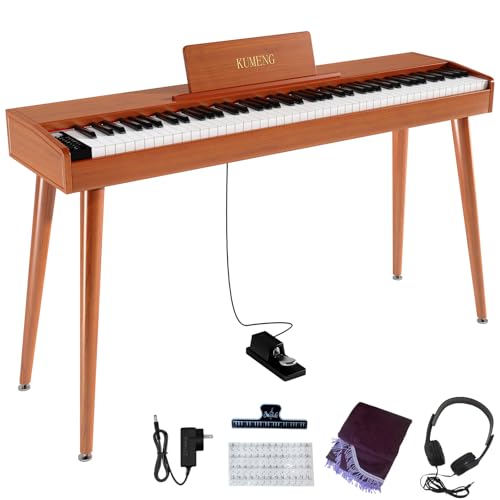
KUMENG 88-Key Semi-Weighted Digital Piano
Designed with a minimalist woodgrain finish, this KUMENG digital piano blends into home decor while providing a complete beginner setup. Its semi-weighted keys offer gentle resistance to help new players develop finger strength, and Bluetooth MIDI lets you connect to learning apps. The included stand, sustain pedal, and headphones make it a ready-to-play package for quiet practice.
Pros
- Semi-weighted keys provide responsive feel suitable for building finger strength
- Includes sturdy metal stand and sustain pedal for a full piano experience
- Bluetooth MIDI and USB-MIDI connectivity for apps and recording software
- Headphone mode with two sockets allows silent practice for two players
- Built-in metronome aids rhythm training
Cons
- Semi-weighted action may not replicate the feel of fully weighted or hammer-action keys for advanced players
Best Digital Piano Under $1000 Buying Guide for 2026
Choosing the right best digital piano under $1000 involves balancing several important factors. Below, we outline the most critical criteria to consider before making your purchase.
Sound Quality and Polyphony
The sound engine of a digital piano determines how realistic and expressive it feels. Look for models that use multi-sample recording from concert grands, which capture the nuances of each key. Polyphony, the number of notes the piano can produce simultaneously, is equally important. For playing complex pieces with sustain, 128-note polyphony is recommended, though 64-note polyphony can suffice for beginners.
Many digital pianos under $1,000 now feature modeled sound engines that go beyond simple samples, offering richer tonal variations. Brands like Yamaha and Kawai are known for their high-quality sound engines, while Casio and Roland offer excellent value in this price range.
Keyboard Action and Touch
The feel of the keys is arguably the most important aspect of a digital piano. Weighted or hammer action keys simulate the resistance of an acoustic piano. Graded hammer action, where the lower keys are heavier and the higher keys lighter, is a must for developing proper technique. Look for terms like “Graded Hammer Standard” (Yamaha) or “Scaled Hammer Action” (Kawai).
Some models in this category offer synthetic ivory keytops, which provide a slightly textured surface and reduce slipping during long practice sessions. If you plan to eventually play on an acoustic piano, prioritize a keyboard with realistic weighted action.
Connectivity and Features
Modern digital pianos offer a range of connectivity options that enhance your playing experience. USB-MIDI allows you to connect to computers, tablets, and apps for learning or recording. Bluetooth is increasingly common, enabling wireless connection to headphones, speakers, or music software. Headphone jacks are essential for silent practice, and some models have two jacks for duet play.
Built-in features like metronome, recording, and a variety of instrument voices (e.g., strings, organ, electric piano) add versatility. Some pianos even include built-in lesson functions or companion apps, making them ideal for self-taught players.
Portability vs. Furniture Style
Digital pianos come in two main form factors: portable (stage) pianos and console (furniture) pianos. Portable pianos are lightweight, easy to move, and often more affordable, but they may require a separate stand and bench. Console pianos come with a built-in stand, pedal unit, and often a matching bench, providing a more traditional look and feel.
If you have limited space or plan to move the piano frequently, a portable model is the better choice. If you want an instrument that feels like a permanent fixture in your home and looks like furniture, a console piano is worth the extra investment.
Pedal and Accessories
The pedal system can significantly affect your playing. Most digital pianos come with a sustain pedal, but the quality varies. Basic pedals may be single switches, while more advanced models offer half-pedaling capability, which allows for more nuanced sustain control. Some pianos include three-pedal units that mimic an acoustic grand’s soft, sostenuto, and sustain pedals.
Don’t overlook the importance of a good bench and headphones. An adjustable bench ensures proper posture, while quality headphones reveal the piano’s true sound without disturbing others. For more tips, see our digital piano setup cost planner.
What You Get in a Digital Piano Under $1000
In the under $1000 range, a digital piano should offer 88 weighted keys with good key action, enough polyphony to play sustained passages, and decent built-in speakers. Many models also include a sustain pedal and a headphone jack. Portable digital pianos are lighter and easier to move, while furniture-style ones sit on a stand with built-in pedals and look more like a real piano. If you are comparing models, listen to the sound and play the keys if you can. Prices change often, so check Amazon for the current offer.
Why You Should Trust Us
Our team has spent countless hours researching and comparing digital pianos across all price ranges. We evaluate each model based on sound quality, keyboard action, build quality, connectivity, and value for money.We do not accept sponsored placements, ensuring our recommendations remain unbiased and trustworthy.
We update our guides regularly to reflect new product releases and price changes, so you can always rely on the most current information. For a deeper dive into digital piano terminology, visit our digital piano glossary.
Final Thoughts
After evaluating 10 models, we found several standout options in the best digital piano under $1000 category. For the best overall experience, we recommend the Yamaha P-125, which combines excellent sound quality, a realistic graded hammer action keyboard, and a sleek design. It offers great polyphony, built-in speakers, and USB connectivity, making it a versatile choice for both beginners and intermediate players.
For the best value, the Casio Privia PX-S1100 is a top contender. Its slim profile, lightweight design, and powerful sound engine make it ideal for those with limited space. Despite its compact size, it delivers a surprisingly authentic piano feel and includes Bluetooth audio/MIDI connectivity.
If you prioritize portability and practice features, the Roland FP-30X is an excellent pick. Its PHA-4 Standard keyboard offers realistic weighted action, and its Bluetooth connectivity allows seamless integration with apps. The built-in rhythm patterns and recording capabilities make it perfect for creative exploration. For more recommendations, check out our Budget Digital Pianos category.
Related Guides
Frequently Asked Questions
What is the best digital piano under $1000 in 2026?
Based on our analysis, the Yamaha P-125 is the best overall best digital piano under $1000 in 2026 due to its balanced combination of sound quality, keyboard action, and features. However, the best choice depends on your specific needs, such as portability or built-in learning tools.
What should I look for in a digital piano under $1,000?
Prioritize weighted or graded hammer action keys, at least 64-note polyphony (128 is better), and good sound quality. Connectivity options like USB-MIDI and Bluetooth are valuable for modern use. Also consider the form factor (portable vs. console) based on your space and mobility needs.
Are digital pianos under $1,000 good for beginners?
Absolutely. Many models in this price range offer excellent key action and sound quality that can support a beginner’s development. They often include built-in lessons, metronomes, and recording features that make learning easier and more enjoyable.
Can I use a best digital piano under $1000 with music apps?
Yes, most modern digital pianos under $1,000 feature USB-MIDI or Bluetooth connectivity, allowing you to connect to apps like Simply Piano, Flowkey, or GarageBand. This integration is great for interactive learning and composition.
What features should a digital piano under $1000 have?
Look for 88 weighted keys, good key action, enough polyphony, a sustain pedal, and headphone support. Portable and console styles differ, so choose by where you will play.
Do I need a separate amplifier for a digital piano?
Most digital pianos under $1,000 come with built-in speakers that are sufficient for home practice and small performances. However, if you plan to play in larger venues or want a fuller sound, connecting to an external amplifier or PA system can enhance your experience. For more on setup, see our digital piano setup cost planner.
More guides you may like
Popular buying guides
About the author
The Digital Piano Desk covers digital pianos from entry-level to console models, comparing key action, sound features, size and who each model suits.